One of the nice things Orbit UK did when they published Song of the Shiver Barrens was to include an interview with me at the back. (The other nice thing for you readers – they included the first chapter of Karen Miller’s new book in the UK “Empress”!)
Here’s the first part of that interview:
Can you tell us a bit about your background? How did you get into writing fantasy?
I grew up on a small farm in Western Australia. Playmates were few and far between, which is probably why I developed both an excessively inventive imagination and a love of all things outdoors. As a child, I read everything I could lay my hands on, including old National Geographics, and for as long as I can remember I wanted to write and to travel. I was writing fully fledged stories by the time I was eight, and as soon as I was old enough to work in my school holidays, I was saving money to travel.
I’ve been writing and travelling ever since. As well as Australia, I have lived in North Africa, continental Europe and Asia – both on the mainland and the island of Borneo. My first published works were non-fiction travel articles!
You were a teacher for many years. How do you think that affects your approach to storytelling?
Well, I was telling tales long before I was a teacher. I seem to remember enthralling my classmates back in the playground of a country elementary school on a regular basis by reading my stories to them. Perhaps the teaching that helped me most as a writer was when I taught English as a foreign language (in Malaysia, Austria and Tunisia) and gained a depth of understanding about the structure of my own language as a result.
A bit of a logistical question, but just how do you find the time to write with another career and family to visit all around the world?
I can – and do – write anywhere. Without that ability, I would never be able to submit a book on time to meet a deadline.
I now work as an environmentalist, not a teacher, and much of my work takes me into the field. I have read first proofs in a tent in the middle of the rainforest. I have dealt with copy edits while sweltering by a roadside waiting for transport. I have plugged my computer into the wall in airports, coffee shops and waiting rooms, or I’ve hooked it up to generators in muddy logging huts or rainforest research camps. I’ve used my laptop as long as the battery would last on buses and beaches and coral atolls, in peat swamps and on fishing boats chugging through mangrove inlets. I’ve typed while perched on gunny sacks full of coffee beans on a wharf, or on tree stumps and fallen logs in the forest, or crammed into an airplane seat for a twelve hour international flight. I’ve written by candlelight, lamplight, moonlight, torchlight, firelight, streetlights, and even headlights (waiting to be rescued from a bogged car in the middle of nowhere.) The most challenging of all, though, is to find time to write while looking after a three-year-old grandson…
How much of an influence has being a conservationist and studying the natural world been on your writing and your world building? Do you often draw inspiration from your experiences or does it make it much harder to create something new and different?
An understanding of the natural world includes seeing how everything fits together, the larger picture. A logging operation means more exposed soil upstream. Run-off means the river is brown with mud. How does a riverine kingfisher see the fish it must catch to live? It’s all about connections. What happens in a neighbouring country can affect what happens to the birds in your own.
World building is like that. You don’t create just a house and a street. You are creating a world, and it is all interconnected. You can’t have your pre-industrial townsfolk eating fresh tuna if your town is miles from the ocean. Your musician needs strings for his lute (what are they made of?), your swordsman won’t be an expert if he never practises. In a desert, no one burns firewood in their fireplaces. Of course, you don’t put everything you know about your world into your book! But you have to know it and understand how it all fits together. Only if you do, will your reader feel that when he has opened the page, he has stepped into another real place.
Because I have lived as a local within a number of different societies, I know more than the average traveller about what goes into making a culture. That gives me an edge, I feel, in creating the people and the social rules they live by within their imaginary world.
 Every writer dreads that question, because we know that if someone had to ask it, they don’t get the way a writer’s mind works. Our problem is never ideas – but the writing. We trip over ideas all the time.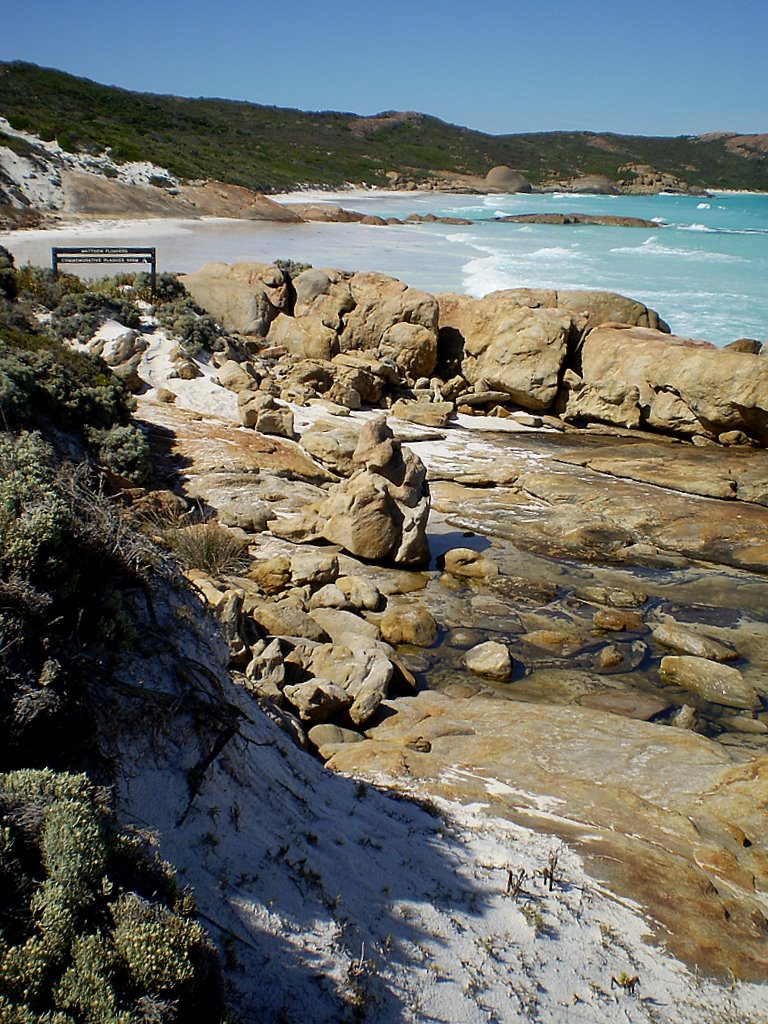
 The Graben. God, how I loved that city.
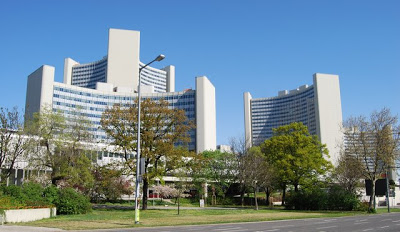 That was his office up there… 11th floor
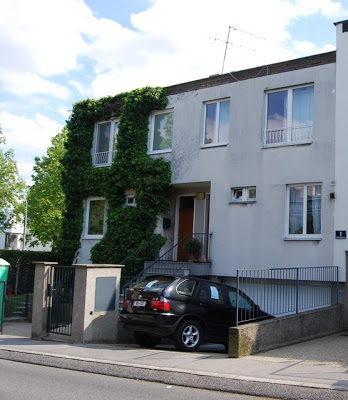 And that’s the house we lived on from 1986 to 1991, just off Beethovengang – we used to walk on up to the Vienna Woods every weekend. You entered the house from the street, but that’s really the back of the house. The front looked out on to a garden with a birch tree. Ah…
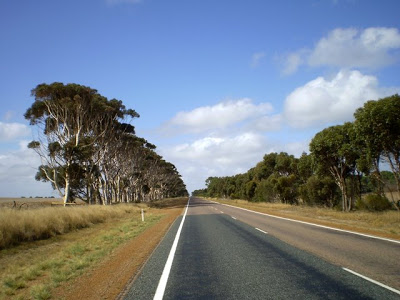 Pix: an Australian country road (between Esperance and Stokes…)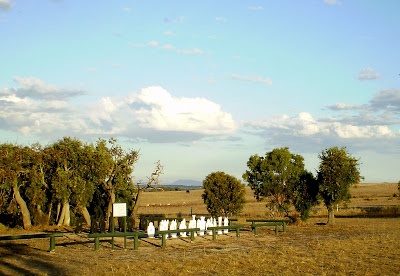
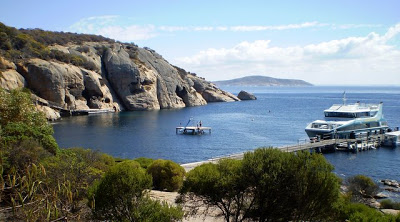
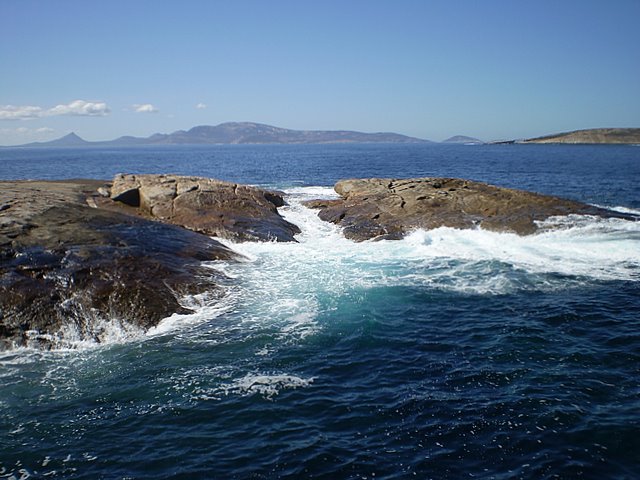
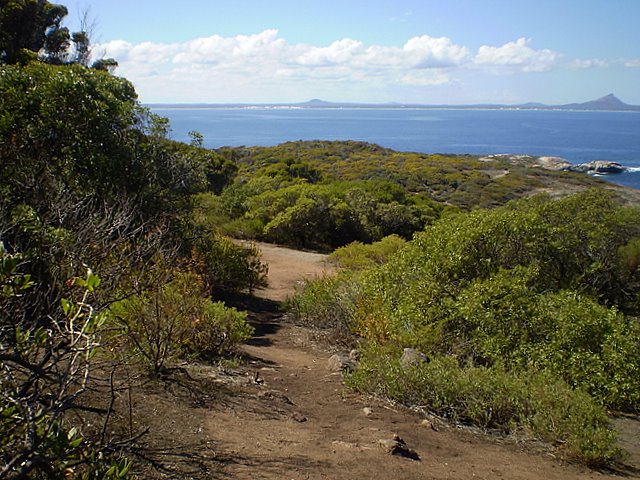
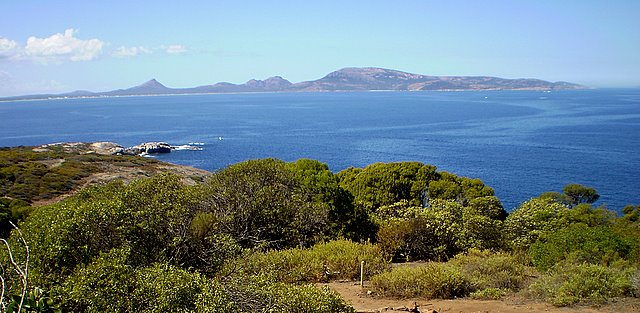
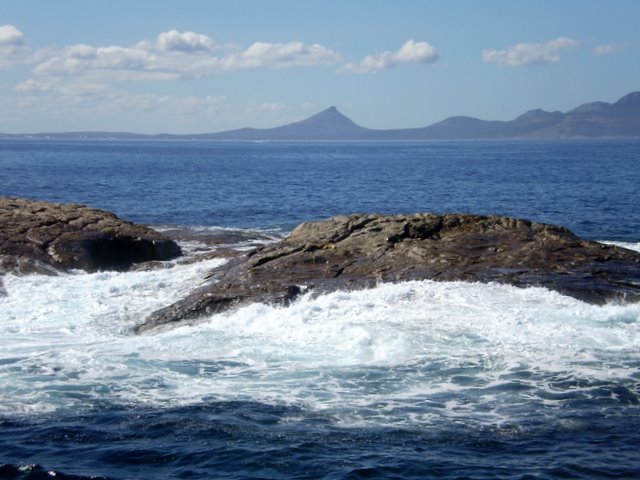
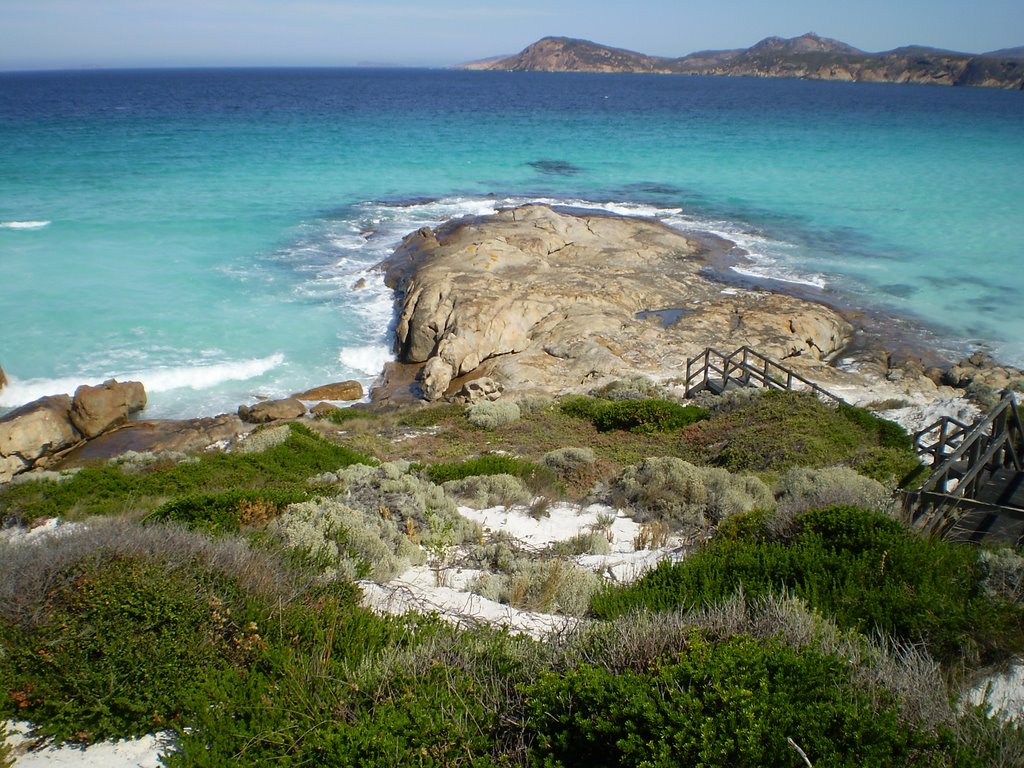
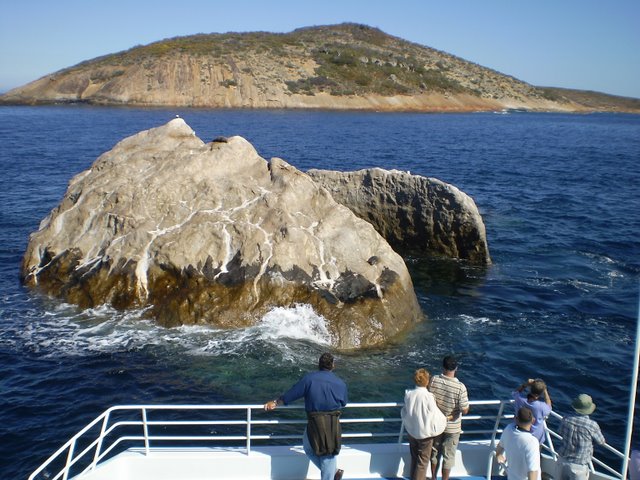 While we were in Esperance, we took a boat trip out to the Recherche Archipelago and spend a brief time on Woody Island, the only one of the 110 or so islands that has a camping area and a building – a restaurant.