Living with the natural

I’ve never been one for cities much. Not to live in. I tend to want something closer to the wild. Born on a farm; teenage years spent in a suburban area that had natural bush and a swamp close by (mostly tidied up now, less so then); even when we were in Vienna, we could walk into the Vienna Woods (and did, often).

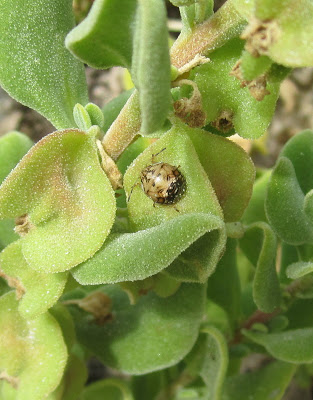
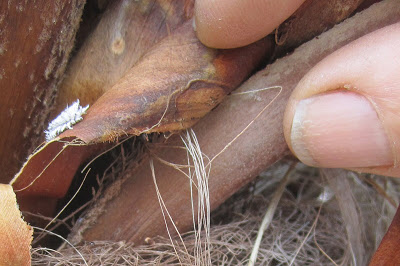
A mealy bug destroyer!…yeah, that white thing. It’s the teenager of a ladybug sp…

Our present house started off with forest and swamps close by, but now is pure suburbia, and not very attractive at that. So when it comes to buying a place for our retirement…we both prefer something less noisy and busy. (You know, somewhere where we are not blasted with the ugliness of loudspeakers for up to 3 hours a day, seven days a week, starting with a half hour session at 5.15 a.m. every day!) It looks like we are going to settle for a place next to a nature reserve on an estuary, with the wildness of an open sea a mere 2 kms away.

The following are just photos snapped by my husband with a digital camera, no fancy lenses, during our week in Western Australia in search of a place for retirement.

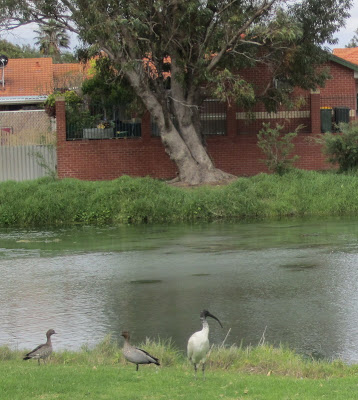
An oxidation pond with wood duck and a White Ibis
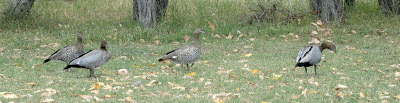
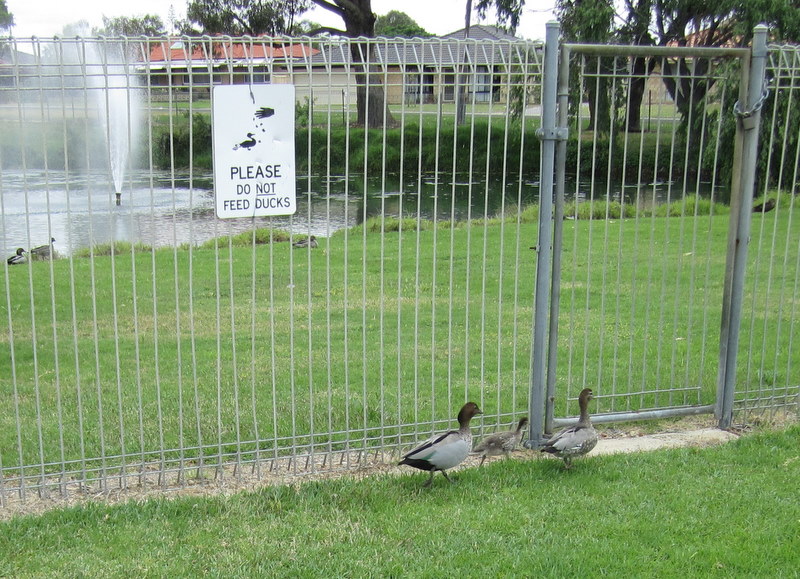
Wood duck strolling through a park
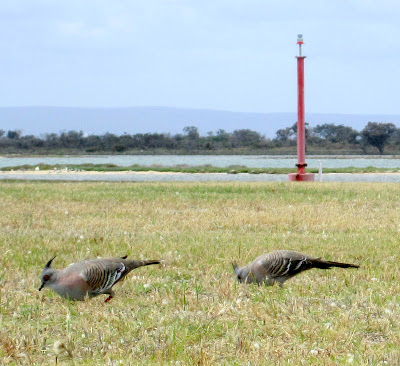
Crested Pigeon
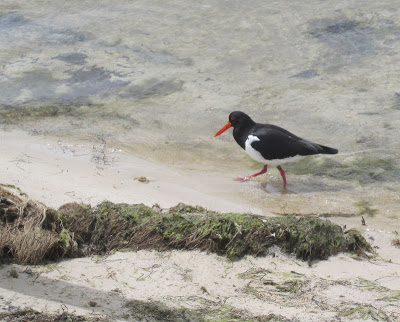
Pied Oystercatcher
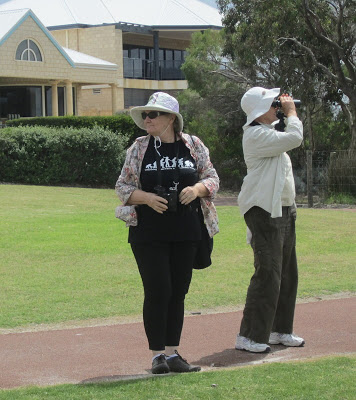
Birdwatching while househunting
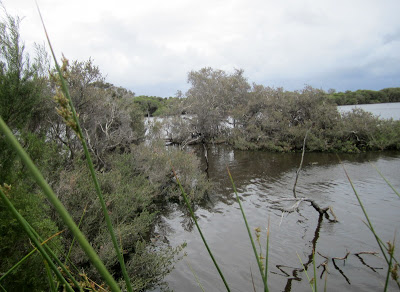
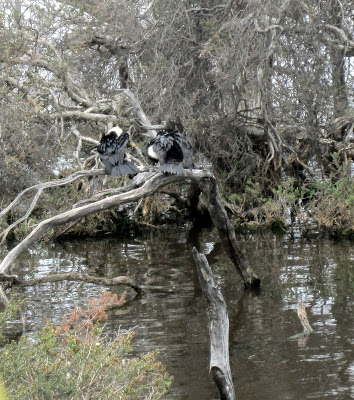
Above & the 3 below: Len Howard Conservation Area — bordering where we want to live
If you look close, you’ll see preening comorants
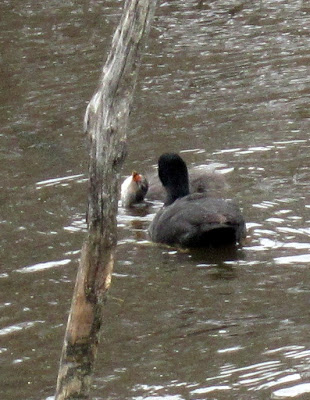
Coot with chick
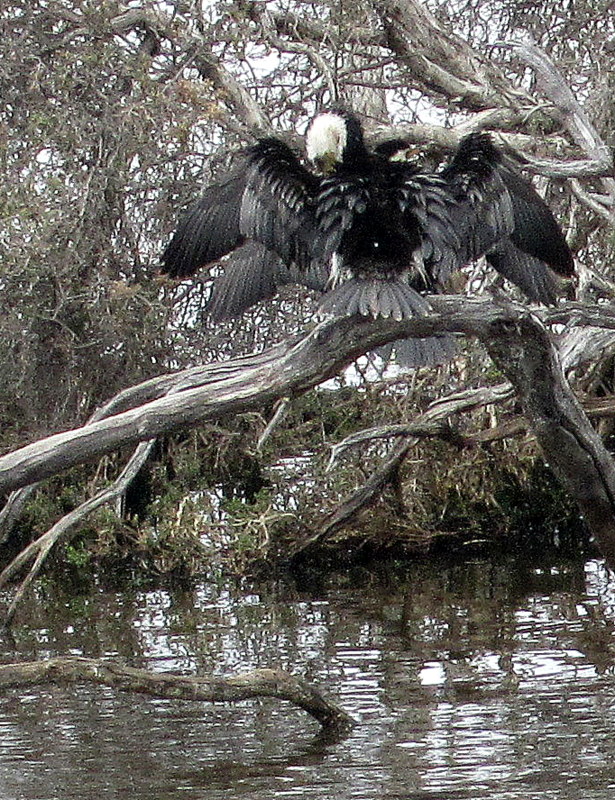
Wing drying…
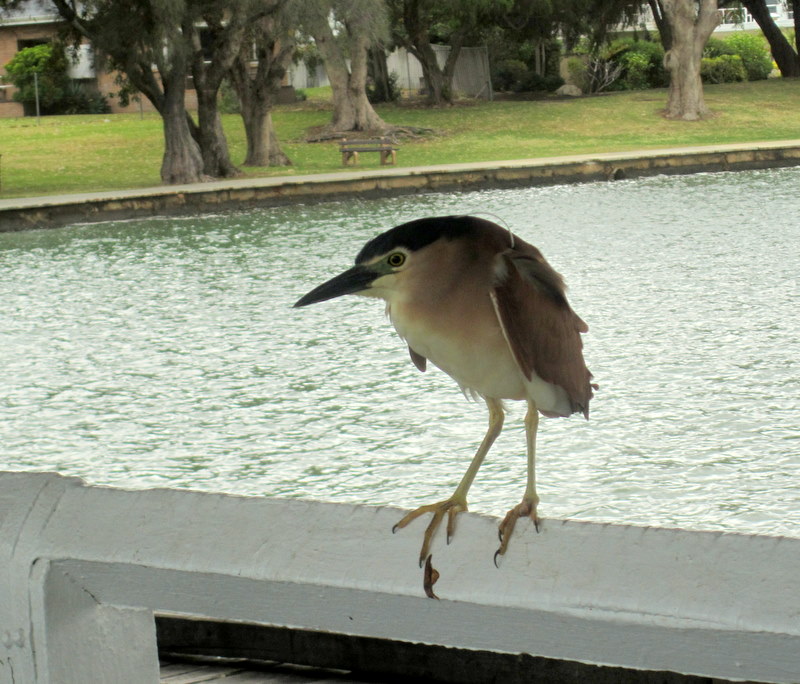
Nankeen Night Heron
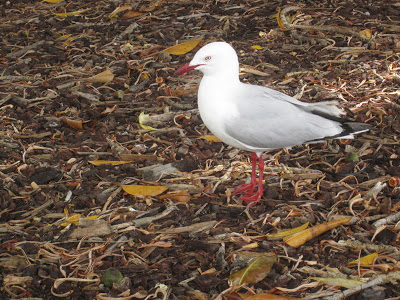
This is W.A.’s avian villain – The Silver Gull, denizen of rubbish bins/dumps, and expert thief
It must have been ladybird season — saw at least 4 distinct species on this trip
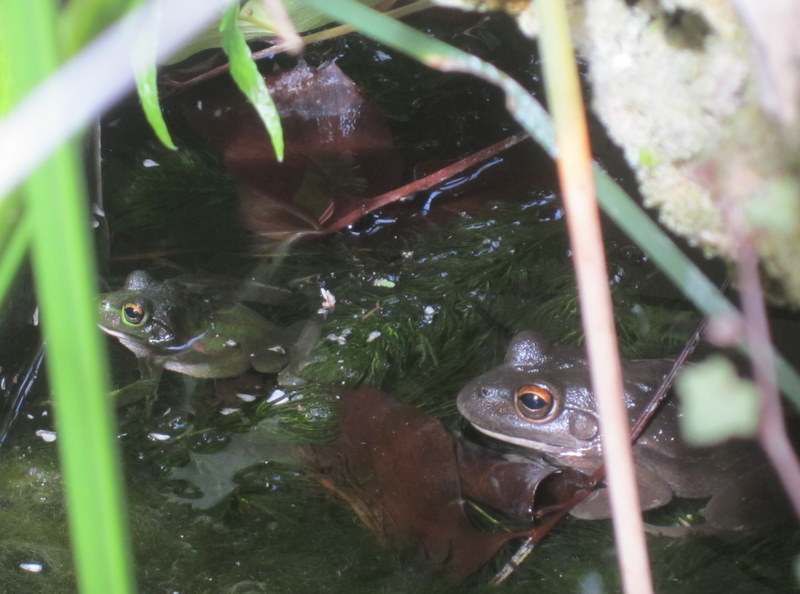
Motorcycle frogs in my sister’s frog pond — and yes, they sound like motocycles
Locked out? There’s always a way under the gate…
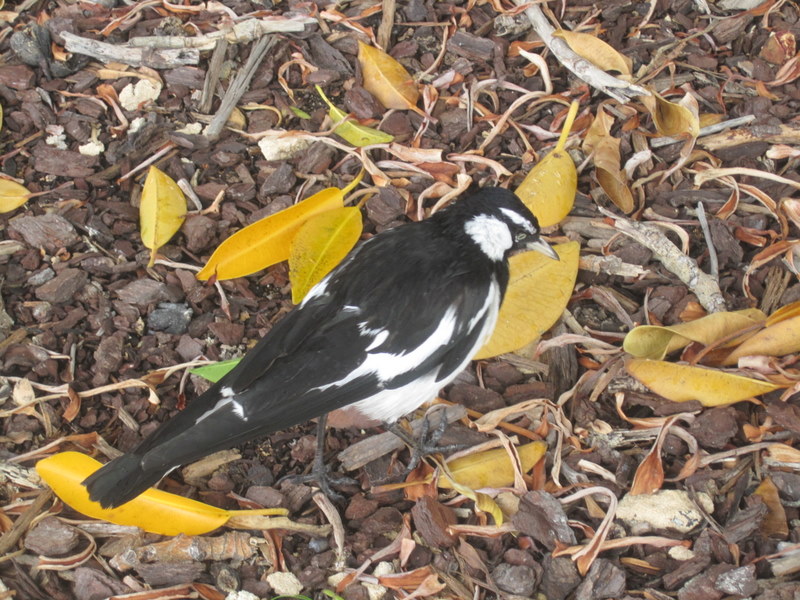
Peewit, Mudlark, Magpie-lark, Peewee. Whatever.

A Walk on the Beach

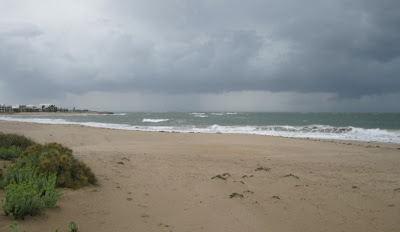
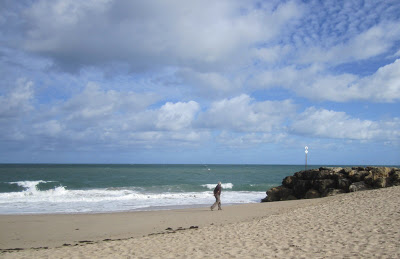
This morning I was here.
It is supposed to be summer, warm, dry — because this is Western Australia, and we were walking along a beach in Mandurah, which is where we intend one day to retire…

And it could have been a West Australian winter. Wet, blustery…intermittent showers and sun.

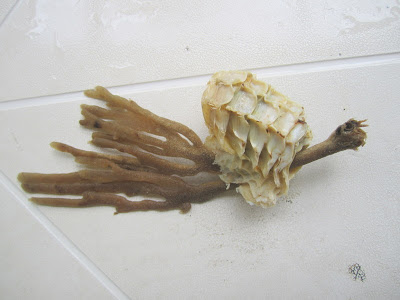
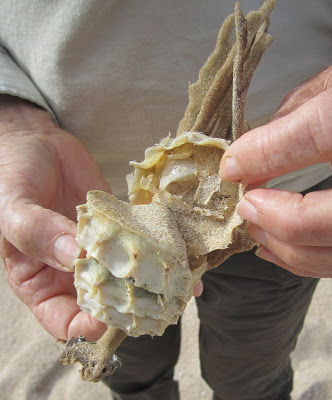
And my husband found this in the sand at the edge of the waves:

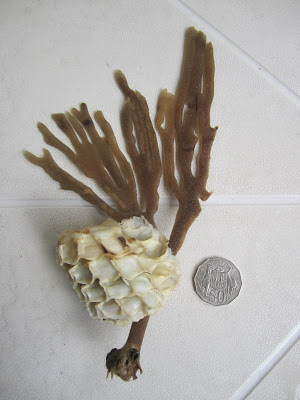
A piece of sponge…with attached mystery object, stuck to the stem.

That’s an Australian 50c coin for size comparison.

The layers of “the thing” were hinged at the side where it was attached to the sponge.
So what does one do? Turn to the internet of course. Type in sea “egg case” and see what comes up. That led to pictures of whelk (conch) egg cases which seemed similar, and eventually to the Syrinx aruanus, or giant whelk…the biggest gastropod of all. According to one account, they can grow to 91cm long. That’s 3 school rulers in length. Wow. When the snails hatch, they are 2 cms long.

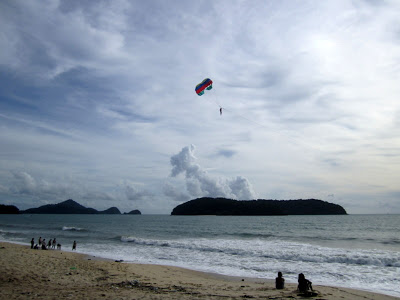
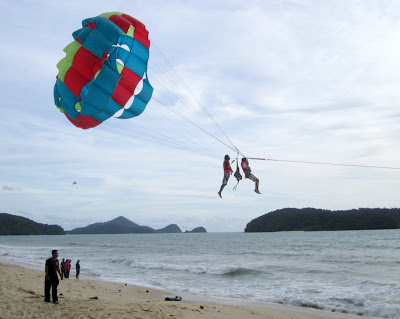
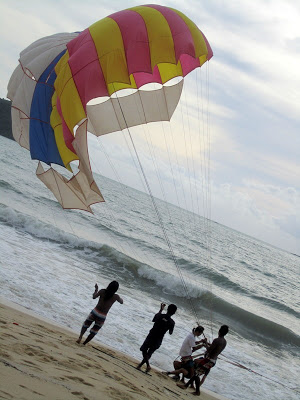
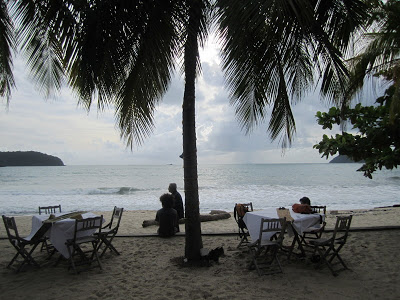
A perfect Langkawi evening

Some final shots from our trip to Langkawi. On our last evening, we went to our favourite restaurant on a beach, for a superb meal that didn’t — by Western standards — cost the earth, where we could watch the parasailing as the sun went down.

And one last memory to relate. We were lounging by the hotel pool, when husband got talking to a couple from the Middle East. Thirty-ish or so, good-looking, Western dress, she with a hubble-bubble, him with a can of Heineken, both with excellent English skills. They were from Damascus. At the time, the Syrian government, on a daily basis, was shooting mostly unarmed protestors in the streets of other cities, children included, all recorded on the ubiquitous camera phones and then emailed out as videos to the rest of the world…

“All lies,” says the gentleman. “Damascus has no demonstrations, nothing.”
His wife nods in agreement. “We’re are very happy with our President. (Bashar al-Assad.) We don’t want a change. Our government is a good one.”
“All that you see on al-Jezeera, CNN — all lies,” he says. “Don’t believe it! 90% of Syrians do not want any change. We are a prosperous country. These are terrorists, thugs, attacking our legitimate government.”

I look around at the swimming pool, the palm trees, fronds waving gently in the breeze, the sound of children laughing and splashing. A waiter brings colourful  cocktails with umbrellas to a nearby table. The sun shines, the breeze is — perforce — balmy…

I think: enjoy this, my friend, while you may. Because if people like you won’t acknowledge the true nature of your problem, how can you ever mend it?

And I am grateful, so grateful, I am who I am, living in this place, at this time. Or are we all living with our heads stuck in the sand?

Mangrove Mud

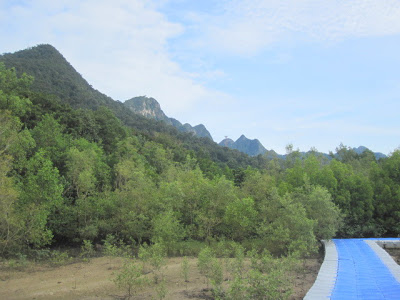
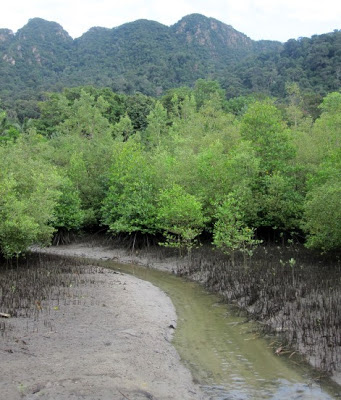
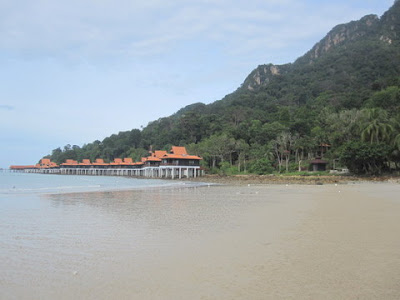
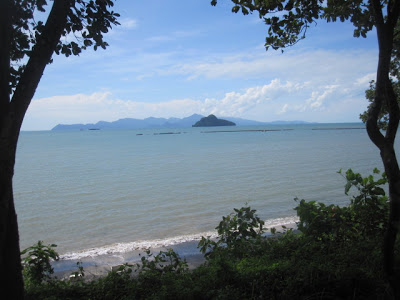
The following photos are all from Langkawi Island. The resort we were staying in has a floating boardwalk a short distance into the mangroves (seen here at low tide).

Some years ago I sent six months working on a mangrove project, living in the heart of Johor Baharu in an old colonial house overlooking the Straits of Malacca — except if I was in the field, when accommodation varied from sleeping on cement floors being bitten by sandflies to hotels directly over a Chinese coffee shop, and much of my day was spent in boats poking around in some of Malaysia’s remotest streams and estuaries.

 
One memorable day when we tried to walk through one of Malaysia’s oldest untouched mangroves to find the southern most family of gibbons in the Peninsular. No one had known those animals were there until we heard them; the scientific books and papers said white-handed gibbon territory did not extend that far south. (I imagine they don’t exist now, a few short years later — I suspect the area has vanished under the all-encompassing “development” greed of man, and the gibbons died, or were captured. They were not in the mangroves, but isolated on a patch of higher ground forest. )

Unlike these flat seaside mangroves, an old grove can be incredibly rough going, with lobster mounds two metres high and drainage rills two metres deep – climb, descend, repeat, climb, descend, repeat. The trees were huge things, gnarled beyond description with interlaced roots — a cat’s cradle of wood. To set foot on the gluey grey mud that would suck your boots off in a second, it was necessary to balance on this lacy network of grey goo-slippery wood below and haul on the tree branches above. All lugging cameras and backpacks in near 90F heat and 100% humidity.

It took us over an hour to go less than a kilometre, which is when we decided to give up (given that getting trapped in there by the tide might not have been funny.) It was easier for the men involved — they were 6 footer lanky Danes, with long legs, and twenty years younger than me…

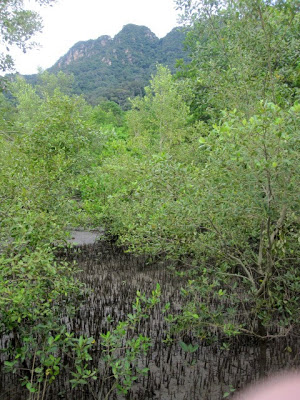
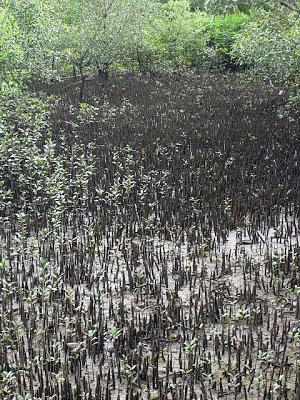
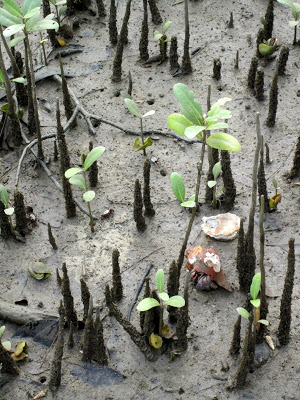
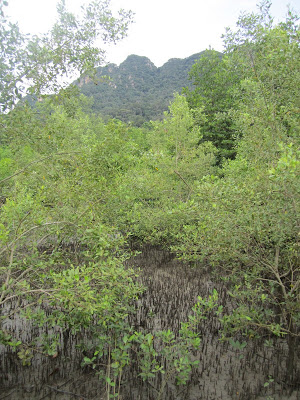
What surprised me most was how astonishingly beautiful mangroves could be. And how alive with life.  Note the roots poking through the mud above, a case where roots grow up to aerate themselves.

And (above) in among the roots and the new saplings, a hermit crab with his shell adorned with the remains of other dead shellfish.

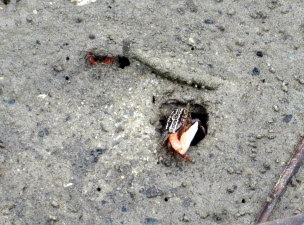
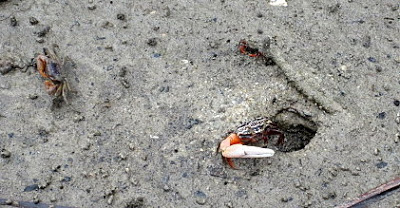
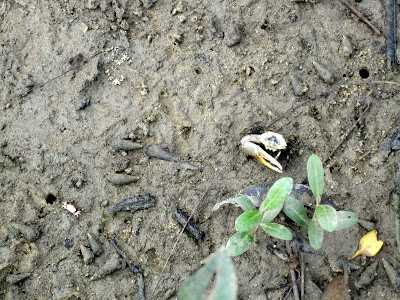
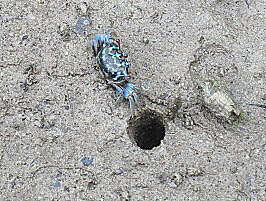
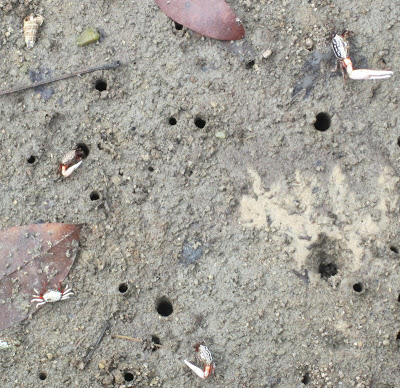
And what about these, above — fiddler crabs. Each male has developed a single claw much larger than the other. Its purpose is pure aggression. It can’t use it to feed itself! Below there’s one guarding his hole.

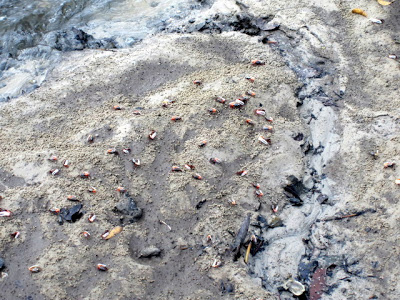
Note all the other types of shellfish lying around, waiting for the tide to come back in.

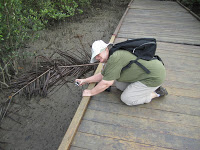
And me — taking a photo
And here, a lovely blue crab with pretty markings.
The sounds of the mangroves are incredible — pistol prawns snapping, all the clicking and scuttling underfoot, and the birds – Brown-winged Kingfisher calling, the slow flap of a dark morph reef egret, the singing of tailor birds and orioles and fantails…

Green and wild reasons to love Langkawi

I have several favourite resorts on Langkawi Island. It has a whole range, from glorious luxury (Datai Langkawi; The Andaman — where I once stayed while on a job!) to cheap backpackers.

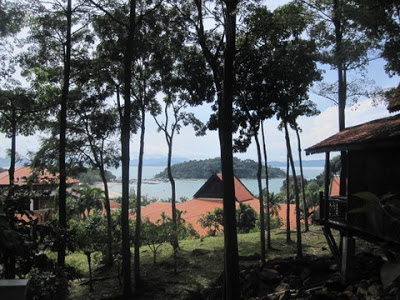
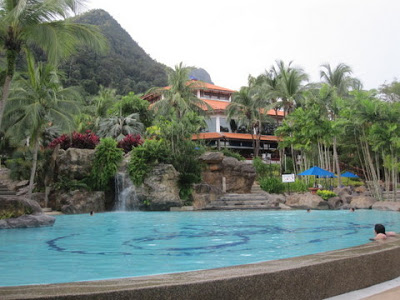
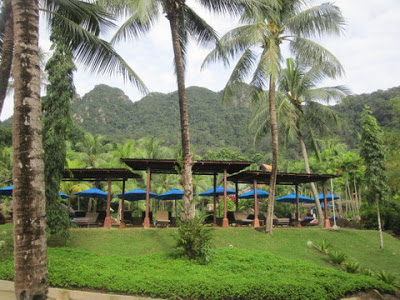
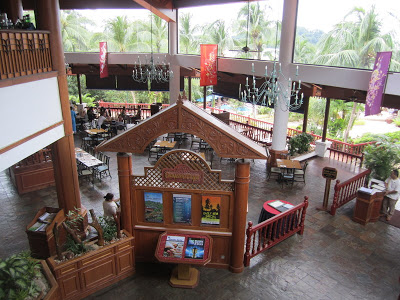
This time around we went for comfort and great surroundings, but not outrageously expensive. I like the Berjaya Beach Resort because they (like the Andaman and the Datai) pay a lot of attention to keeping the green surroundings and blending the resort into the greenery.

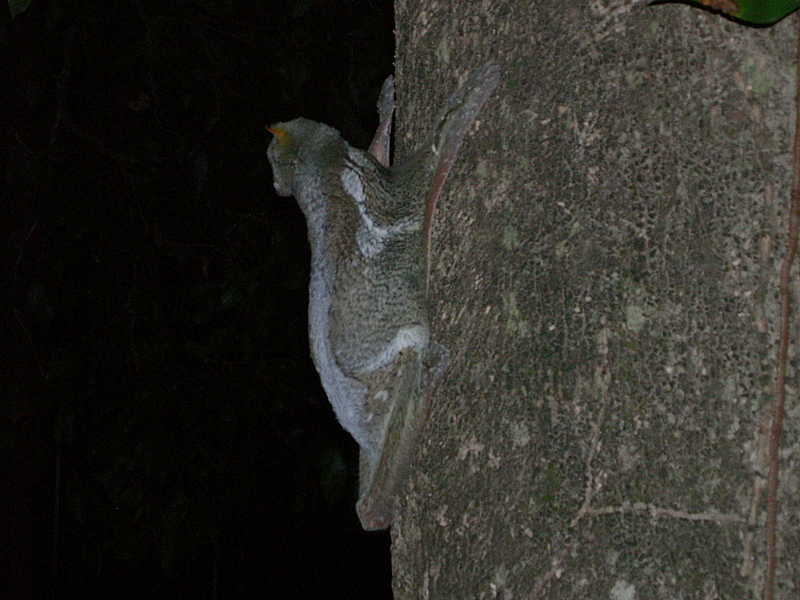
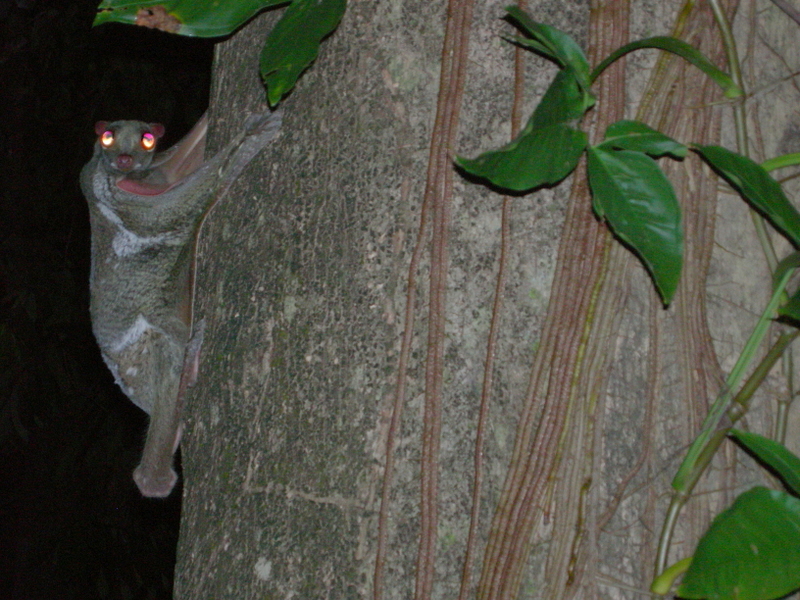
 Some of the chalets are over the water, but these are not my favourites; I like the chalets tucked away among the trees. You get woken up by the birds, including hornbills, and can watch the wildlife on your verandah. At night, there are flying “lemurs” (actually colugos) and flying squirrels.

 Of course, there are still the usual things like swimming pools and recliner chairs on the beach.

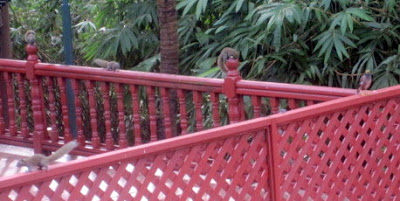
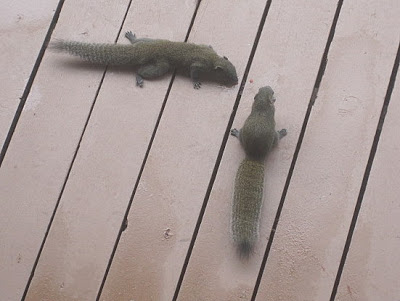
 One of the restaurants, see below, I enjoyed at breakfast because just below was the playground of about fifteen grey bellied squirrels and a number of common mynas.

These squirrels were wrongly identified in the resort literature as Plantain Squirrels; they aren’t. They are Grey-bellied. (I have both types in my garden.)

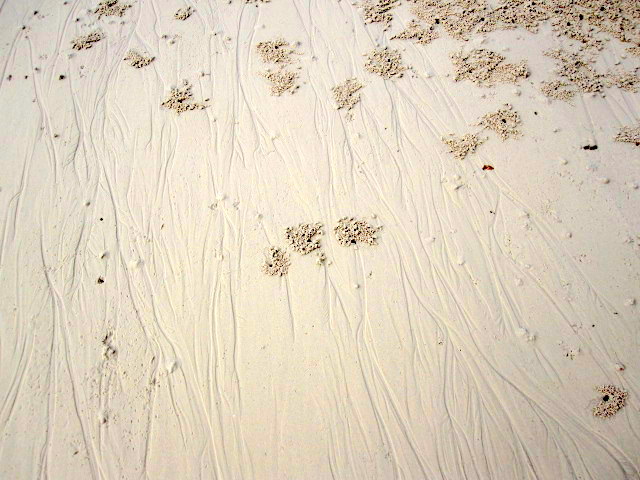
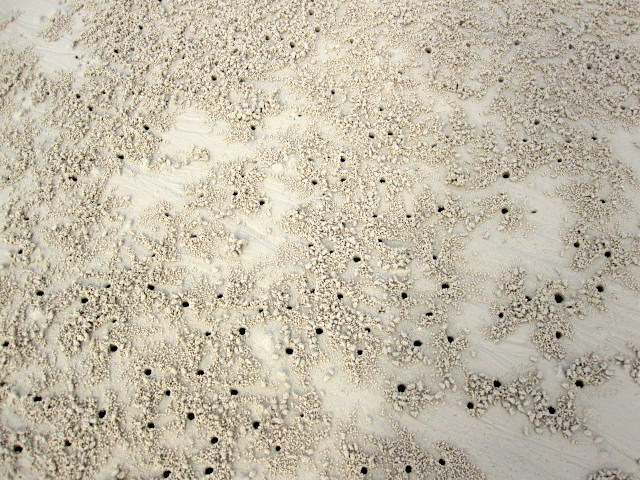
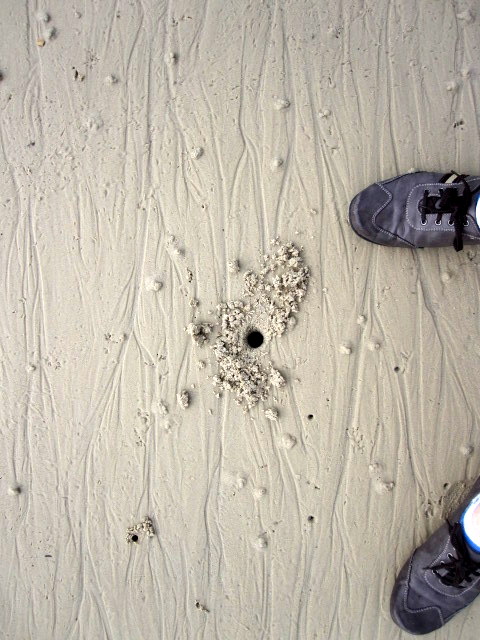
One other reason I like these “green” resorts is that they don’t clean the beaches with tractors and mechanical scarifiers — it’s done by hand, so crabs and other wildlife living beneath the sand is not disturbed. This means the herons and waders come to feed.

I remember walking out on to the beach in the early morning at The Andaman, and seeing the beach covered in tracks: monkeys, monitor lizards, otters, civets, leopard cat, herons, rodents, crabs and mud worms of all sizes. It was like a written history of what had happened during the night and at dawn, written in the sand.

A colugo taken at the resort on a previous visit. Remember these things fly. Well, to be more accurate, they glide…

Island Paradise?

I first went to Langkawi Island when I was in my twenties. 
I don’t even remember the year, but take my word for it, it was an age ago. 
1969 or a little later.  We stayed in the government resthouse, I remember.

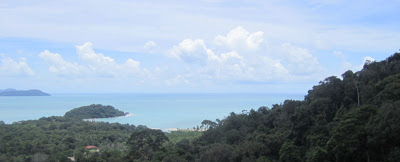
Langkawi is a group of islands — supposedly 99 of them, off the northern coast of Peninsular Malaysia. You can see the Thai islands from there. We were back there, just recently.

Back in those early days, you had to take a slow local ferry that didn’t run all that often, and you were probably the only tourists on the boat. In fact, we might well have been the only tourists on the island. there weren’t many roads, and even fewer cars.


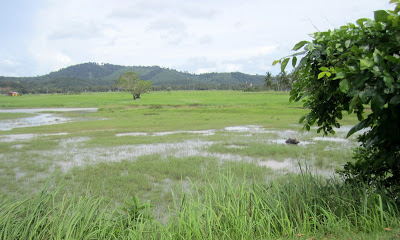
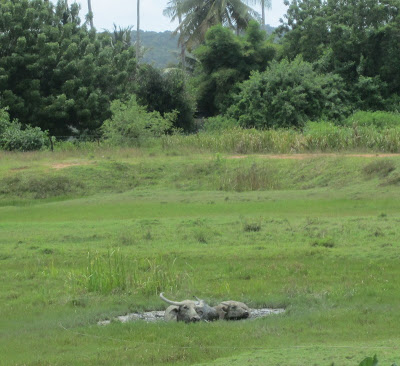
People lived by fishing and farming — rice fields ploughed by water buffalo — and generally ignored the mile upon mile of magnificent beaches, crystal clear waters, coral reefs and age-old geological marvels. Boys may have learn to swum; girls and adults didn’t.
I
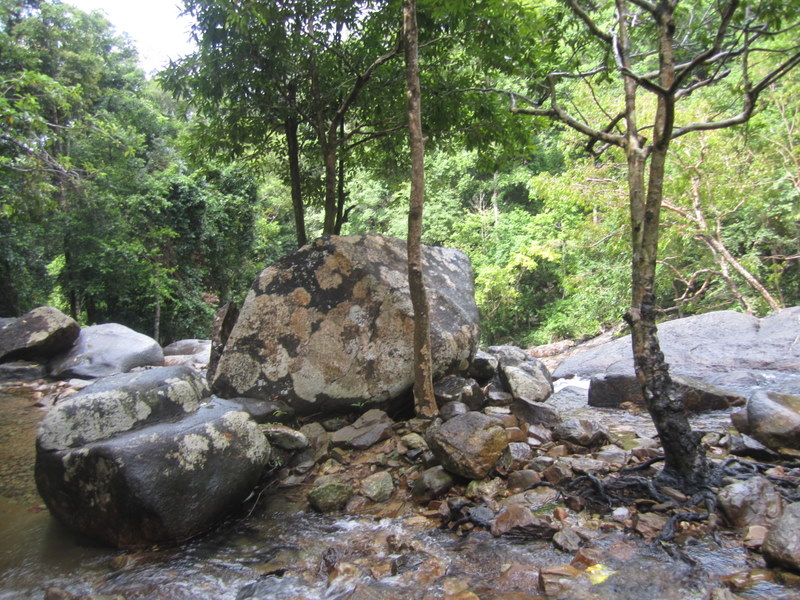
There were forests and mangroves…
 
 And wildlife…
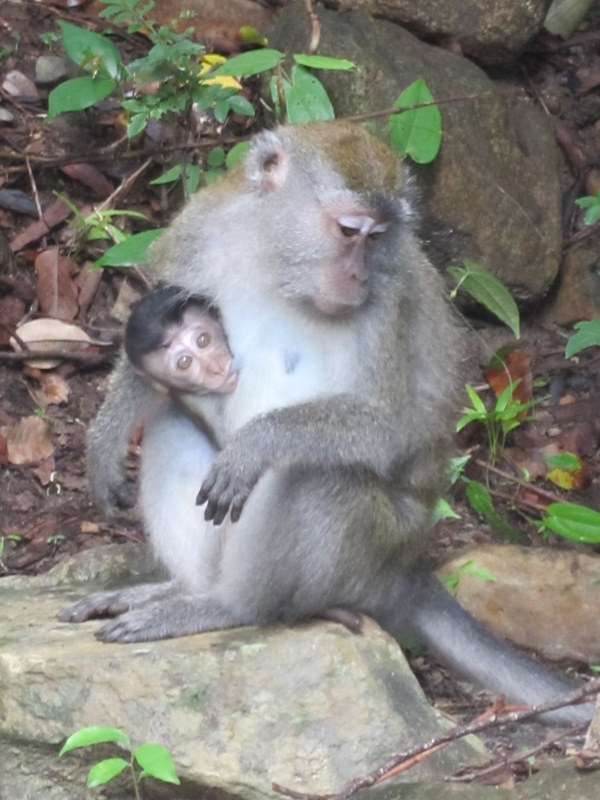
Like this Long-tailed Macaque above, photographed outside our chalet…

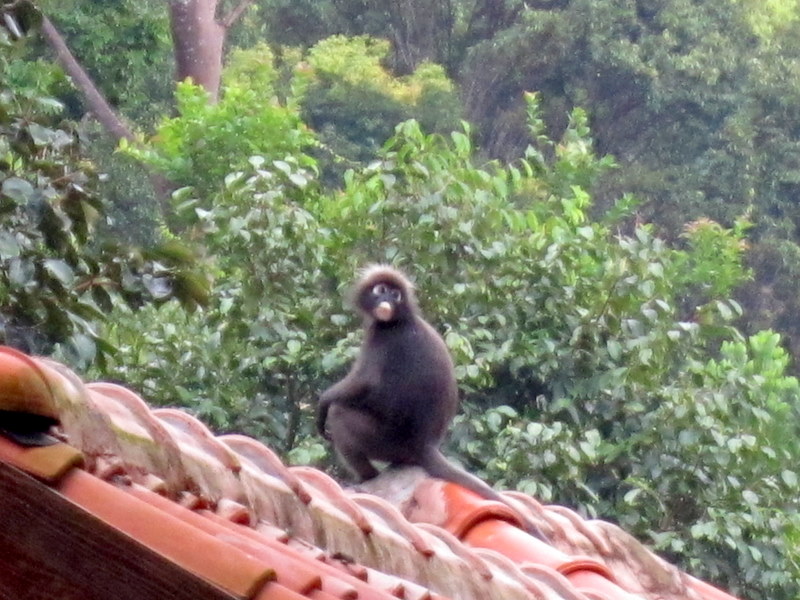
Or this Dusky Langur (leaf-monkey) sitting on our chalet roof…
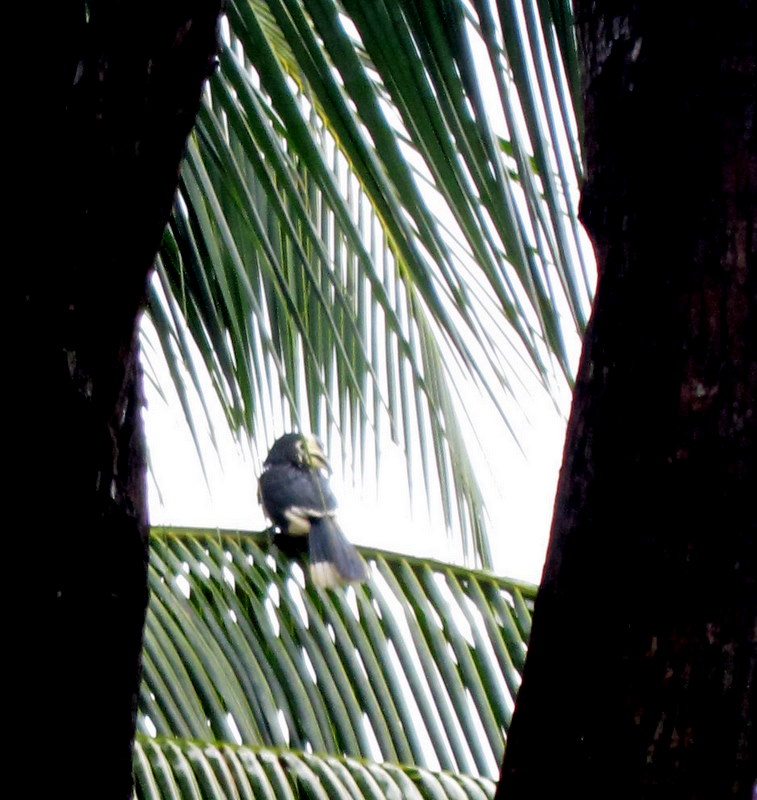
Or this Southern Pied Hornbill above that woke us up in the morning
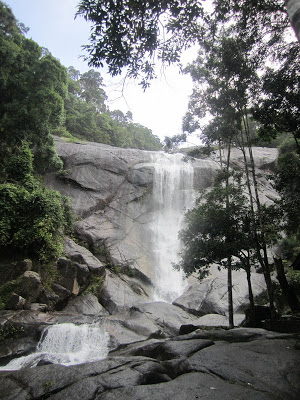
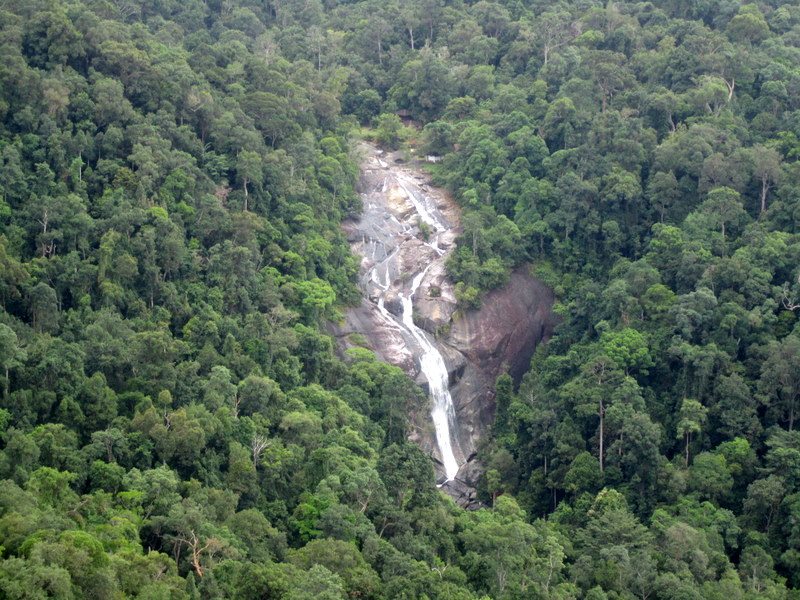
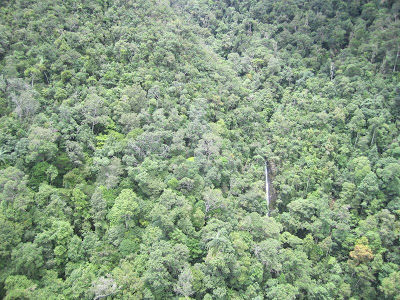
There are waterfalls, like this one above and below — Seven Wells…
Seven Wells from the air
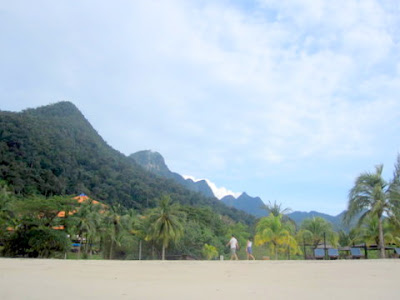
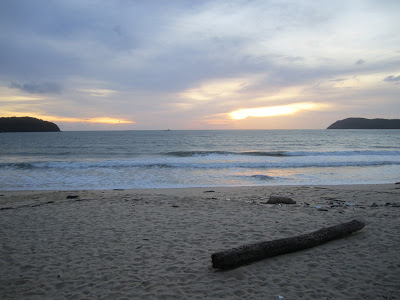
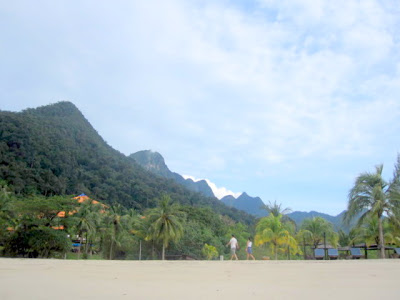
And beaches like this one…

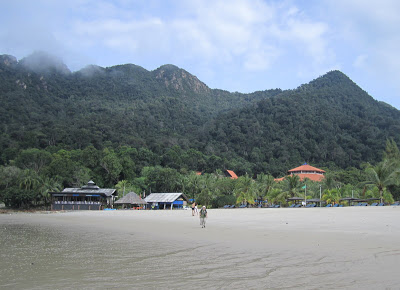
…or mountains, like these (Mat Chinchang)…
 It was a backwater when we first went there, but in a way, a glorious one. With rice and fish, wood in the forest and mangroves, home grown vegetables and fruit in the back yard, all in a magnificent setting, with the village school down the road, life might have been quiet but, if you didn’t have ambition, it can’t have been a bad place to grow up in.
Now, it’s a pretty good place to holiday in. And the islanders are a great deal more prosperous.

More on the weekend in Penang

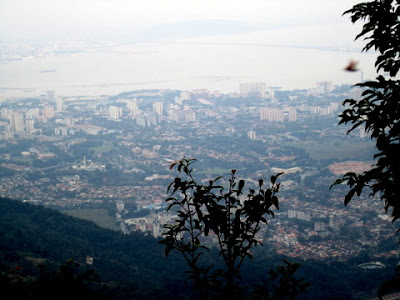
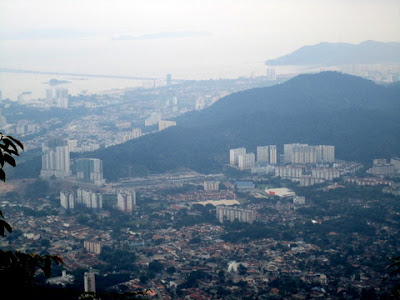
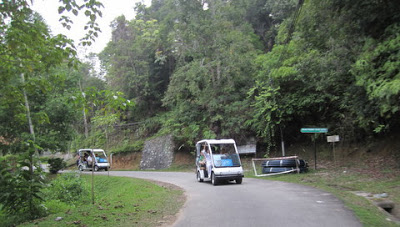
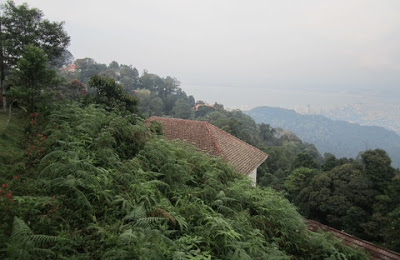
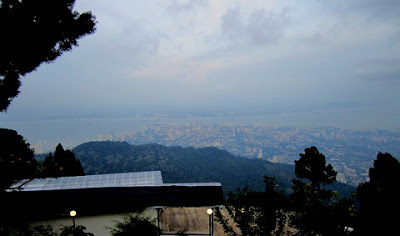
The birthday dinner of our host was held on top of Penang Hill. The hill is one of the famous Malayan “hill resorts” of British colonial days. Normally the view is stupendous, but alas, over in Sumatra across the Straits of Malacca, the Indonesians were burning the island as they seem to do about once a year. (Malaysia is not innocent here, either — they do the same thing on Malaysian Borneo). so it was very hazy.
Note the bridge to the mainland
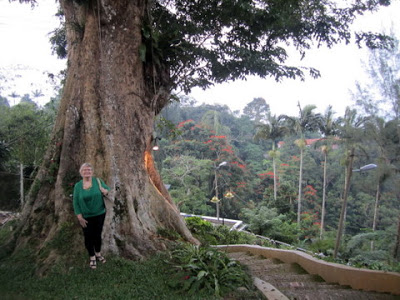
me under an ancient Angsana tree

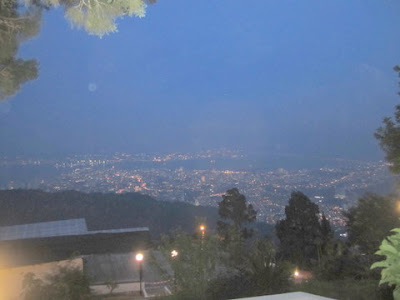
On Strawberry Hill — so called because Captain Sir Francis Light of British East India Company days is supposed to have levelled the hill to grow strawberries in the late 18th century — stands a restaurant called David Brown’s. It serves a British traditional menu. Good food, and because we sat out on the lawns at the edge of the slope — a glorious view as the sun went down and the lights came out…

Nightfall

(Francis Light leased Penang from the Sultan of Kedah. He died of malaria and is buried in the Protestant cemetery not far from the Hotel Penaga in Penang. His son was the surveyor Colonel William Light who laid out the city of Adelaide.)

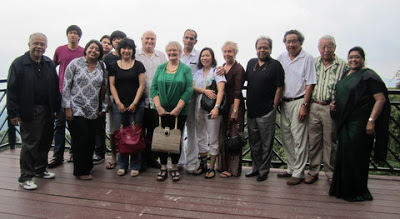
The party-goers, many ethnicities, many countries, 1 Malaysia.

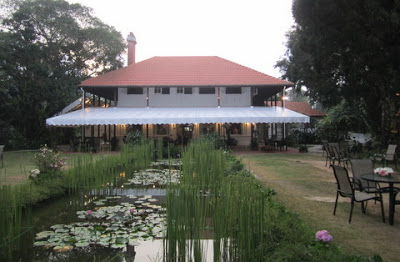
Penaga, a Hideaway in Penang

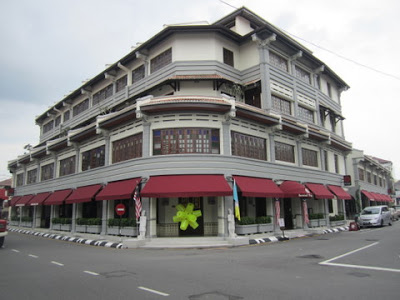
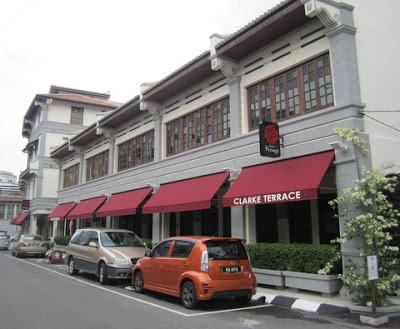
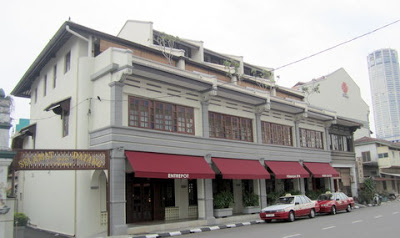
Sometimes the heart rejoices to see things done right, especially when it comes to the restoration of old and crumbling buildings into vibrant living places, all done with more than just a passing nod to past heritage. Hotel Penaga in Georgetown is one such place. For a long while now, one of my friends has been missing from Kuala Lumpur — and here’s the reason. She and her husband have been fully occupied with restoring a block of shop houses into a boutique hotel.

Hotel Penaga

To see the “before” photos, click here — and read how Hijjas (one of Malaysia’s top architects) and his wife Angela, (just as well known, but as an active supporter of the arts and as an environmentalist) achieved and furnished this result. It has been a labour of love — and it shows.

We stayed in the hotel recently — as part of the owner’s landmark birthday celebrations.

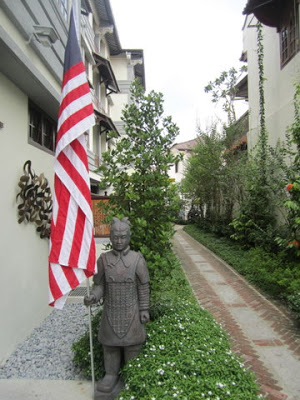
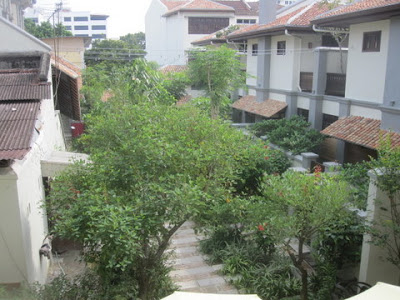
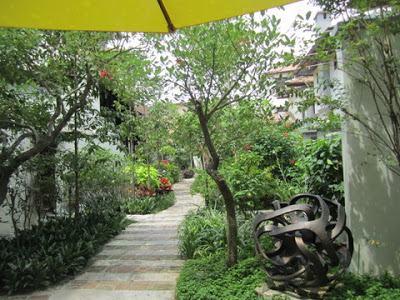
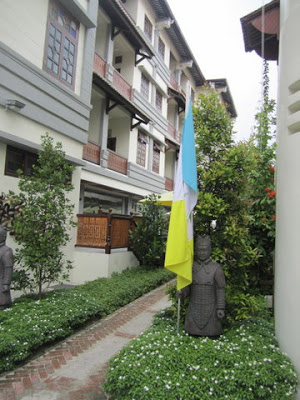
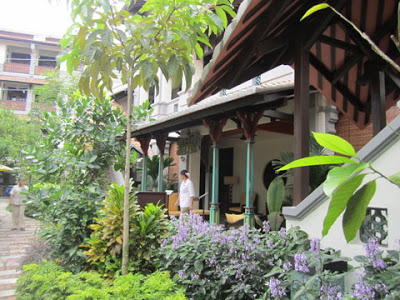
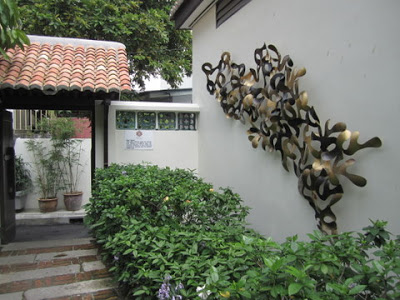
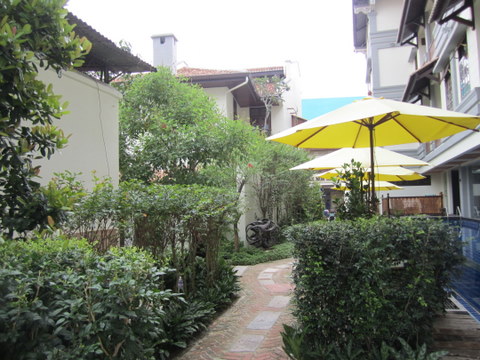
In between two parts of the hotel is a little laneway, which has become a feature of the hotel. Here, all is quiet and peaceful. A path wanders through to the next cross street, a garden is planted with both local plants — including the penaga tree — and exotics.

Of course, you can guess the original purpose of the laneway, right? Yeah, the dunny alley…

The view from our window (another side lane)
Another view further down the lane
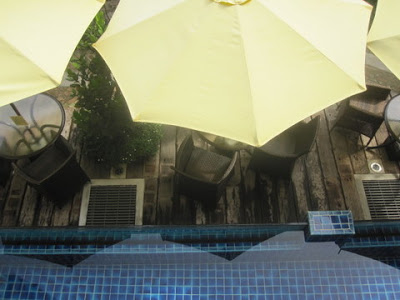
A place to sit out in the open beside the pool…right under our upstairs window
Our first floor room was to the left in this photo.

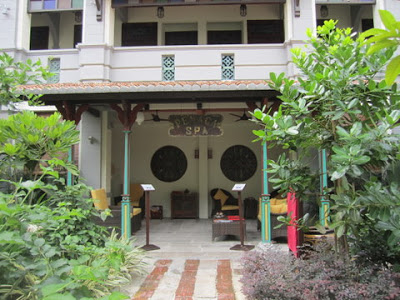
The hotel spa, entered from the lane
Another view
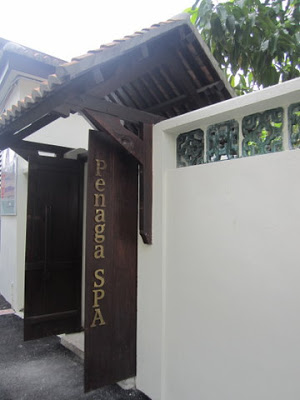
The spa entry

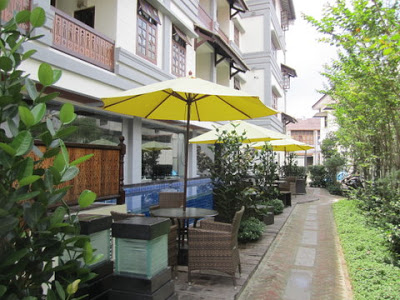
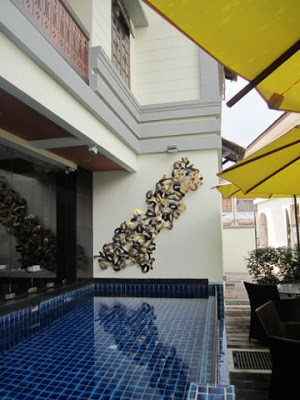
The pool beside the lane
Looking the another way down the lane
The pool, looking down from our window

And, of course, one of the joys of the setting of Hotel Penaga is the fact that you can walk out of the door and you are in the heart of the old district of the city. An amble takes you to the World Heritage site of Penang, and everywhere there are things to explore: art galleries and antique and junk shops, clan houses and temples, ancient mosques and the old British cemetery, the water villages and old quays, the finest colonial architecture — all within walking distance.

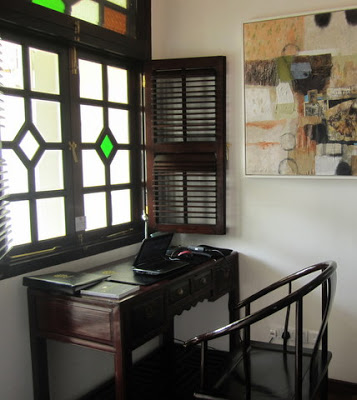
Inside our room, showing the combination of modernity and period-style furniture
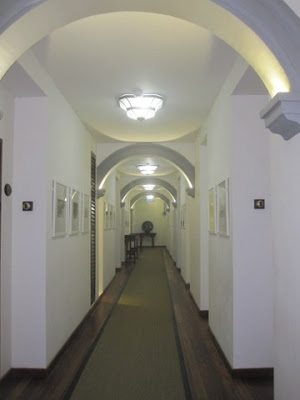
The passage outside our room

And if you don’t know the glory of Penang cuisine, this area is the place to check it out. You can go for high class restaurants to street stalls and food courts, all within walking distant. And if you want to eat in, there’s the hotel restaurant featuring a range of ethnicity in its dishes.

Playing catch up

Yes, I am still alive. But life has been hectic lately.

I have also been plagued by a health issue that is a bit unpleasant, and leaves me a bit tired from time to time. One of the worst part of health problems, though, is the fact that you have to devote time to solving them.

However, unlike many people in the world, we don’t have issues with getting free medical care. Because my husband was a government servant, I am covered for all normal treatments/operations and common medications, but I do have to go to government hospitals and clinics. And as everyone knows – no matter where you live! – government clinics are SLOW and overcrowded.

So a single visit to a hospital clinic involves driving time (1.5 hrs including return) and a lot of waiting. Waiting to get a number. Waiting to see the doctor (often an intern). Waiting to see another more senior doctor or specialist. Waiting to have blood tests. Waiting to get medicine.

This is not all bad — I get to read a lot! And it is free, which is more than many Americans can say for a start. Even for paying patients, the hospitals here are subsidised and cheap. Another thing Americans can’t say. (And I hasten to say that cheap does not equal incompetent or shoddy.)*

There are no frills. No magazines in the huge waiting rooms. Plastic chairs. Too many patients (and this being Asia, patients usually bring along some other member of their family) has led to part of the corridor being partitioned off for a waiting room annex. Two or three doctors share an examination room, and so do patients. You can listen to what the fellow next to you is saying to his doctor… But the doctors are top-notch. And so is the equipment (though you may have to wait a long while for your turn).

As for my diagnosis? Not certain yet. Possibly an auto-immune disease, Sjogren’s Syndrome. Not fatal. More just an uncomfortable nuisance from time to time. I return in a month for more test results. A biopsy for Sjogren’s actually came up negative.

*Speaking to American readers of this blog — you may have gathered that  the absence of free medical care is something much of the rest of the world just doesn’t get about America!

There is no truth…

…to the rumour that I was eaten by dragons. Or that I have been imprisoned in a deep dungeon. Truly, I will be back this week to the world of blogging. And writing. And generally behaving like a abnormal human being.