
Bit pressed for blogging time at the moment…we are away for the weekend.
2
So much for promises, eh? I have been offline for a couple of days, thanks to a faulty computer which won’t connect to cyberspace. Not sure when things will be back to normal.
In the meantime, the Noramly family adventures continue. A diabolical dentist tortured my daughter, more of which in a moment.
As for me, I suffered the ultimate in restaurant poor service last night, and was lucky to emerge unscathed. I kid you not: a waitress pulled the chair away as I went to sit down, with the result that I came an almighty and inelegant cropper spreadeagled under the table. Honestly, service these days…
As I have on separate occasions fractured two vertebrae in very minor incidents, I consider myself lucky that I had no more than a bruise.
Believe me, we didn’t tip.
As for my daughter, she went to have the nerve removed from a tooth (in Melbourne) and ended up in a dermatologist’s office being treated for a severe burn that removed 2 cm long x half cm wide of skin from her face and is probably going to leave a scar near her mouth. The lip was also affected, but seems to have healed ok. The dentist shrugged it off and said she must have been allergic to something. (Huh? To what? They put things in your mouth that take the skin off your face?) He paid for the dermatologist consultation, so I guess that is some kind of acknowledgement that he was to blame. The dermatologist said, nope, that’s a burn. Because of my daughter’s skin colour, scarring is usually very noticeable. Moreover, she has flawless skin.
I am in two minds what to advise. I am not one of these people who immediately jump up and down and say, Sue! Sue! when someone makes a mistake. No one is perfect, and we should go through life accepting that sometimes people eff up, just as we do ourselves.
But firstly, it sounds to me as if she was not told the truth about what happened. Her cheek and mouth were numb, so she really didn’t know what was going on, but she did feel that something was not right at the time. Secondly, the only thing that I can think of that might conceivably have done this kind of damage is that they used something out of the autoclave that was too hot and when pressed against her skin for a prolonged period, produced a burn mark of those dimensions. Which sounds more like torture than a normal dental procedure.
Is there anyone out there who has any other theories? Anyone heard of anything similar?
In the meantime, I’m looking behind me. People are out to get us….
 There have been some interesting replies to the blog on “Fitting In” . I shall blog some more about being a square peg in a round hole, or an orang putih* in a Malaysian world, tomorrow.
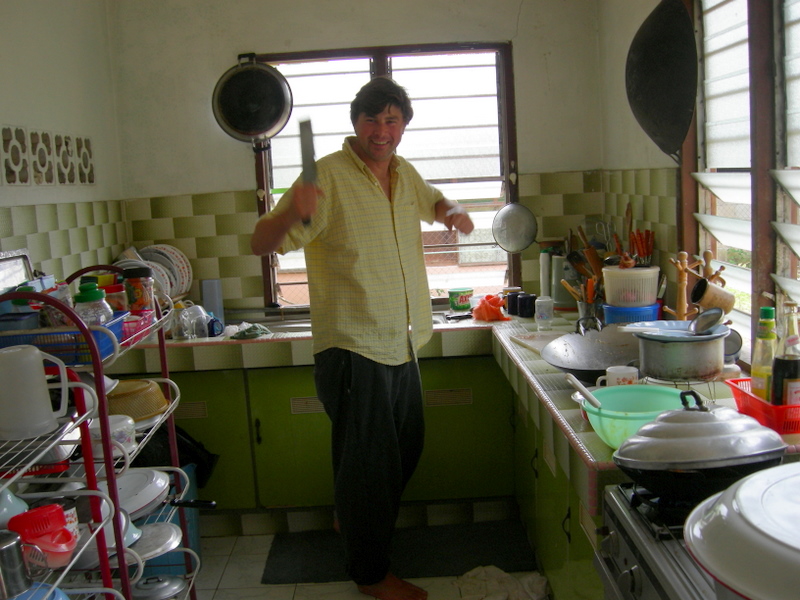
This pix (my American son-in-law fitting in down in the kampung in Melaka) is for Hrugaar, who thinks, quite rightly, that doing the dishes is a great way to start…
* lit: white person
Well the Aurealis best fantasy went to a West Australian author – unfortunately not me! Sigh. I shall try again.
Congrats to Juliet Marillier and the other category winners, especially Shaun Tan for an extraordinary work, “The Arrival”. If you have not seen this, take a look. Buy it for your kids. Buy it for your friends. Keep one for yourself. It is a very special work.
In Heart of Mirage, the main protagonist grows up thinking she fits in to her adopted world. She is well educated, wealthy, respected. Yet she is also aware that she is different – not the kind of person you would want marrying into your family, for example. She is not looked down upon because of her skin colour and appearance so much as because of the work she does. In fact, she chooses to live on the fringe of her society because of it.
When she returns to the land of her birth, she finds herself an outsider again. Here, she looks right, but is culturally different. She tries to fit in, but finds it tough. She starts to question all the things she had once believed were admirable…
I grew up in a small farming community on the outskirts of Perth, Australia. The primary school I attended had two grades to a classroom, it was that small. And not far away, the government built a migrant camp (as they were called in those days) where immigrants lived until such time as they found work and homes. The year I started school was 1950, and my classmates had names like Ludwiga, Tosia, Gunter or Vladimir. Many had been born in DP camps at the end of the war, and had never known a proper home life. Their parents had lived through hell. I remember my mother’s Country Women’s Association made a visit to the camp to make the first batch of women feel at home – and all the women ran away and locked themselves inside the Nissen huts. Who knows what fears they had…
I remember a girl called Elisabet. She must have been about six. Every day she stole the little iced biscuits my mother used to pack in my brown paper bag for my school lunch, until I complained that my sister had biscuits, why didn’t I? I was very indignant when I found out what had been happening to them, until my mother – who was a wise woman – told me that Elisabet had never had anything sweet to eat until she came to Australia. That sounded so awful, I was prepared to give her all my biscuits thereafter.
I remember how we Australians used to giggle because in winter some of the migrant girls used to wear trousers under their dresses, or tights, which we thought was very odd. They did their hair differently too. And wore earrings in pierced ears! No dinky-di Aussie did that. They had weird food in their lunch bags. Sometimes they themselves smelled funny. (We were proudly fifties-Australian and never ate garlic….)
Were we cruel? No, not intentionally, but I doubt that we were exactly kind, either. Like most kids, we were uninterested in those who didn’t conform, and quite willing to poke fun at them. As they grew older and became more Australian, we were also willing to be best friends. We embraced them because they changed, not because we embraced the difference.
Australia did alter because of them. We all eat garlic now! And they changed because of us. I remember meeting Ludwiga when we were both in our twenties. She was Louisa then, and completely indistinguishable from any Oz-born woman of her generation. Her children would never speak Polish, or eat Polish sausage, or have Polish names. She’d learned her lesson young.
 How much should an immigrant change to fit in? How much should they hang on to their cultural integrity? Does Ligea in Heart of the Mirage betray herself, her adoptive country or her birth nation? Or all three? Does she fit in anywhere?
Come to think of it, do I?

I came back to Kota Kinabalu, Sabah, yesterday.
And today my husband went back to Kuala Lumpur, Peninsula Malaysia.
I’ve been Noramled obviously.
When I write, I often do have a point to make.
But the point about having a point is that it should never become too pointed…
In other words, the story’s the thing, and if a fiction writer starts preaching, everyone loses interest – even those who agree with the point..
One of the points Ursula LeGuin made in her Earthsea trilogy (now the Earthsea quartet), with a quiet subtlety, was that heroes didn’t have to be white. Ged, the protagonist, is brown-skinned. The curious thing is that as a (white) reader, I hardly noticed and didn’t care. But LeGuin feels that it did indeed make a difference to non-white readers – here at last was someone they could identify with.
I believe I read somewhere that one of LeGuin’s beefs about the mini series (haven’t seen it myself) was that it ignored this. Even more odd is the fact that her original publishing house refused for many years to put a brown-skinned protagonist on the covers.
Huh?
As I mentioned in a blog a day or two ago, several of my main characters in several of my books are brown-skinned. Was I making a point? Of course. [But never at the expense of the story, I hope.]
Look at my gorgeous daughters if you want a very personal reason.
 My Oz covers haven’t put people on the covers, except as distant figures, which seems to be an inhouse style common in Australia. Certainly, it would never have crossed their minds to do what LeGuin’s Earthsea publishers did 40 years ago.
I have found, btw, that my Oz publishers (HarperCollins Voyager) are happy to discuss covers with me, and to make changes at my suggestion. Bless ‘em. Not all publishers do that. My Russian and US and German publishers presented me with a fait accompli – here’s your cover, you better like it because it’s gone to the printers!
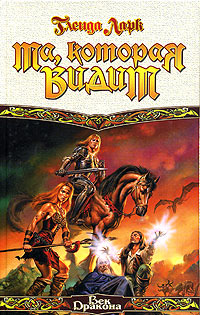 I haven’t seen the German or UK covers yet, but the Russian covers, see here, happily made Blaze brown-skinned.
So did the US covers. Well, sort-of…
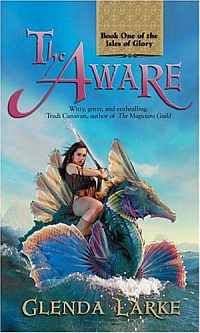 The only comment I ever had from a reader about Blaze’s skin colour was from a US reader, something along the lines that they seemed to have made her more Mediterranean in looks than South Sea Island. They understated the colour, or so that reader felt. I wonder if that was deliberate? A sort of colour-androgynization in order to make her more universal – for marketing purposes? I personally think it a nice sign of the times that it has aroused so little comment – maybe we have learned a lot since LeGuin published her first Earthsea book (1968).
However, the real idea I was trying to put across was this: that Blaze’s skin colour was only an issue in the Isles of Glory because of what it (in combination with her green eyes) implied about her. Making another point? Of course.
And how many of us are guilty of this type of extrapolation? Eh? Eh? Come on, admit it! See that guy wearing robes and and a turban walking down a Sydney street looking like a terrorist – can he possibly be an upright Australian citizen who loves his country and know as much about cricket as you do? Or what about that middle-aged white woman driving through Kuala Lumpur – she can’t possibly be a Malaysian who cares deeply for her nation, and loves to listen to classical Malay songs on her car radio, can she?
Blaze loses out because of her appearance, yet in the end, she is crucial to making the Isles of Glory a better place. So my story was making this point: outward appearances mean nothing, and we are ridiculous to penalise/judge/dislike/generalize/jump to conclusions on that basis. In the Isles of Glory, they had even incorporated the concept of outward appearance and race into the legal framework and the basis for citizenship.
We would never do anything as silly as that in today’s world, um, would we…..?
Amazon now has a Print On Demand division, called Booksurge. and Booksurge offers – for a mere a $US 399, a wonderful book review. It doesn’t matter what your book is like, the review is gonna be great. (For that price, it had better be.)
Of course, I immediately thought “Just what I need”. I mean, how could one resist such deathless prose as this:
“We are drawn into this seaboard existence, seeing the stars pronging the sails at night, the flying fish that land on deck, and even the birds that fly, unaware, into the mast,” offered by the reviewer about a book called The Last Voyage of the Cosmic Muffin.
Now let me think. If I was a POD author, just how many copies of my book would I have to think such a review would sell in order for me to get my $399 back?
And readers, if you buy a book based on a paid-for review, then I have a lovely set of twin-towers for sale, situated at the present moment in downtown Kuala Lumpur, but easily portable to a new location, bargain price…drop me an email. Don’t be put off by the fact that I live in Nigeria.
 This is a picture of a Black Panther. It was taken by a friend of mine, Lim Kim Chye, when we were on a project together over in the Pahang Peat Swamps.
(Acknowledgement: UNDP/GEF Peat Swamp Forest Project Mal/99/G31)
It is also a picture of a leopard.
That right, this is exactly the same animal, the yellow one all covered in spots, that you see drooping over the branches in an African thorn tree. In fact, it is perfectly possible for a leopard to have a twin cubs, one black and one yellow. And if you look very carefully at a Black Panther (as I did at this fellow when we tumbled out of the 4WD to take a look) y0u can actually see the black spots superimposed on a grey-black background.
When I was a kid, a long, long time back, I went through a stage of reading a lot of American/Canadian “boys’ own” style stories – you know the sort of thing, frontier stories, Indians and Mountain Men and the French wars and so on, Last of the Mohican type tales. And in almost every book there seemed to figure a shifty figure, dishonest to the bone, called the “half-breed” who absolutely couldn’t be trusted, apparently for no other reason than that he was a half-breed. No other reason seemed to be needed.
Which struck me as a little odd, but I didn’t lose any sleep over it; that type of book was considered suitable fare for a school library back then.
But somehow, the niggle must have stayed. Because one day I wrote a book about a halfbreed*. Who wasn’t shifty, and who showed herself to possess far more integrity and courage than some of the other characters who had impeccable lineages and genteel backgrounds. I guess I had something to say.
What point am I making?
When people ask me “why do you write fantasy?” in a tone that suggests I am throwing away my talent because I should obviously be writing “literary” works of great merit, this is one answer I give: So that I can make a point about things that matter, like tolerance – or point out things that don’t matter. Like skin colour.
 I could do that with a mainstream novel of course, but one is constrained by reality. Moreover, when you live in someone else’s country, in another culture, it is all too easy to upset someone. [What the hell is that foreigner doing coming here and telling us what we can and cannot do?] Genre fiction is a superb vehicle for making a point, making people think, without being crudely obvious.
Any idea how many times I was asked how or where I had adopted my kids?
*The Aware