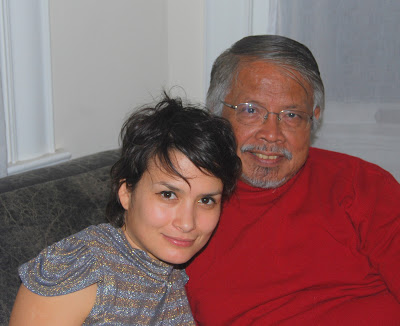
Leaving kids home alone

Read something in the US news about a mother leaving her teenage kids home alone. Now she’s facing legal action. And her oldest was 17.

Hmmm.

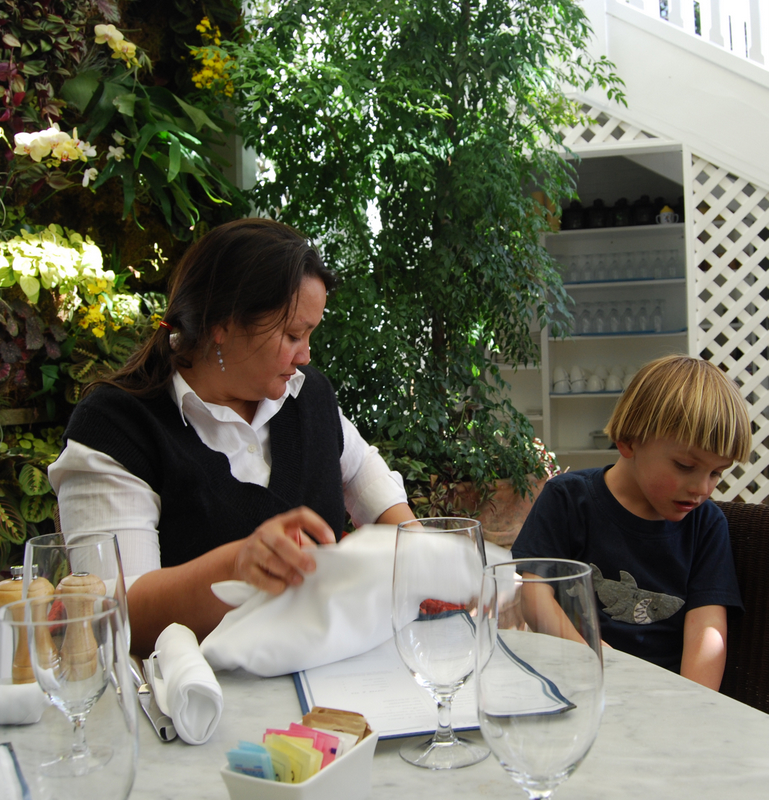
I remember going off to Morocco with my husband – he was on duty travel – in 1988. For 8 or 9 days. The girls were just turned 13, and the older 16, four months short of 17. Yep, left them alone for 9 days.

We were living in Vienna (the one in Austria, that is.) The kids were at school, so could not come with us. We lived in a row of adjoining houses and the German/Finnish couple next door promised to keep a eye on things – but they weren’t actively involved in their care. For heaven’s sake, the girls could look after themselves. My husband’s secretary kept in touch with them as well.

And you know what? I wasn’t particularly worried about them and I don’t think we did anything particularly terrible.

My own mother at age 11, back in 1914, was cooking for the family, caring for a chronically sick mother, looking after her two sisters aged 10 and 4, and schooling as well.
Here’s what I wrote to her after we got back to Vienna: “Home again and all well that I can see. N managed to remove the skin from her upper lip and chin in a fall which does nothing for her looks, and they dropped a knife onto the element of the dishwasher where the handle melted, but no other disasters…”

Of course, Vienna was a safe city. People didn’t walk around taking pot-shots at school kids, and crime where we lived was rare. In our six years there I don’t remember that we were robbed once. (Wish I could say the same about Malaysia today.) Drugs were rare in the school environment. And there were so many friends – both theirs and ours – that the kids could turn to in a fix. In addition, European children tend to be an independent lot, used to fending for themselves and even travelling to other countries on their own.

Elder daughter and her girlfriend once went by train for a weekend to Venice. I think they were 16. They found their own accommodation and meals, and fended off amorous Italians all by themselves. That’s Europeans for you.

When the older daughter was off at Oxford, we left the younger one at home again, when we went to Albania for five or six days. She was 15.

I rang her from one of the two public telephones in the capital city of Tirana, just to check how she was. The year was I think 1990. And you had to use a real live telephonist in the hotel to connect you before you could speak…

Anyway, no sooner was daughter on the phone, and before I could get a word out, than she was desperately asking after OUR safety. Were we all right? There was a revolution in Tirana!
I said, ‘Huh? You sure you’ve got the right place?’ We hadn’t had any access to the news, although the Albanians did seem upset. Italy had just been defeated in the semi-finals of the World Cup Soccer, after all…
To which she replied with a scathing: ‘Muuu-uuum!’ You know the tone.
‘Oh,’ I said, the penny dropping, ‘So that’s what all those people we saw climbing over the embassy walls was about!” And that was why the Government Minister we’d had dinner with the night before had a decidedly harrassed look, especially when he was buttonholed by a Western reporter in the hotel lobby.

We were in the middle of a revolution and hadn’t even known it.
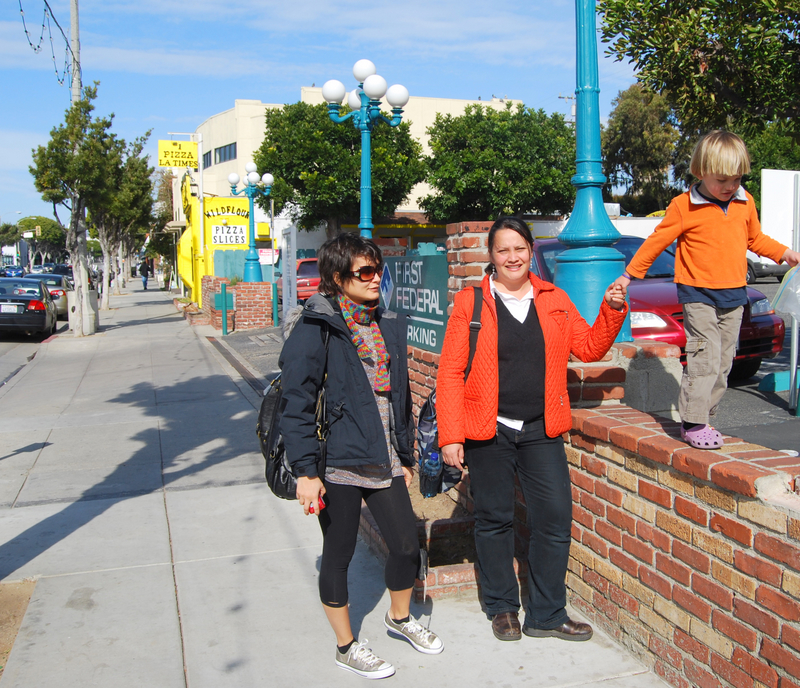
More family stuff in L.A. when I wasn’t there…


Once I lived in Kingsford, Sydney, for 6 months. The Opera House had it’s grand opening that year. My elder daughter was two and a half. She had a grand passion for walking on walls. Every time we went anywhere at all, she had to walk the walls…it made going to the shops a very slow business.

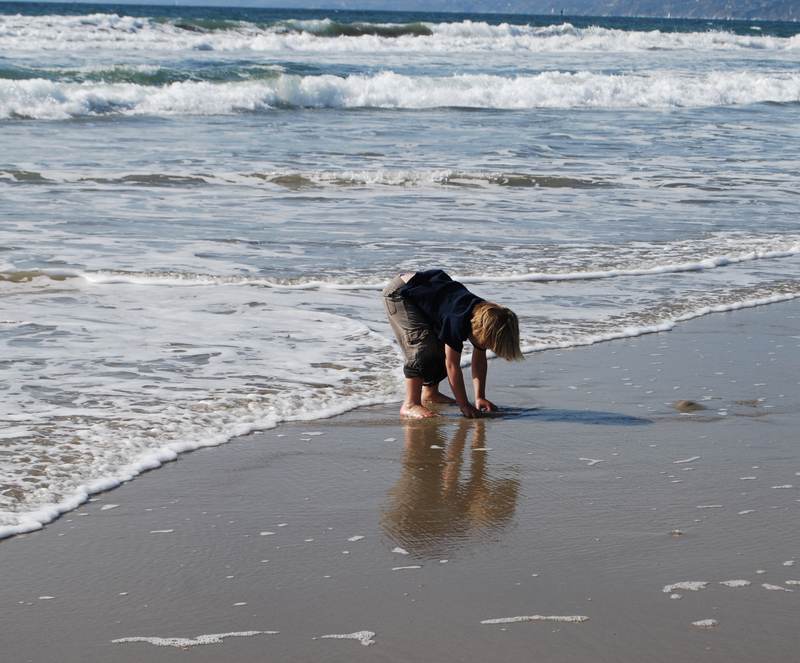
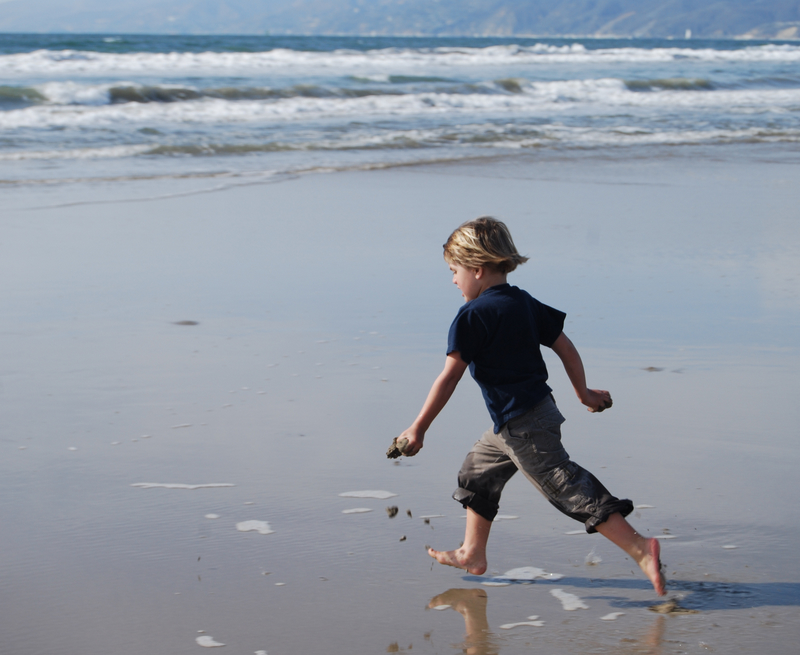
Now she has a son, and guess what…

Beach pix taken at Santa Monica.

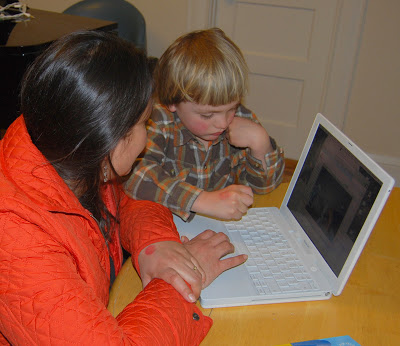
And that’s them skyping Nana in Malaysia…

Who should write reviews?

An interesting article here on an interview with John Grisham, writer of legal thrillers. Some of the things mentioned:

He got 15 rejections before his first book, “A Time to Kill,” was published.
He made $9 million last year.

He says: “I’m not sure where that line goes between literature and popular fiction.(…)I can assure you I don’t take myself serious enough to think I’m writing literary fiction and stuff that’s going to be remembered in 50 years. I’m not going to be here in 50 years; I don’t care if I’m remembered or not. It’s pure entertainment.”

And I like this point:

“When I start getting good reviews, I worry about sales (…) It’s a better day if I don’t read any reviews. It’s the only form of entertainment where you’re reviewed by other writers. You don’t see rock stars reviewing each other’s albums, and you don’t see directors reviewing each other’s movies.”

What do you think – ought we ban fellow writers from doing reviews? Hmmm…..

Saying sorry and …so when did you know?

I listened to the entire “Sorry” speech by Prime Minister Rudd of Australia over on Justine Larbalestier’s blog and shed a tear. So many bad things are done in the name of governments – even in the name of doing good, that every now and then it is great to hear an apology for one of these policies. No one can make it right for anyone, even if they are still alive. But saying sorry is the correct thing to do. It’s a start.

Back in 1964 while all this was still going on — that is, forcibly taking children away from their indigenous parents and communities, literally dragging them out of their mother’s arms in some cases, simply on the racist basis of them having some white blood, then carting them off to mission schools where the level of care and education was patchy and their religious denomination was decided by chance — back then, I was in university taking a course in elementary anthropology. The course included a unit on the culture of the indigenous peoples of Australia. It was all pretty basic.

I knew children were being taken, even then, to mission schools for education. In my humungous naivety, I assumed their parents had consented and that the children returned home for holidays. I assumed they could write letters to their families. I assumed that this was the best way for them to get an education and therefore to have a choice in their future lives. What did I know – I assumed all this, because the people who surrounded me in my youth were reasonable rational and kind and would never have treated me in any other way.

It never occurred to me that not only was permission not granted, but that these children were quite literally being stolen, and that the paper trail was obscured by name changes or obliterated, or perhaps never existed in the first place, so that when children and parents tried to find one another as adults, it was never easy and sometimes impossible.

To this day I wonder about those professors and tutors I had at university – they must have known. They did field research, after all. Why did they not tell us just how iniquitous the system was?

When I found out, I was outraged, but by then I was already living in Malaysia. And that was when I started to wonder what I could do to say sorry. Not much, really. When the previous Australian government refused to say sorry, I was furious.

And of that outrage, of that fury, one of the elements in Heart of the Mirage was born – and I wrote a fantasy novel about a woman stolen from her people and raised to despise her own culture.

The acknowledgments in the book say, in part:

Many years ago, when my own children were very young, I heard for the first time two stories, from opposite sides of the globe. One told the tragedy of (…) how several generations of children were forcibly taken from their loving, caring families to be raised by strangers. They were told to forget who they had been and where they had come from, to forget their language, their culture and their people; indeed to denigrate their very origins.

Ligea’s story is my way of saying sorry to all those mothers and their children; my way of paying homage to (…) the Stolen Generations of Aboriginal Australia. As a mother, I have wept for you.

After the book was published, the best fanmail I have ever had came from a Koori woman living in Western Australia, to say thank you. I cried then too.

There is so little one can do to repair the past.

On the dangers of being a witch.

Over the centuries, numerous religions have supported, and in fact encouraged, the torture and murder of women who were supposedly witches. Thousands upon thousands of them died in horrendous ways. (Often, of course, the religious/secular authorities made a profit out of such death – e.g. the property of the “witch” was divided between the church that persecuted her and the state that prosecuted her.) Wow, I wonder what motive they had for accusing her in the first place.

The trouble is that once accused, there was no way out.

Produce a witness to say that the witch was somewhere else at the time of the supposed crime, then the witness was obviously bewitched.
If it is proven she led an evil life, then obviously she is a witch. If she proves she led a blameless life, well, we all know witches are good at dissembling.
If she resists confession under torture, well what did you expect, she’s a witch. If she admits it, well, that proves she’s a witch.
If she seems scared, well, her conscience accuses her.
If she is brave, well, that’s typical of a witch.
And so on.

Once accused, there was never a way out. To find a witch innocent would have called into question every other case. Take a single year, 1598, in a single German town (Wurtzburg) – there were 28 public burnings of witches, each with some 4 to 6 victims.*

The last execution for witchcraft in England was in 1684, when a woman and her nine-year-old daughter were hanged. Their crime? Raising a rain storm by taking their stockings off.

Of course, we have left all this behind now. No state in 2007 would be so stupid or cruel or weird. No religious leaders or major religion or government would recommend or support such horrors, or display the kind of misogynous and weirdo-erotic elements as were found in the sexually repressed, male-dominated society of the 16th of 17th century Europe and America.

Would they?

This from the BBC news.

Human Rights Watch has appealed to Saudi Arabia to halt the execution of a woman convicted of witchcraft.

In a letter to King Abdullah, the rights group described the trial and conviction of Fawza Falih as a miscarriage of justice.
The illiterate woman was detained by religious police in 2005 and allegedly beaten and forced to fingerprint a confession that she could not read.
Among her accusers was a man who alleged she made him impotent.
Human Rights Watch said that Ms Falih had exhausted all her chances of appealing against her death sentence and she could only now be saved if King Abdullah intervened.”

* Figures/examples etc taken from Carl Sagan’s The Demon Haunted World” which ought to be required reading of every secondary school pupil everywhere.

One of those days…again.

We have a fence all around our house and yard. Entry is through a gate. Which we keep chained with a hefty padlock.

This morning husband and I tried to leave for our walk along the river – only to find the keys would no longer open the padlock.

One hour later, with the aid of wonderful neighbours from every side, and the loan of hacksaw and muscles, we were finally released, too late for the walk.

Tried to pick up my air ticket to Australia. Couldn’t find parking. Gave up. When I came home from a bookgroup meeting (Animal’s People was up for discussion), there was no power. Which is no joke in the tropics. It finally came on, and immediately set off the burglar alarm. Great.

Then tonight the power went off again…
And I discovered the disadvantage of broadband (external modem won’t work without power) and a free standing monitor (won’t work either). Sigh.

Why isn’t Malaysia proud of its wildlife?

Ask the average Malaysian what animals we have and he could probably say elephants and tigers and monkeys. He might even mention orang utan, although he could well be a bit vague about whether they are found in the Peninsular, or just in Borneo. Ask what type of monkeys, and many Malaysians would look at you blankly.

The other day I had to tell my 2 sisters-in-law, both over 50, that the little creature so common in all Malaysian gardens and kampungs is not a squirrel but a tree-shrew. It’s not even a rodent, as squirrels are. It’s active throughout the day and will even enter your house if it’s quiet enough. And yet they could not distinguish it from a squirrel – didn’t even know there was such a distinct creature.

Don’t believe me about how clueless most Malaysians are? Look here (in Malay) for the Kosmo news page, from which I pinched the pix. Kosmo, and at least one of the daily English language newspapers, has not a clue what animal they are talking about. They speak of a Spotted Leopard cub.

And yet this is the most common of all our wild cats. It is Leopard Cat – not a Spotted Leopard (or Black Panther which is the morph of the Leopard most commonly found here in Malaysia). And it is an adult, not a cub.

That’s right. These folk – who are informing the public, mind you – reckon this is a baby of the rare leopard which grows to a length of over 2 metres (7 feet) if you count the tail, and is usually black here in Malaysia. When actually it is a fully grown leopard cat, relatively common, which is a only bit bigger than a domestic puss.

In all my years in Malaysia, I have seen one leopard (see here for the encounter and a pix), and countless Leopard Cats. Go out into an oil palm estate that borders a bit of forest at night with a spot light and you practically trip over the things.

I give up.

The sublime and the ridiculous

Nice, eh? Came in the email today…
That’s for Song of the Shiver Barrens which is Book 3 in The Mirage Makers trilogy. Book 1, Heart of the Mirage, was also a finalist, but in 2006.

That’s the sublime part.
And then there’s the ridiculous.

This from today’s paper:
The religious police in Saudi Arabia have banned red roses ahead of Valentine’s Day. The Commission for the Promotion of Virtue and Prevention of Vice has ordered florists and gift shops to remove any items coloured scarlet…

Wow.
So giving your wife or your husband a red rose is a vice in some parts of the world it seems. Shades of the Scarlet Letter.

This has got to be in the running for my top award of the year for “How to Make Your Religion Look Stupid.”