On writing a query letter

.
[This is actually an idea by author Josh Palmatier. What happens is this: a number of authors are putting up an example of a successful query letter, i.e. one that either got them an agent or an editor. In other words, they post a query that succeeded. In addition, the writer might also post a discussion about how they write queries or whatever they feel might help other aspiring writers with writing their own queries.
At the end of this post there is a link to all the other blog posts on queries posted by all of the other writers.]

My advice on writing a query letter:
If you ignore instructions, you are doomed from the start.

The first thing to do before writing a query letter is to see what a particular publisher or agent wants. And nowadays that’s usually easy – you look at their website. Can you send them an email? Do they want the first three chapters with the query letter or do they want the query first?

Don’t send a two page query letter if they ask for one page. Don’t send it as an email attachment if they ask you not to. Or maybe they are a publisher who doesn’t want a query from anyone but an agent? Then don’t waste your time sending one. Different countries have different ways of doing things too; don’t expect to use the same letter to appeal to an American agent and a British agent…

Back in the days when I started querying, in the late 1980s, finding the prerequisite information was harder. There was no internet. I used the UK Writers’ and Artists’ Yearbook, ran a finger down the columns of agents to the first one that said they were looking at fantasy, and sent off a query letter.

The letter below was more or less it (and you are going to tear your hair out in frustration knowing that anyone could get anywhere with something like this – but back in those days quite frankly there wasn’t as much competition. You know what? – When you had to type an MS, fewer people actually ever finished a book…) :

Dear (agent’s name)

Please find enclosed the first three chapters of a completed a fantasy novel of 90,000 words, entitled* Blaze Halfbreed. I hope you will consider reading the whole novel with a view to representation.

I am an Australian teacher presently living in Vienna, Austria. My only previously published work has been non-fiction articles for nature and travel magazines.

Thank you for your consideration.

Yours sincerely,

….
* Some purists insist that you can’t use entitled in this context. They are wrong. Entitled not only means what is due to you, but also the designation, or title.

Yep, that was it. I suspect this kind of query letter will not get you far today. The book, btw, became somewhat longer after agent and editorial advice, and was changed from a standalone to the first book of a trilogy. It was eventually published as The Aware, Book One of The Isles of Glory. My agent was the first person to ever read it, other than myself.

Nowadays it pays to add some kind of a hook to get the agent or editor interested in reading those three chapters – but I would still keep the rest of the letter short and pithy. At this point in your relationship, an agent or editor is not interested in the fact that you work as a trapeze artist or an ambulance driver (unless of course you’ve written a book about a cowardly trapeze artist or a traumatised ambulance driver). I included the bit about the non-fiction publications merely to show that I can write professionally enough to be published. No details, because I doubt the agent would have been familiar with the magazines involved. If I’d written for a well-known international magazine, then I would have added “including Playboy” or whatever.

If you want to know how to write a query letter with a hook, then look at the archives of Pub Rants or Miss Snark. In the end, though, it will be your book that gets you an agent or a publisher, not your query letter. And it is better to expend your energies in writing that irresistible first chapter than agonising too much over a letter. One good sentence or a short paragraph that tells the reader enough about the book to intrigue should be sufficient. Don’t try to summarise the story!

Something like this might have done the trick for “Blaze Halfbreed”: When you can’t legally stay in one place for more than three days because you lack citizenship, you have to be special to earn a living – or indeed to stay alive. Fortunately Blaze is special. She not only wields a large sword, she can physically see what few people can: magic.

And here is the list of other authors who will be posting their own query letters sometime today – and theirs will probably be much more up-to-date and relevant to today’s situation than mine.

Paul Crilley
Chris Dolley
Diana Pharaoh Francis
Gregory Frost
Simon Haynes
Jacqueline Kessler
John Levitt
Joshua Palmatier
Janni Lee Simner
Maria V. Snyder
Jennifer Stevenson
Edward Willett
David J. Williams
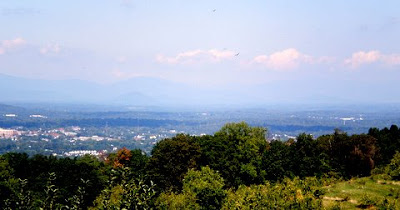
Charlottesville

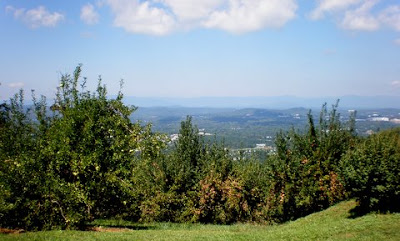
If you haven’t been to Charlottesville, Virginia, you are missing a treat. It is one lovely university town. Last weekend we went up into the hills to pick apples, and the view from there shows just how the large town conceals itself in vegetation…Those hills on the other side of the valley are the Blue Ridge Mountains, and the next valley over is the Shenandoah.
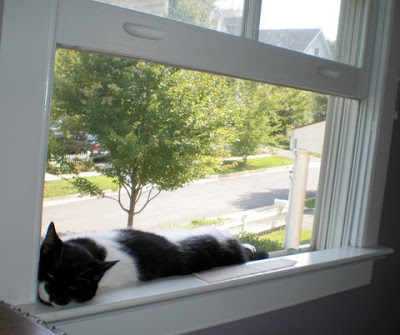
If you look very carefully at the bottom photo you will see a number of black spots in the sky – these were Turkey Vultures circling on the thermals.

Tomorrow tune in for a post on writing a query letter…with a successful example and lots of links.

More on language…

A while back, I mentioned a discussion about coping with words that were “foreign” to me because, as an Australian farm kid growing up in the forties and fifties, with no access to TV (let alone the internet!) and rarely going to the flicks (movies), so much of what I read was indeed foreign.

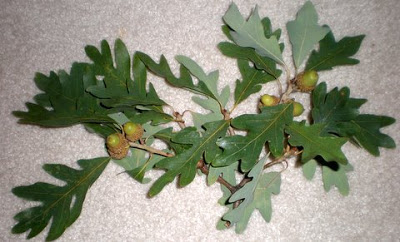
I never saw snow, even in the distance on mountains, till I was 20, and I never saw it snowing until I was 36. I never saw an acorn or an oak tree when I was young.

And sometimes that led to odd perceptions. I thought chipmunks were as big as cats and groundhogs were more the size of kittens. I thought snowflakes were at least an inch long (hey, that’s the way they are often depicted in kids picture books!). I thought the Mona Lisa must be a huge picture. And I thought an acorn would be as long as my thumb instead of more the size of my thumbnail.I remember my husband discovering after he arrived in Australia that strawberries didn’t grow on trees like mulberries, or even on bushes like raspberries. And when I pointed out the Southern Cross to an American friend in Malaysia, her astonished exclamation was, “But it’s so small!”

This past week I saw my first groundhog – in fact, I saw two, at different locations on the same day, so I finally cleared that one up.

This kind of mistake is growing more and more rare, of course, as we become more and more visual through the media, and it has become so easy to look things up. What mistakes did you make as a result of learning something through reading, but not seeing it?

Language

Russell Kirkpatrick had an interesting post over on his blog last week, about a list of words he obtained from a book he was reading, a list that a reader of that book had trouble understanding. Russell asked how many of these words we knew without having to look them up. Read his blog here to find out how he came by the list.

I particularly liked his remark in the comments section too: “I guess authors have be careful at what level they pitch their vocabulary. A reader doesn’t want to be constantly looking up words in the dictionary. But if we all write for the lowest common denominator, some lovely and powerful words will be lost forever.”

Here’s the list:
crammer’s
haled (as in ‘haled him home’)
collateral
solecism
lard (as in ‘with a needle lard each tenderloin’)
ascertain
commissariat
omelette aux champignons
transmigration
insoluble
mot juste
gravamen
asseveration
messuages

supercilious
celerity
basilisk
en casserole
succes de scandale
perjured
morale
bradawl
votary
truite bleu
appetising
anticipate
coy
Plimsoll mark
inept
Paradise enow
moratorium
nub
aural
whilom
incessantly
heliograph

The ones in the red are the ones I did not know. The blue ones are either the ones I sort of knew but didn’t quite get right, or ones I guessed wildly at, and got accidently right.

I note that one commentator on Russell’s blog said she got them all right – which was pretty impressive.

Anyway, it highlights a problem that we writers have – do we make concessions to our readers with the choice of our vocabulary? Use long and difficult words when short simple ones will do and we are accused, quite rightly, of being pretentious. However, there are times when a more difficult word is exactly right in that context. And so I use it, knowing that many of my readers will not understand it.

I look at it this way: most of us have learned the more unusual words in our vocabulary by reading them. Reading, not listening, is in fact the reason I have an extensive vocabulary. [Maybe that is not so true now with the present generation who get to listen to TV a lot more than my generation listened to the radio. I wonder, though, if TV extends vocabulary the way reading does…other than it puts the watcher in touch with recent trends in catchwords, technology and slang.]

And so my hope is that if a reader does not know a word when they read it, they will either guess its meaning from the context, or they will look it up, and either way they gain a new word.

Of course, sometimes a disparity in the writer’s vocab and the reader’s recognition leads to confusion. As I think I have mentioned elsewhere, my copy editor read the sentence “She feathered the oars” and asked me why the oars were covered in feathers? And a mention of someone being in the van of the army led to the query: How come the army had vans? What sort of vans did they have in those days?

Back to work

Grandson started going back to pre-school yesterday. I was too sick to do anything, but today I start working again in all seriousness.

On July 13th, my word count was 100,000, or 55% of the supposed total of Book 2 of the Random Rain cycle. I’ve actually done quite a bit of writing work since then: another rewrite of Book One, and another draft of those first 100,000 words of Book Two, working through it from beginning to end. And to give you an idea of what happens between draft one and draft two, here’s the new word count for Book Two. And remember, I probably cut a couple of thousand words out too.

So now it’s back to serious work. From next week, I have a clear four to five hours a day…

No blog today

Godda cold. Miserubble.
So I leave you with a thought.

If you would not be forgotten as soon as you are dead, either write
things worth reading or do things worth writing.”

Benjamin Franklin

Things I learned this week, or how to greet someone while sitting on a camel

1. Taxi is probably the most international word in the world today.
Followed closely by: sex, ok, pizza and chai.
The latter will apparently get you a cup of tea from Bangladesh to Russia. It might even work in Malaysia. Although, be warned, in a number of places it might not be the cuppa you are used to.

2. In Sardinia, there used to be a woman in every village called the acabadora who would put the sick and dying out of their misery with a little hammer. The last reported incident was in 1978.

3. The all-American gesture of the high five actually originated from Prophet Muhammed and his followers in 6th century Arabia. It was the easiest way to greet someone when sitting on a camel.

Don’t you just love the internet? My younger daughter sent me the link to interesting and totally useless cultural stuff like that, see here.

And what have I learned on my own? The fascinating fact that farting is the favoured subject of conversation in four-year-old boys, ranking up there just behind their interest in having mac and cheese for lunch.
Every day.

Sigh.

Looking in from the outside

I have a personal stake in the future of the United States. My grandson is an American. So is my son-in-law. My two daughters live there.

In another less personal way, I have a second stake in what the future holds for the USA, and that is this: I live on this planet, and what the USA does counts. It counts with everyone one of us because it is a big, wealthy country with a great deal of power. It counts in just about every way you can think of: environmentally, commercially, militarily, scientifically, etc, etc. And so I want it to have a responsible leadership – someone who thinks very carefully about of the consequences of the use of military force or of its trade policies, international relations, education policies. (In fact the weight of the responsibility that falls on the shoulders of a President of the USA is unbelievable – and I wonder why on earth anyone would actually WANT such a job…?)

So I have watched the selection of the Republican presidential candidate’s running mate with appalled fascination. A man who is 72 years old with a slew of known health issues may live to be 90, sure – but the odds that he might die in office – if he is elected – are obviously higher than younger men, or men of his own age with a clean bill of health.

Now in most countries that wouldn’t really matter. You’d have another election, or the second in command, someone already elected to the national governing body and probably elected to the post by his fellow party members, steps up.

In the USA it does matter. It matters a lot. Because in the USA a President who dies in office would have elected by his single vote the next President of the United States. (And you folk from the USA don’t know how utterly weird and undemocratic the rest of the world thinks that is!)

When I look at Senator McCain’s choice of a running mate, I am enormously fearful. Sorry, no matter how hard I look, I can’t see in Sarah Palin someone who is anywhere near being qualified to be the President of the USA. Of course, it’s only a remote possibility it would ever happen, but it makes me tremble already.

And, of course, I have absolutely no say in the matter.

I Love the Internet

Over the weekend, I accessed the internet, standing up, at a slow, old computer the size of a small elephant and much prone to crashing (with what looked to be one of the earliest versions of blogger possible) and wading through things hordes of acronyms like WEP, DNS, DHCP, WPA, ISP, IP, cmd, TCP, not to mention mysterious words like ipconfig and ping. I have followed numerous esoteric (to me anyway) suggestions made by people who gave of their time to help in attempts to diagnose what was wrong with my laptop connection to the internet. Unfortunately, often the answers I got back from running diagnostics made as much sense to me as the acronyms. Less perhaps. Try Ancient Egyptian or basic Hittite.

In the end, I don’t think it was anything I did (except ask it one more time to automatically find my IP and the DNS for the network connection) that solved the problem as abruptly as it had started in the first place. Both times, the server went down (for everyone in the house) beforehand.

I guess I’ll never know what it was all about, but one thing I did have reaffirmed. There are wonderful people out there in the Web. People who will give of their time for others for no remuneration except my grateful thanks. You rock, guys.

P.S. And Khaldan – as I read your first comment, before reaching the end, I couldn’t believe my eyes. Hrugaar had suddenly acquired geek status??