.
Jo asked a couple of questions on the comments section of the last post, and here’s the answer to one of them:
Why do some books come out in hardback and others in paperback?
And with paperbacks, why is the size different? Why sometimes in “trade” paperback, that’s the larger sized paperback; or A format – the smallest size?
The first thing you have to understand is that this is never the choice of the author. We take what we can get. The publishers make this decision and it’s based on economics – commercial reasons, i.e. what is going to make them the most money.
It would be rare these days for a first-time fantasy author to come out with their first book in hardback. It can happen – but rarely. The publisher wants to be sure they have a success on their hands before they produce a more expensive edition. Yes, they can sell a hardback for more money, but the profit is going to come from numbers, and they can lose more too if they don’t reach the magical break-even number of sales. Trade paperbacks are inbetween – yes, they will cost more, but once again the profits are better as long as you get the right number of sales.
So they want an author with a proven track record for sales before they will opt for trade pb or hardback. This is why you sometimes see a trilogy start as a paperback with book 1, it sells like hot cakes, and book two is out as a trade paperback or even a hardback – and you have to wait and wait for that mass market paperback which will match your copy of book 1.
Got that?
Of course, there are exceptions. A publisher might want to throw a lot of money at a new author they think is going to be a hit, and in a way this can be a self-fulfilling prophesy. Put the book in hardback, buy space at the front of the bookstore, advertise a lot – and you up the chances of having a best seller.
Every author wants to be in trade or hardback because they get more per book too. And they get a second round because the book will be re-issued in a mass paperback, at least if it was a hardback first.
And why are people prepared to pay more and buy that hardback? Because they guess it will be a “keeper”(a book you will re-read and/or pass on the the kids) and hardbacks keep better (they usually have better paper as well as better binding). And maybe because they can’t wait for the paperback to come out – they want that particular story from that particular author now!
Topical books that are going to be quickly out of date are usually paperbacks; textbooks that will keep going for years are usually hardbacks.
Children’s books are often hardbacks because kids are hard on books… I suspect YA are more often paperbacks because they are easily stuffed in a bag and read anywhere. (Just guessing with that last one though.)
So when a fantasy author comes out in hardback, you can be pretty sure they are popular and sell well. And same with trade paperbacks – the author is probably doing better than the one who never sees a trade. The USA is fonder of the really small size pb than UK or Oz. No idea why.
We authors also believe that when your name is bigger than the title, then you are becoming a “brand” – i.e., your name is a big factor in the selling books, not just what the book is about.
Note: compare The Last Stormlord, Oz cover v. UK cover, over in the sidebar. I am better known in Oz – and the name is larger than the title. It never used to be!
.
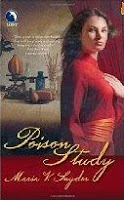
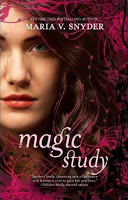
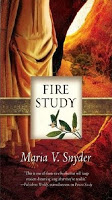
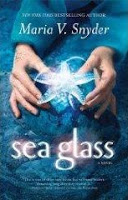
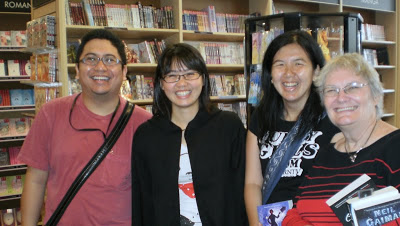
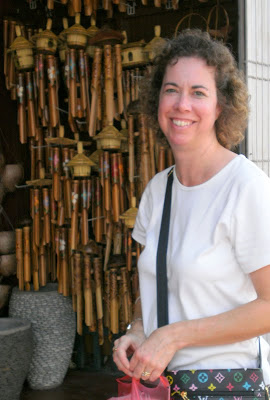 Above is Maria, looking remarkably cool in spite of 90+ degree temperatures and 90% humidity.
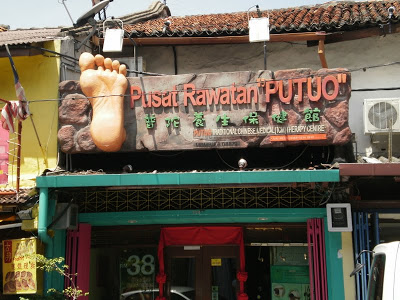
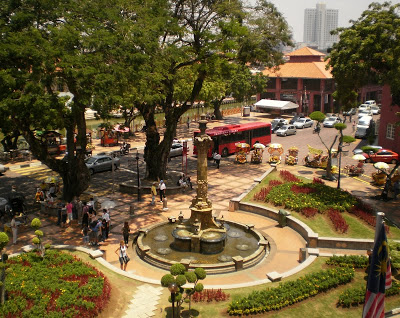
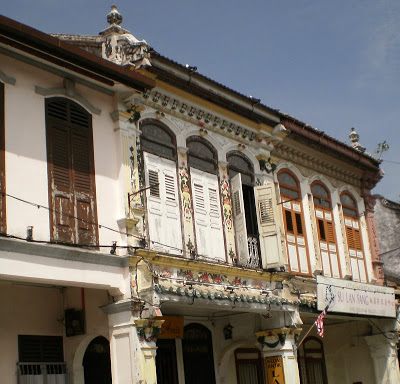 And here are some of the photos of old Melaka – a city that still has structures standing from the Portuguese era (they arrived in 1511) and where the old Dutch town square still stands. Above are some of the ornate Baba Chinese shophouses, below an interesting shop front.
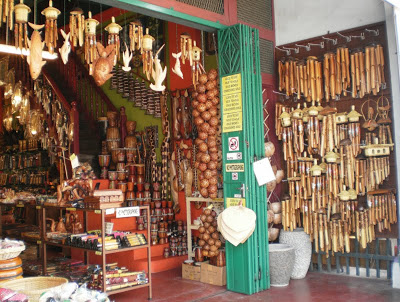
 Below: A shop specialising in wooden & bamboo & rattan handicrafts
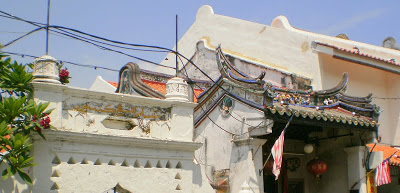
 Below: An old Muslim tomb and Chinese architecture, side by side
 Below: a decorated trishaw or beca.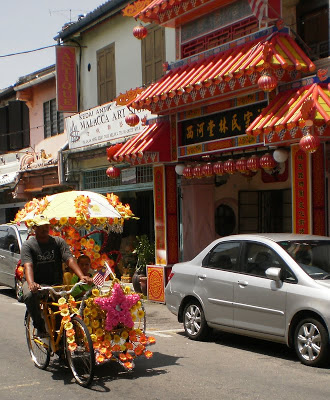
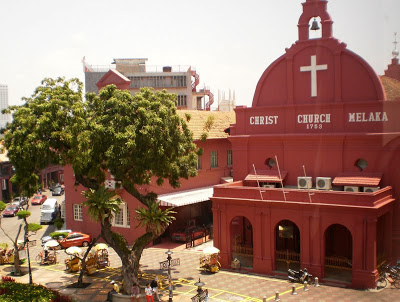
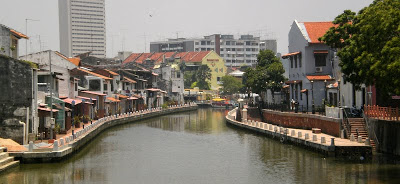 And on the town square, what used to be the Dutch Reform Church before being appropriated by the Brits. That red colour is an approximation of the original colour of all the Dutch public buildings here.
 I had a wonderful day – talking writing with a talented, successful novelist and at the same time pottering around an interesting old city, collecting ideas…my idea of heaven.
 Poor Maria, though – she had a 37 hour journey ahead of her just to get home!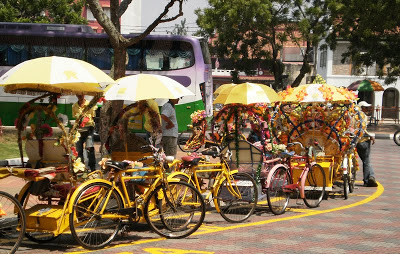
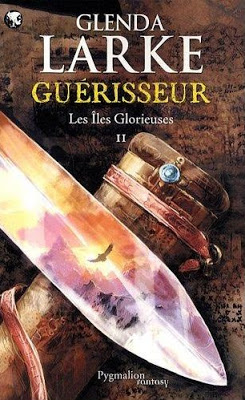 As a consequence, we have a new look and reissue of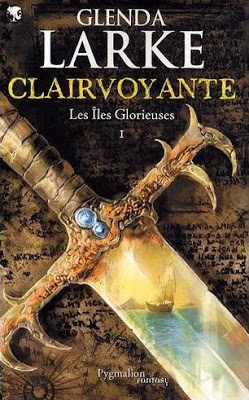

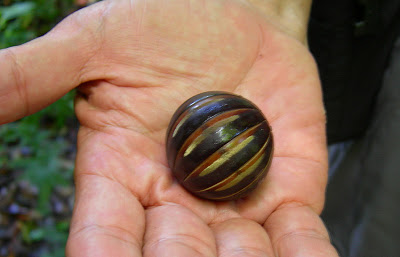
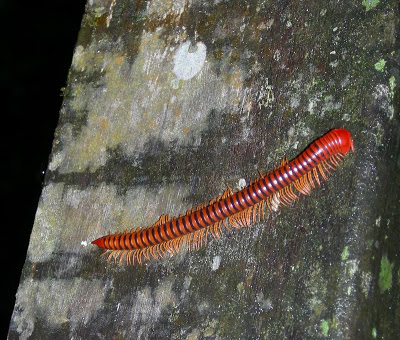
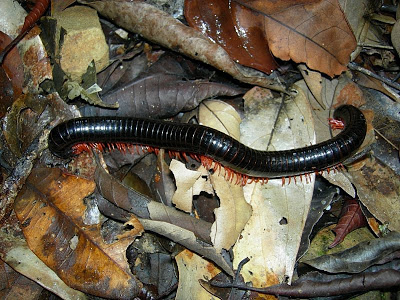 So the answer is: the Malaysian rainforest.