Temples and Trees

As an environmentalist, I always get a bit of a kick when nature wins out over man. Nowadays it doesn’t happen too often. 
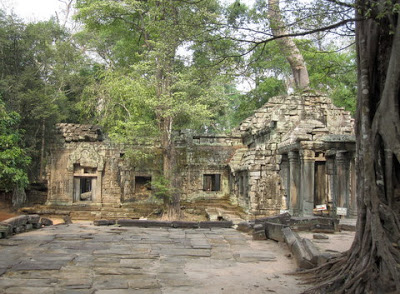
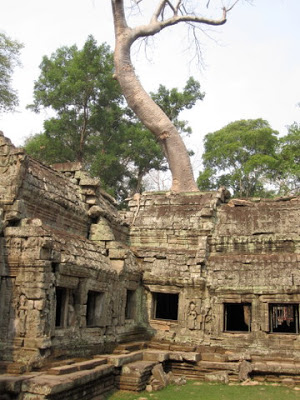
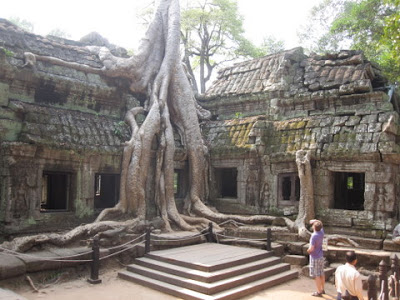
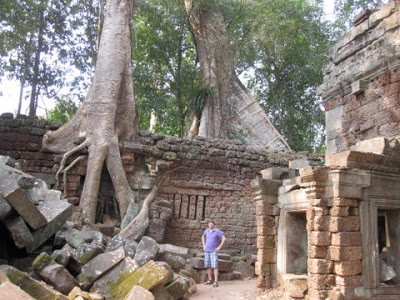
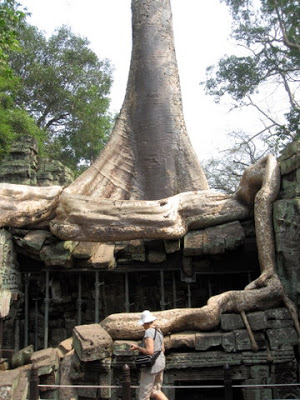
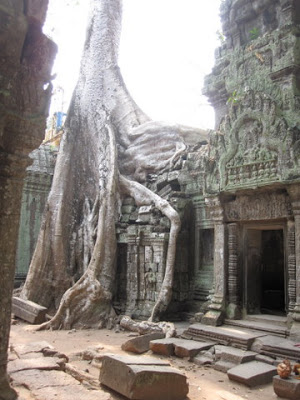
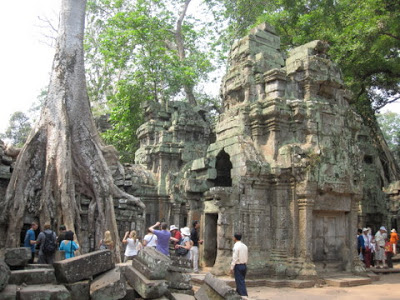
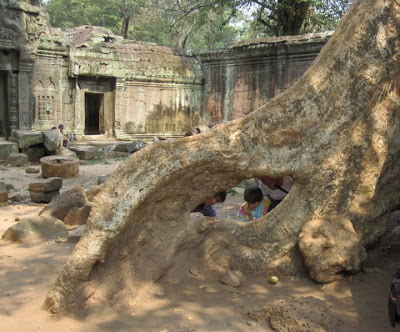
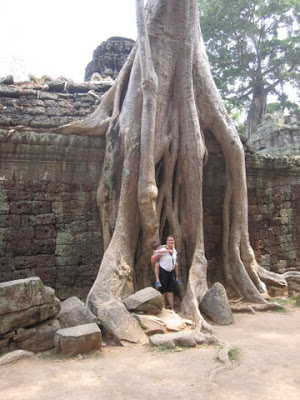
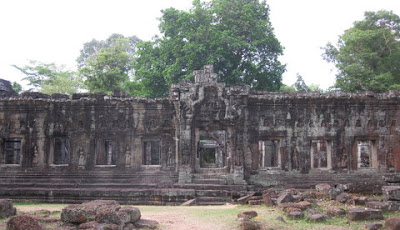
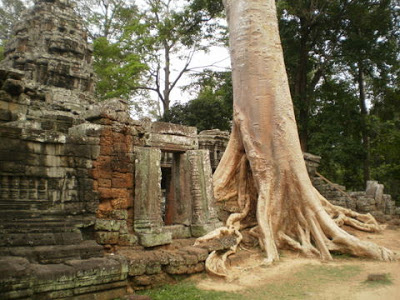
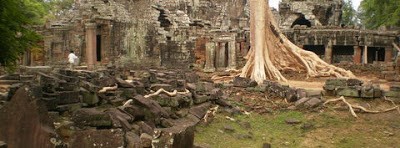
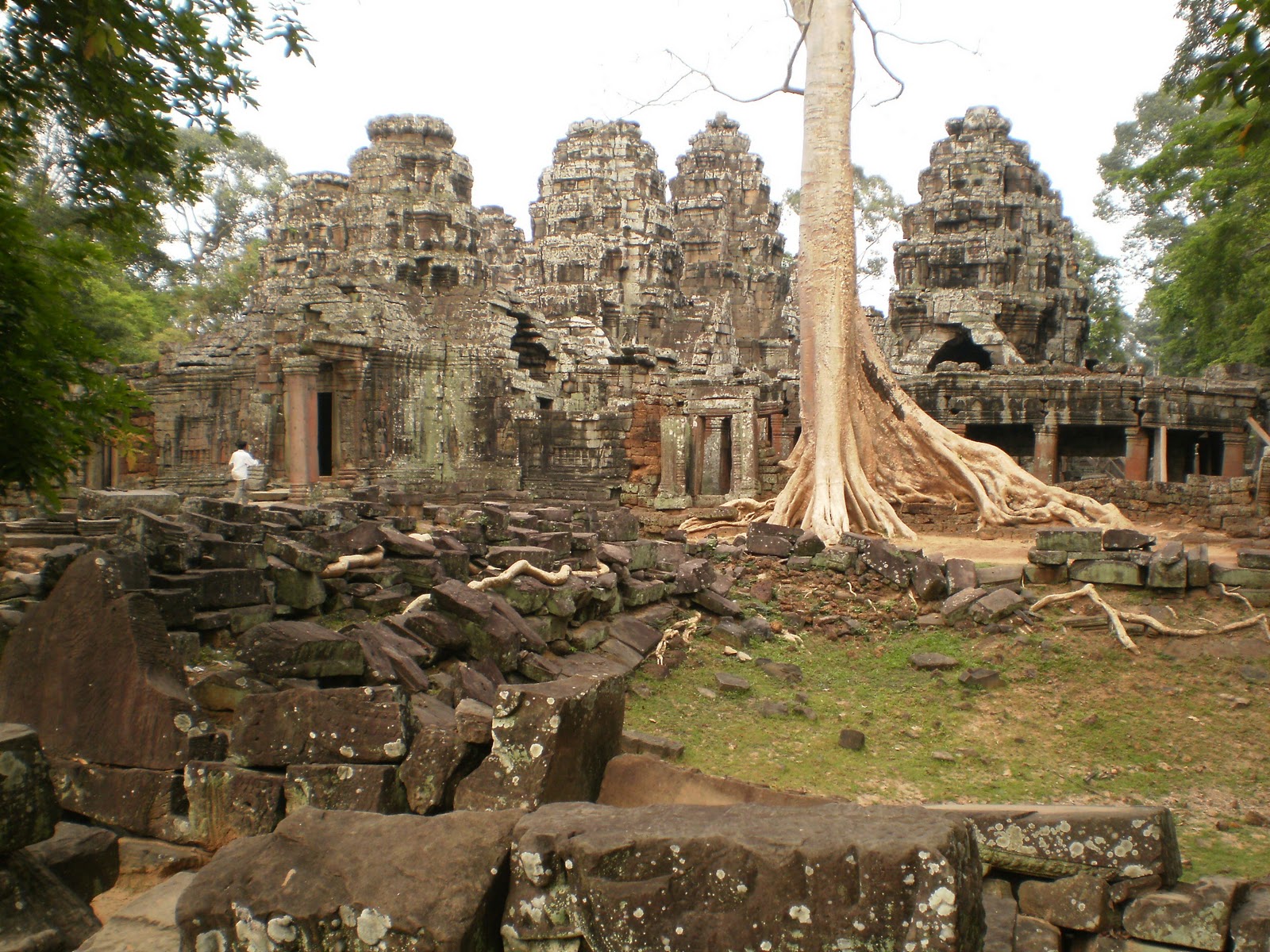
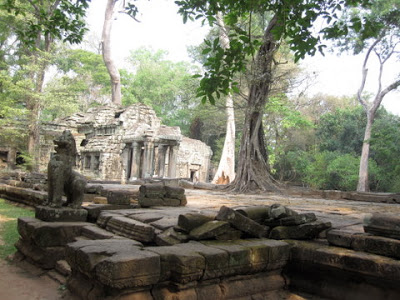
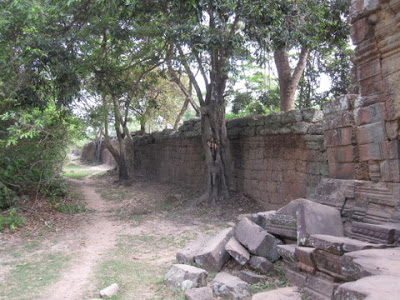
At temples like Ta Prohm in Siem Reap, a thousand years or so has wrought a few changes, and the result is a magnificent juxtaposition of arboreal determination and not entirely immovable stonework…
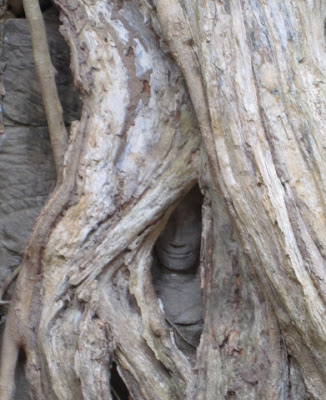
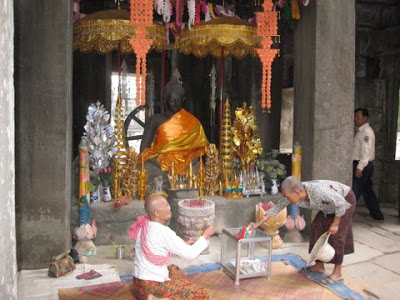
This one I particularly love, with Buddha still managing a smile…

The Temples of Siem Reap, Cambodia

We arrived in Siem Reap in the afternoon, but still managed to see several temples by nightfall, because my daughter had pre-booked guide, driver and van for the seven of us – surely the ultimate way to see the area. If you don’t have a guide, you certainly need to do an immense amount of reading beforehand to make sense of what you are seeing.

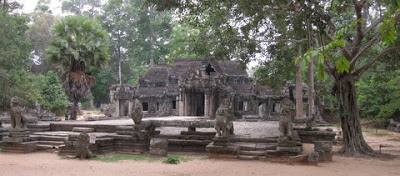
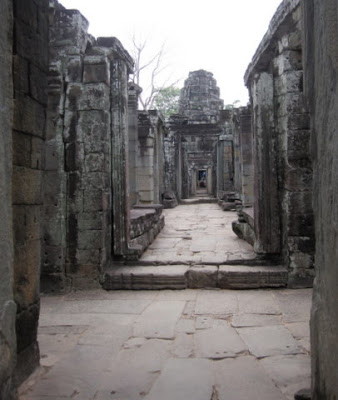
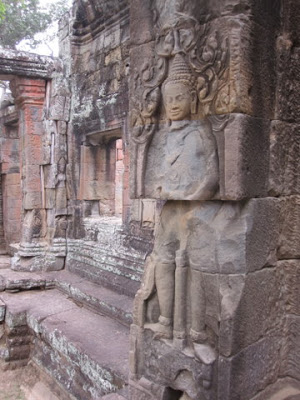
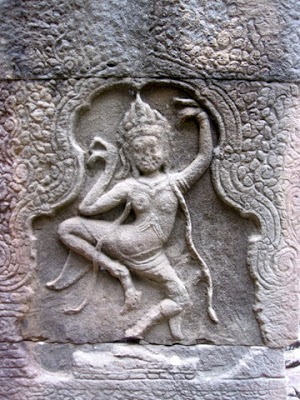
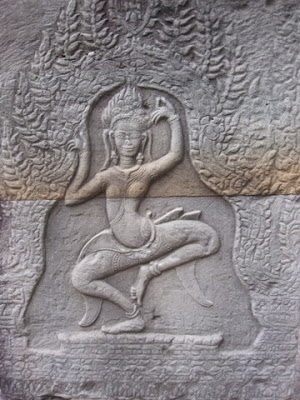
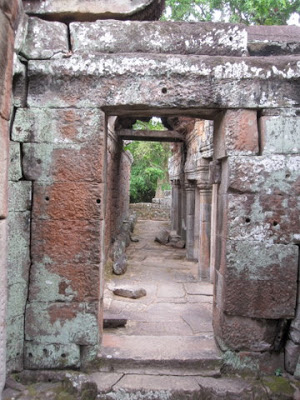
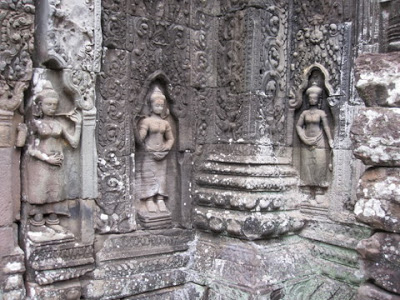
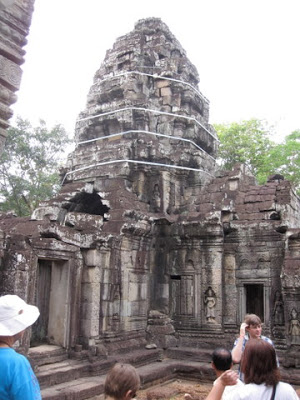
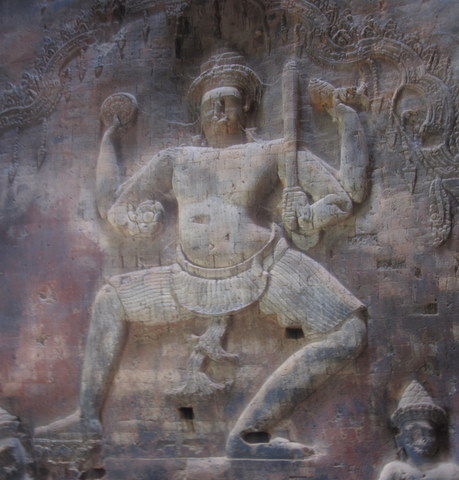
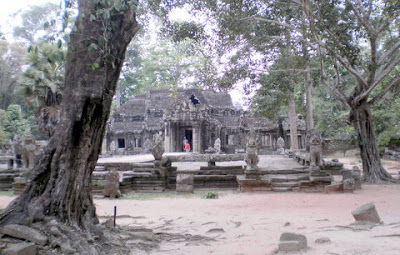
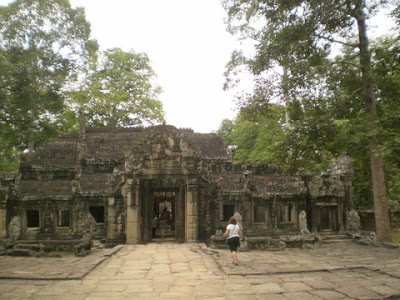
On our first day in Siem Reap we visited, among others, the fascinating temple of Banteay Kdei, a labyrinth of buildings that open up one after the other just when you thought you’d reached the end. This place is famous for its dancing girl wall carvings.

The first thing you have to understand…

…about “Angkor Wat” is that it is just one temple. People say, “We are going to see Angkor Wat”, but in fact what you do is go to Siem Reap and see dozens of temples (there are something like 200 of them around). Most of them have at least one different thing to offer of interest that the large structure of Angkor Wat does not. They are all from different periods, built over a period of five hundred years or so when the Khmers were the on the top of the heap in a cultural and empire-building building sense.
The era ended when they moved the capital from Angkor Thom to Phnom Penh in the early 15th century, possibly because their agricultural system was inadequate for the population at a time when they were being constantly raided by the Siamese.

The second thing you have to understand is that

…many of these temples were not finished, as the current monarch had different plans to the previous one. Not all were built as temples to the same thing – it all  depended whether the guy in charge happened to be Buddhist or Hindu. Nowadays, as the country is overwhelmingly Buddhist (odd, then, that the Khmer Rouge were the very antithesis of Buddhist philosophy, the most vicious anti-religious killers of anything and anybody), you will find present day Buddhists worshipping inside these temples today, even when they may be surrounded by Hindu icons.

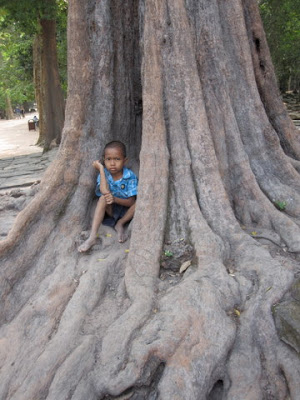
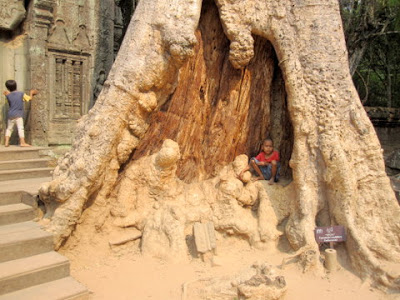
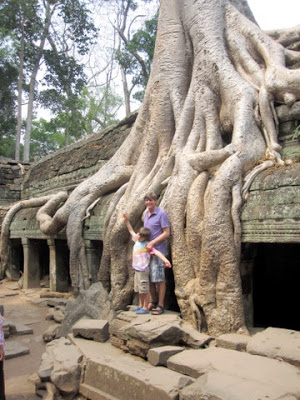
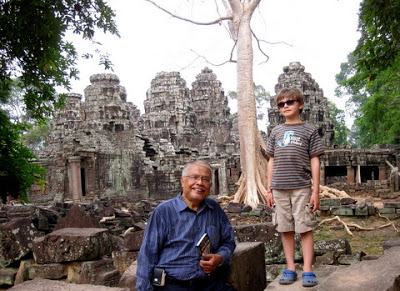
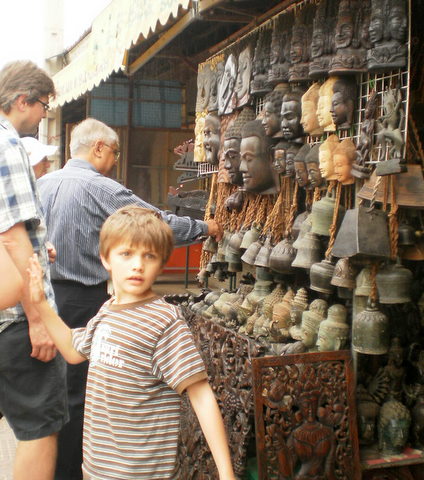
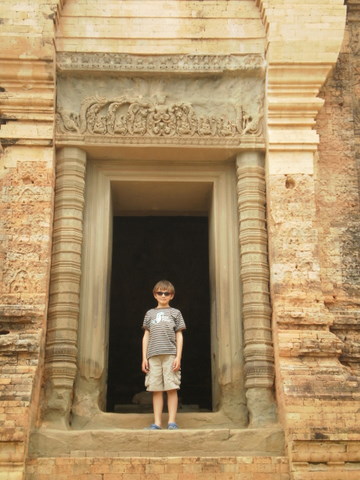
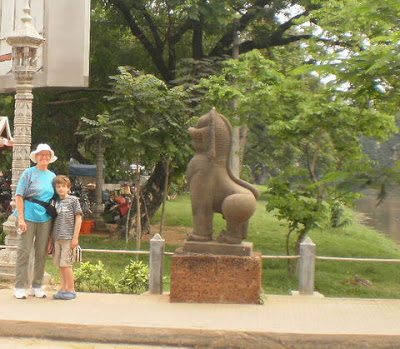
Granddad and grandson
 The third thing you have to understand is that

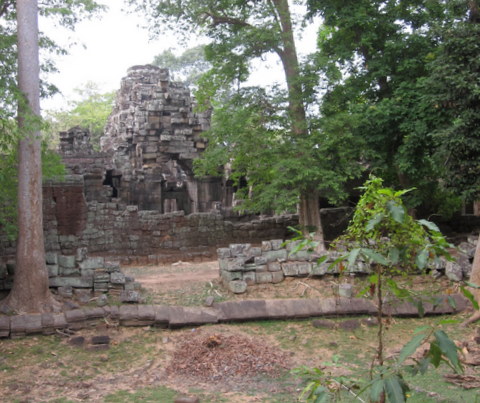
…some temples are surrounded by walls, which enclosed a huge area of which only part was the actual temple. Other essential parts were the library, or even multiple libraries (separate for monks and commoners), armories, places for dancers and for warriors. Wooden buildings that housed these populations have all gone; only the stone public buildings remain.

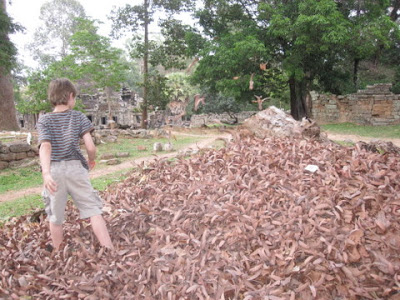
And when you get tired of temples, there’s always leaves.
These leaves are from dipterocarps, their winged seeds designed to spin down like torpedoes.

The fourth thing you have to understand is that the problem of restoration – or even of just managing the status quo – is way beyond the ability of Cambodia, and even with UN supported projects it’s an uphill battle. Nature loves to encroach, and time tumbles even things built of stone.

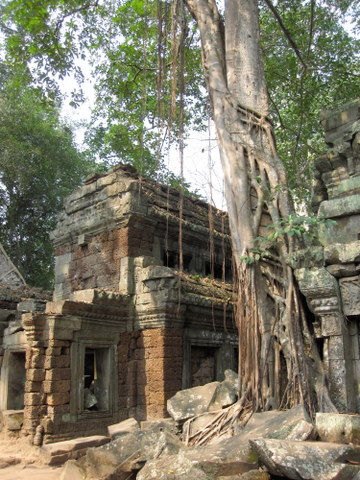
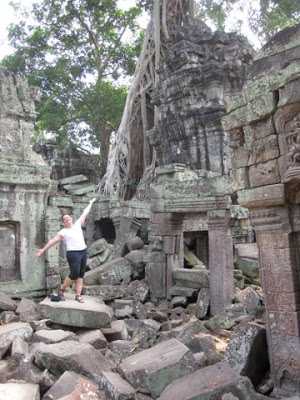
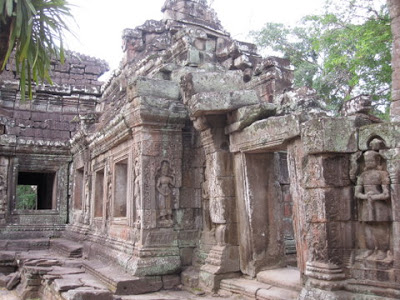
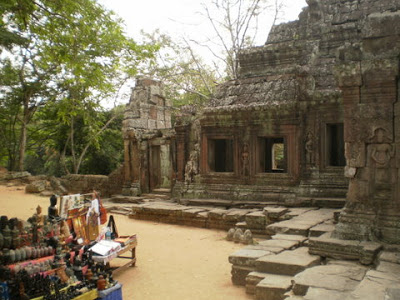
Note the way the stones have been tied together by restorers
Note the way the roots wind their way through the ruins…

Old Markets and Ancient Temples


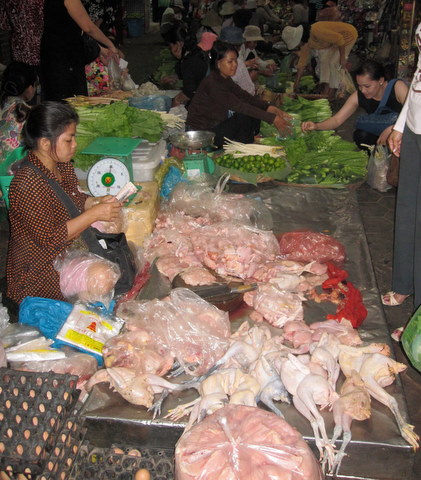
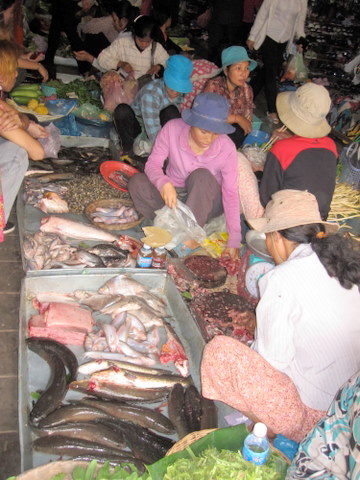
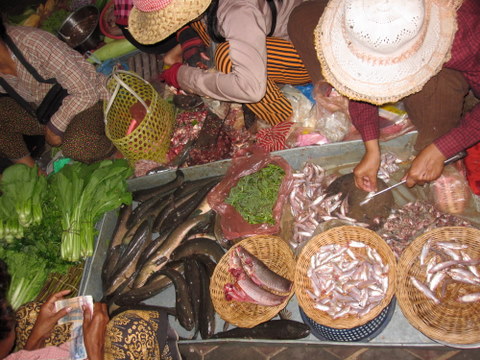
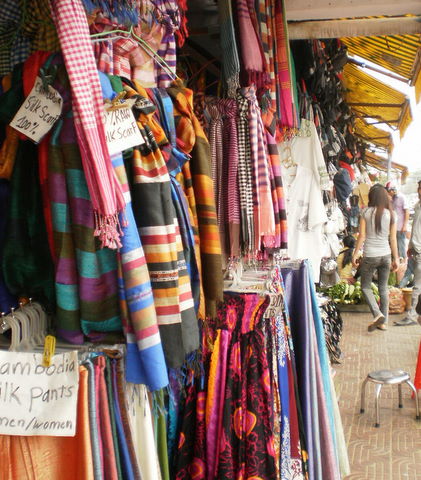
The Old Market in Siem Reap has everything you could possible need, from silks and carvings and paintings to fresh fish and kitchen utensils.
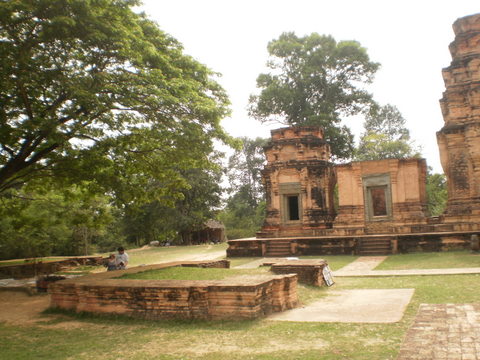
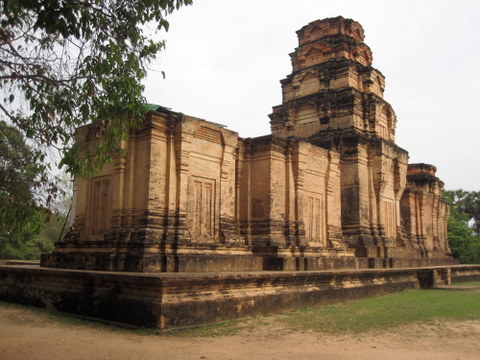
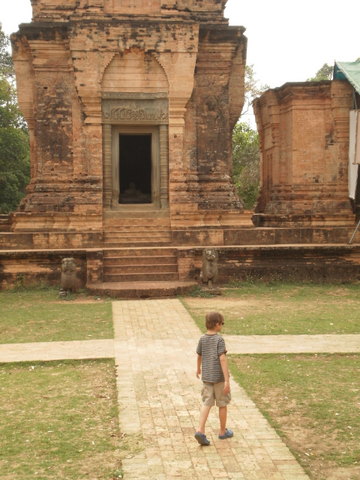
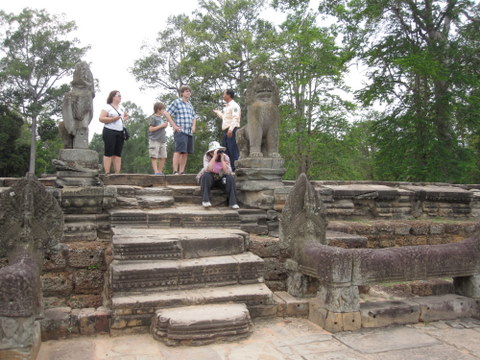
But interesting as it is, people come to the area for its temples. We started off at this one below – dating from the 900s – a Hindu temple that was never finished. And, in this area, both those things are the norm. Cambodia may be 90% or more Buddhist now, but where the past is concerned, worship changed from one faith to the other with stunning frequency.


When Hindus reigned, tax money went relentlessly to temples celebrating the Hindu pantheon. When the next ruler was Buddhist, the Hindu temple was stuffed with statues of Buddha. And so life went on, religious cycle after religious cycle.

When one king died, the next often abandoned the temple being built by his predecessor and started his own. There are an amazing number of unfinished temples!

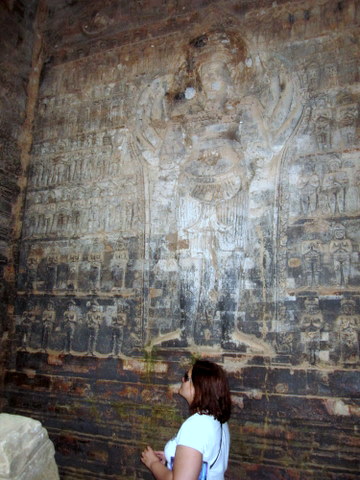
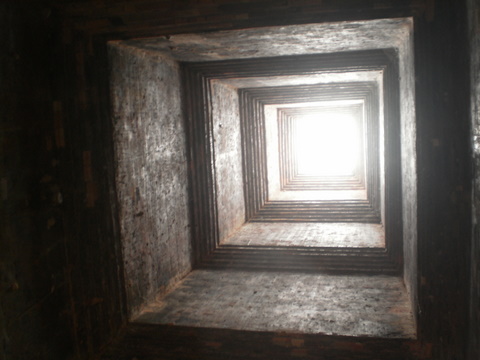
Inside, looking up…over a thousand years of stonework


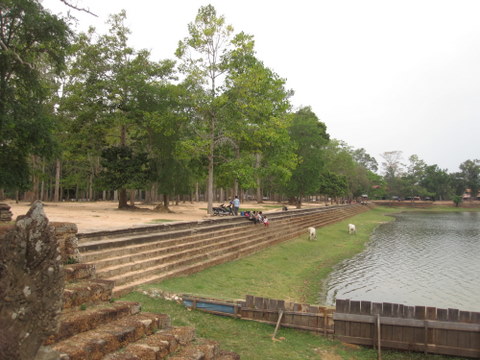
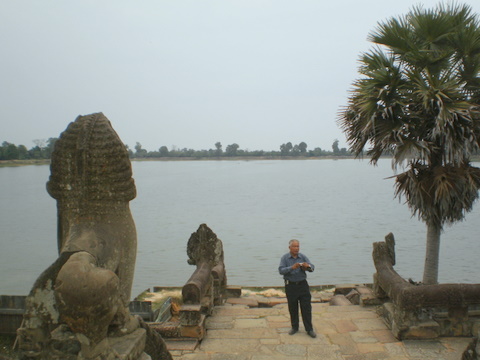
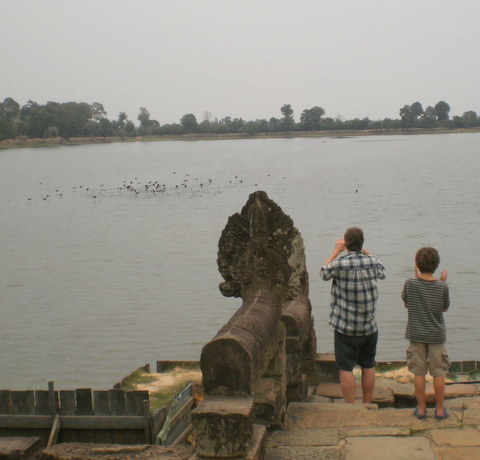
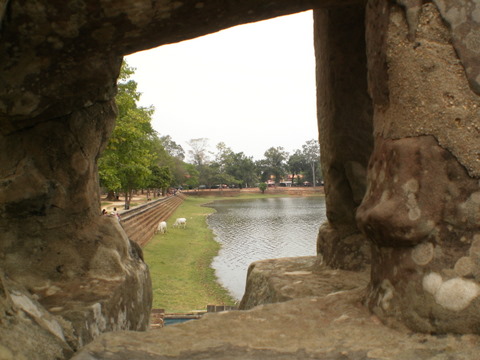
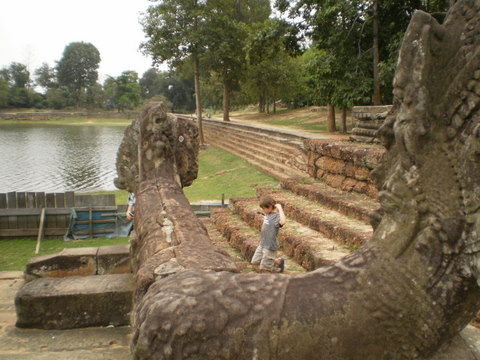
Not far away from this ancient temple there is a lake. Well, not a lake, actually – it’s the king’s baths with stepped sides, artifically created, once the playground of 300 concubines; now home to a whole lot of Little Cormorants and the drinking trough for some cows… (O, shades of Ozymandias…)

As you can see from one photo: for me, identifying the local avian life wins over listening to the chat from the guide. Interesting, though, to consider that this civilization was sufficiently organised and prosperous to produce this kind of artwork, temples and swimming pools, at a time when Britain was as yet mostly without its castles and cathedrals.

Travels with my relatives

Ranging in age from 6 to 70, and consisting of two Americans, two Australians, a Malaysian, and one who is some way or another all of those nationalities, set out on a holiday.

Yep, the Noramlys were travelling again – this time to Siem Reap. That’s Khmer for “Siamese Defeat”, and it is the town that harbours Angkor Wat within its immediate vicinity. The reason was to celebrate a special birthday: the proverbial three score years and ten. (Not mine…yet)

And so for the next few days you are going to be swamped by photos of a family holiday… if they bore you, come back to the blog over Easter (when I shall be blogging from Natcon 50 held in conjuction with Swancon in Perth. Of course if you had any sense, you’d actually BE THERE.)
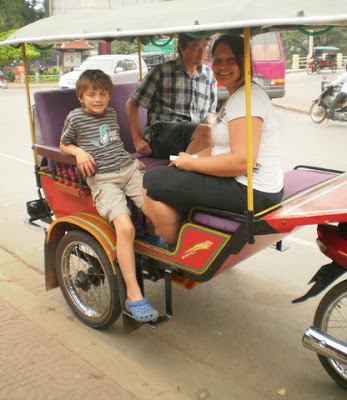
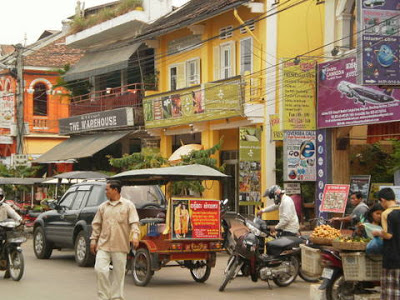
A tuk-tuk, Cambodian style
Near the old market
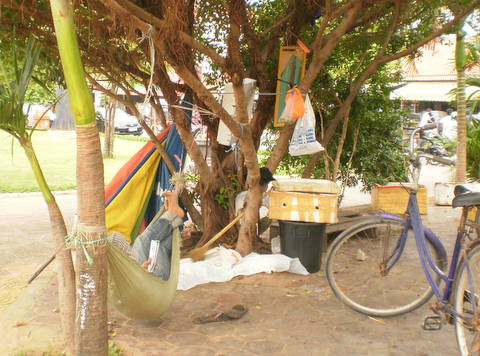
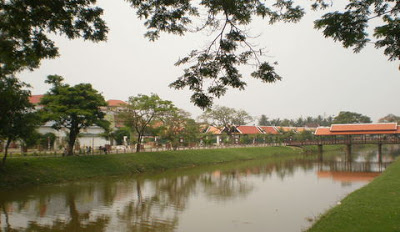
Asleep in a hammock along the river. 

This person had a mirror hanging from the tree, along with their belongings, and a Common Tailorbird was desperately attacking his own reflection…
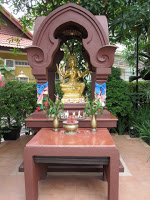
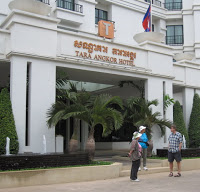
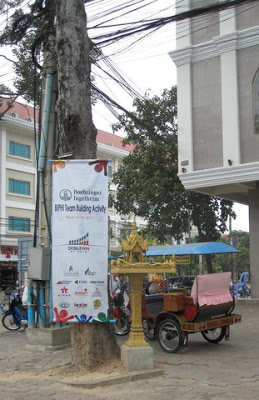
Spirit house outside our hotel


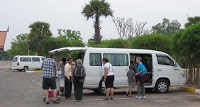
Our van

Outside our hotel
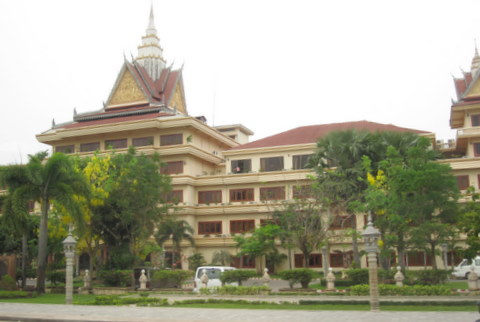
One of the many, many hotels

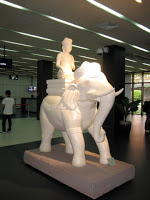
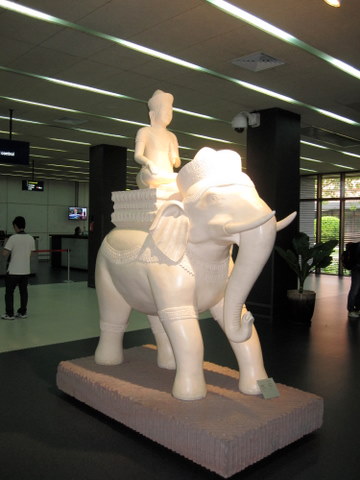
Today’s shots were taken around the town, starting with the statue in the rather magnificent airport, and the van that was our mode of transport for five days, in contrast to the more normal mode of the tuk-tuk – a trailer for four, pulled by a motor bike.

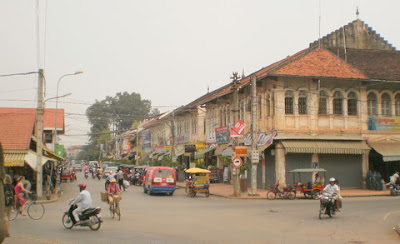
The others are just street scenes around the town, varying from the serene banks of the river and some of the rows of fancy hotels that adorn the main streets, to the more hectic hustle of the centre of town, and the odd little scenes that struck me. Like the festooned electric wires, the spirit house, or the pink frill on the tuk-tuk.

At first glance, Siem Reap seems a prosperous place, thronged by both backpackers and tourists with much money. Both bring the currency to sustain what appears to be a thriving economy. Yet Siem Reap’s income is just the icing on the cake. Unfortunately, this icing melts on the tongue of too few people, and under it there’s not much but crumbs.

Make no mistake; Cambodia has a long way to go. Too few people have access to education. Too few read and write. Too few have access to even basic medical care or contraception. One man I met at an international conference some years ago – a talented, hard working man with a strong interest in saving the birdlife of a country just emerging from too many years of war and starvation and strife – he died, murdered, in effect, when he was given fake medicine to treat his malaria.

Go to Angkor Wat if you can. Because it is inspiring, but mostly because your money helps. It really does.
Question: When is an egg not real?

Answer: when you have a city person forgetting that chickens aren’t a machine.

I’m serious. There has been a hilarious episode in Malaysia at the moment, where a complaint to the Consumers’ Asscociation of Penang (CAP) led to a kerfuffle where eggs were being tested to see if they were…wait for it…”fake” eggs from China. They looked like eggs – with a shell, yolk and white, but were not, according to a spokesman from CAP, real. Someone, they said, was faking eggs in (according to me) what must surely have been an incredibly complicated and expensive process costing ten times the price of a real egg.

Right.

CAP said they were weird shapes and odd colours…and had no taste. Excuse me while I roll around the floor laughing.

I was brought up on a poultry farm. Hens are not machines. They are living, breathing creatures. They lay brown eggs, white eggs, odd shaped eggs, huge double-yoked eggs, eggs with blood spots, pale yolked eggs, dark yolked eggs (according to what they have been eating), eggs with ridges on the shells, and so on. Such eggs are usually sold to places like biscuit factories, cheaply.
More on the hornbill…

Good news. The authorities have taken action on the Great Hornbill killing. I salute them.

“An army officer and three of his subordinates who slaughtered a great pied hornbill and posed with the dead bird have been suspended from duties,” says The Star.

According to the newspaper, the Defence Minister said they would also be charged under the Wildlife Protection Act 1972. The soldiers are apparently maintaining that the bird had been shot by a hunter.
“The bird fell to the ground and upon seeing the dying bird, they slaughtered it,” the Minister told reporters, adding that although the army personnel were not the ones who shot the hornbill, they should have tried to save it.

Hmm. I suspect the soldiers have done some quick thinking to mitigate the trouble they were in, but not to worry. The main thing is that this never happens again – that our armed forces realise that “totally protected” species means just that. And THEY are part of the protection.

Remember fellas – 30,000 RM fine and a jail term. Is it really worth the risk? And it’s YOUR heritage you so wilfully destroy.

Why I am distracted…

 …from blogging.

I have visitors.

One of them is especially cute. My six-year-old grandson. He and his family and my sister are all here for my husband’s 70th birthday.

When they leave, I leave for Swancon/Natcon – so busy times ahead!

I shall be back, with photos, so be patient.