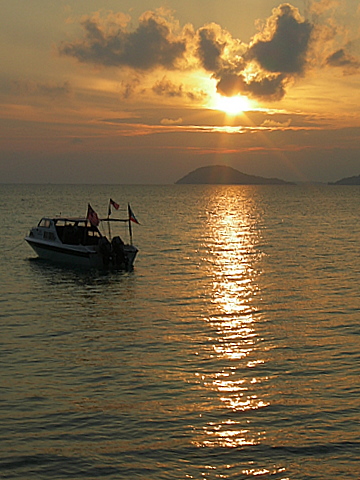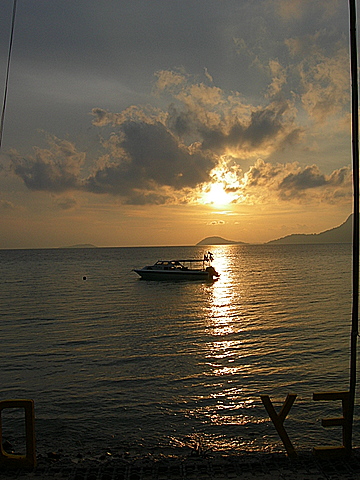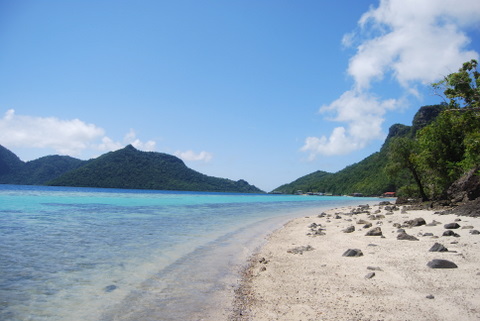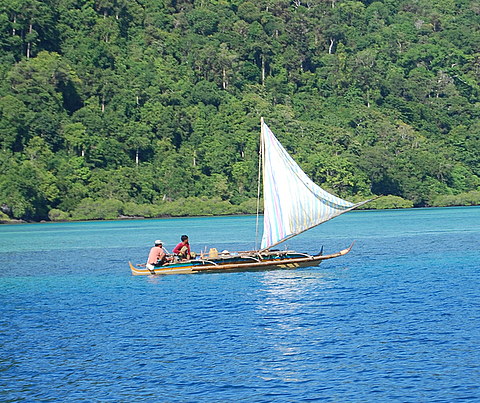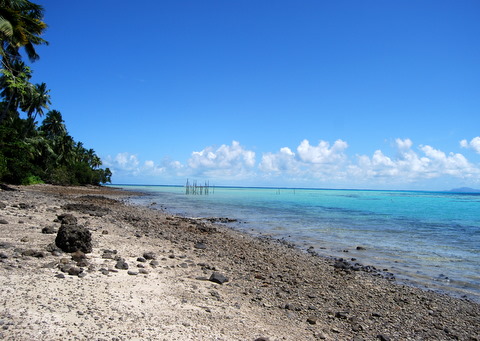
Semporna Islands Park: more photos


Don’t you just wish you were me?

Alas though, this month sees the end of our 18 month sojourn in Sabah. My husband has taken another job, at the National University this time. We are returning to our home in the Peninsula, far from the sea (sob).

Back to rush hours that last all day and traffic jams that never end. Back to the heat of a city and the dust of endless construction.

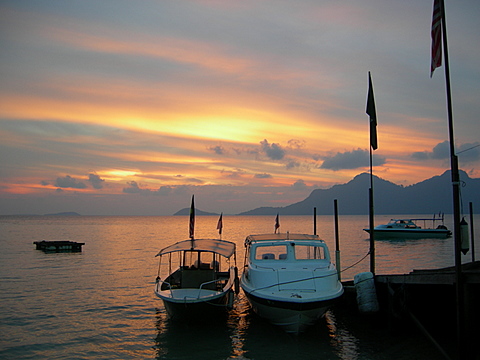
Back to where sunsets are never like these.

Sabah, I love you.

Titles yet again, and a signpost

Right, here’s how it is shaping up:

BOOK ONE:
Rainlords of the Scarpen

BOOK TWO:
Masters of the Quartern
or
Masters of a Quartered Land
BOOK THREE: Beyond a Painted Future
BOOK FOUR:
Beneath A Quartered Sky or
Fall of Random Rain or
Time Of Random Rain

Any better? Preferences anyone?

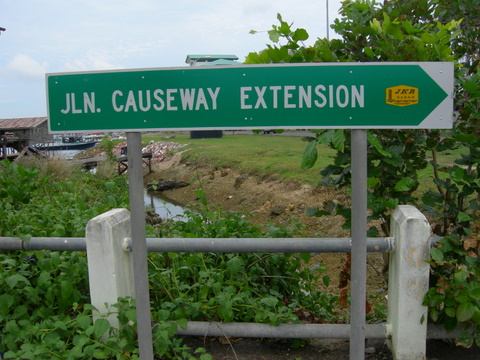
And here’s another amusing street name for you.
Jln is short for Jalan, which means road or street. So this is Causeway Extension Street. Written in English for some odd reason.
And the street is just a tiny loop for turning around in – because the longer Jln Causeway, linking mainland and a tiny island in Semporna port, is a dead end. The street sign is in fact almost as long as the street…
Tomorrow I shall be putting up some more wonderful shots from the Semporna Islands: How the other half lives…


More on Title Troubles

Have had a great response from everyone both here and on the Voyageronline messageboard about titles…many thanks.

Jenny says don’t use anything about drought because it has negative connotations. Use rain instead. I reckon that’s because she lives in Alice Springs and they don’t get too much rain there. She also doesn’t like Droughtmaster because it is the name of a breed of cattle. (Yep – in fact, it was the name of a cow that inspired me to write the books to start with – so where did you think authors get their inspiration, eh?)

No one likes having both Drouthlord and Droughtmaster as titles, including me, although some find Drouthlord intriguing. There have been a few suggestions for using other words – yep, Gryphon, and Time Lord over on the Voyager board, I like the word parched too…hmm.

Ok, more questions.

  • Which is better for Book 1?
Under A Quartered Sky
or
Beneath A Quartered Sky

  • How does this sound for Book 2? (Is it better than simply Droughtmaster?)
Rainlords of the Scarpen

Book 3 I am more uncertain about. Several of the main characters end up as prisoners during the course of the book – in both the conventional sense, in prisons, or in other ways – magically, or as hostages, or because of onerous responsibilities that allow no freedom.

Captives ofCaged by…
Thinking aloud here. It is also largely – but not entirely – the tale of the waterpainter character. Hmm.. Images of…

How’s this:

Book 3: Shimmers on Painted Water


Book Four is not easy either. I like Time of Random Rain as a title, but it is not particularly applicable to the book, as a return to the time of random rain is what they have all been working to prevent.

Aargh.

Title Trouble

Yeah, same old story.
I always have trouble with titles.

This coming trilogy is called The Random Rain Quartet. [Ok, it’s 4 books, not 3, if I can sell the four.]

Tentatively, I have called them:

Drouthlord
Droughtmaster

Waterpainter

Rainmaker

Problem is, I am not that happy with the title Drouthlord, for book one. Drouth means dry or drought, but most people won’t know that, so it isn’t particularly evocative. And it is important that the first book have an arresting title…

So my question is, would you be interested in a book called Drouthlord, if you knew nothing about it, or me?
Do you like snappy one word titles? Do you like those particular ones?

I did think of Waterlord, but then discovered that’s something from Warcraft gaming. What about Waterless instead of Drouthlord? Nah, I don’t think I like that much either.

What about longer titles like:

BOOK ONE: Under the Quartered Sky or Under a Quartered Sky

I like it but wonder if it doesn’t sound more like sf than fantasy.

BOOK TWO: Droughtmaster of the Scarpen
BOOK THREE: Waterpainter to the Far Sky
BOOK FOUR: Against a Random World

Sigh. I don’t know. Help!

Poaching Cont’d. The Sea Gypsies…

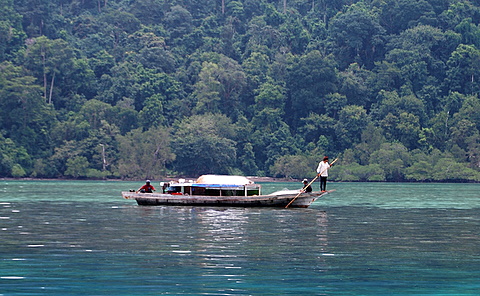
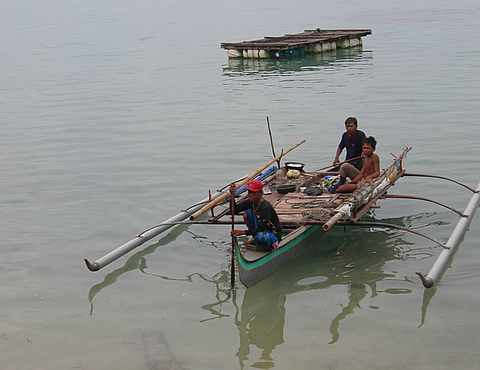
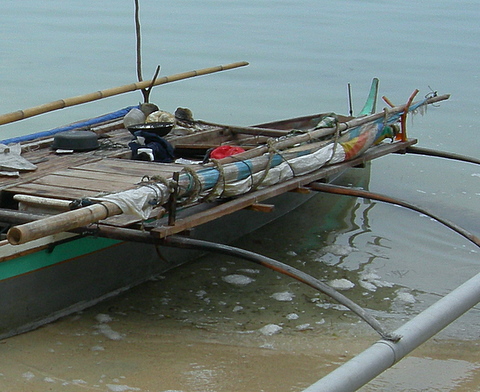
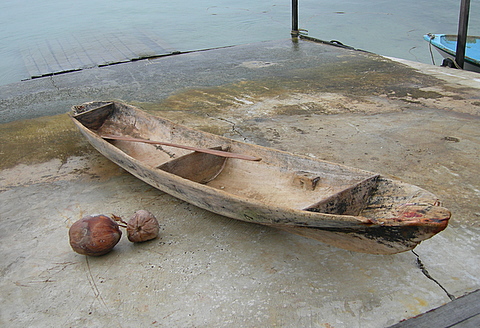
Pix 1: the poacher’s boat – carved out of a single piece of rainforest driftwood, with cross pieces then inserted. The paddle is another single piece of wood.

Ok, now let’s see if I can get all the photos downloaded properly today – and then I shall my blog anzeigen in einem neuen Fenster. Read yesterday’s blog post first, if you haven’t already done so.
[No idea why Blogger has decided to test my German when I post. At least I have learned a new word: Tastaturkürzel It sounds like a root vegetable, but it actually means those keyboard control shortcuts]

Pix 2: The crew of the outrigger, all brothers. They reckoned the younger ones were 8 and 11, but I think that was a ploy to gain sympathy. The younger one was probably more like 11 or 12. Here their names and details are being recorded by the park staff, while they anxiously observe what is being done to their boat.
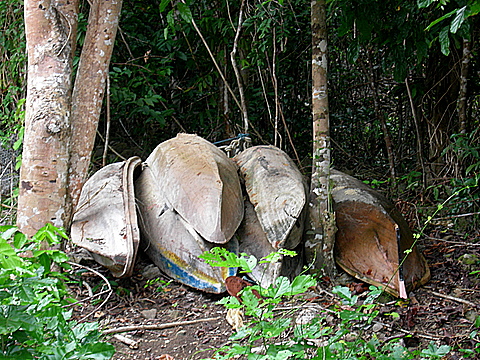
Pix 3: a pile of confiscated wooden dugouts.
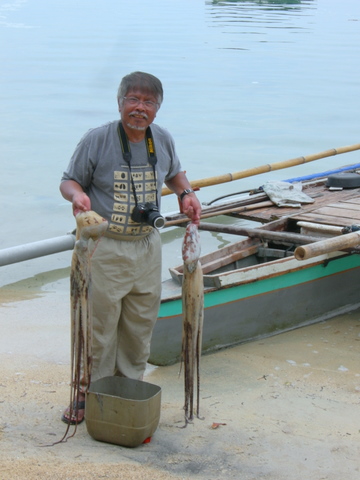
Pix 4: My husband with part of the catch: octopus.


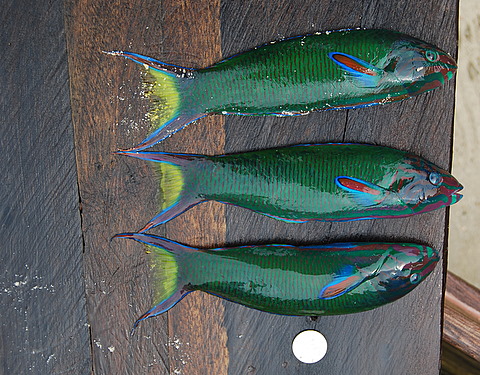
Pix 5: the fish they catch then use as bait for the larger ones – Moon Wrasse.

And they do catch big, expensive fish too.
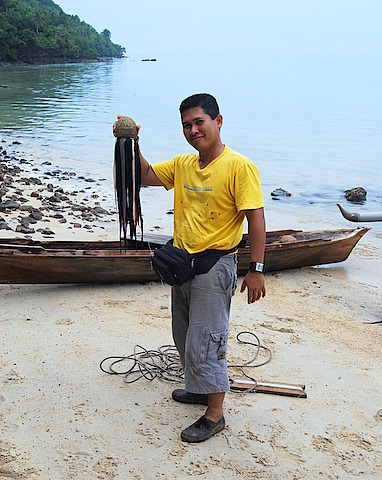
Pix 6 shows some more bait: that “jelly fish” has a large hook and nylon line inside. The handsome guy is Dr Hamid, one of the senior staff from the Institute of Tropical Biology and Conservation at University Malaysia Sabah.
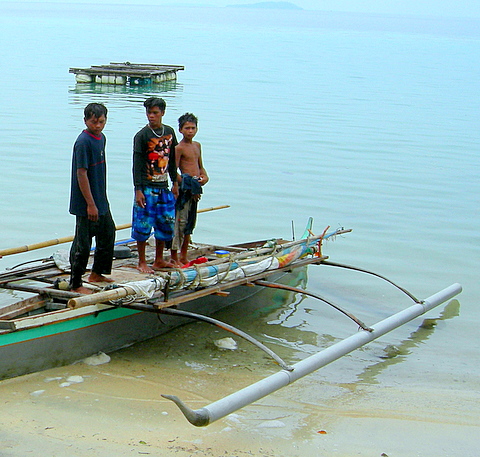
So what happened to the poachers? The man had his boat added to the confiscated pile. The boys were made to stand on the boat and be photographed holding some of their catch. The fish that were still alive were released. The others – most of them anyway – were eventually returned to them.

Then all four of them were set to work carrying large gunny sacks, with orders to clean up the flotsam rubbish on the beach.

I think some of their equipment may have been confiscated; not sure about that. After the cleanup, they were released with the outrigger and strict instructions not to return to fish inside the park boundaries. (The outrigger, by the way, has a propeller powered by a pump engine, for use in emergencies.)

The only people who can fish inside the park are the few who lived there before the park was gazetted. More about some of them next time.

Most of the poachers are the Sea Gypsies (Orang Perahu) a sub-group of the Bajau Laut peoples. (Laut means sea). Originally many of them came from Philippines where they were made unwelcome. They are often stateless, living on their boats, sometimes on houses built out to sea (more about that soon too) or on temporary huts built at the shoreline somewhere. Many of them are not poor – not in the sense of starving or without money. Those large fish and octopus fetch good money.

Hassled, they move on, roving throughout the Sulu and Sulawesi Seas, living a life at sea … given a chance to put down roots, many of them would not accept, although they would like to have some kind of legal status somewhere.

Before the Sabah Parks moved into this area, poachers were devastating the corals with bombs and other unlawful, wasteful and STUPID methods (not all of them non-Malaysians, either). One guy I know, doing research work on the reef, was almost killed by a bomb while he was diving. I have no sympathy for poachers.

Or do I?
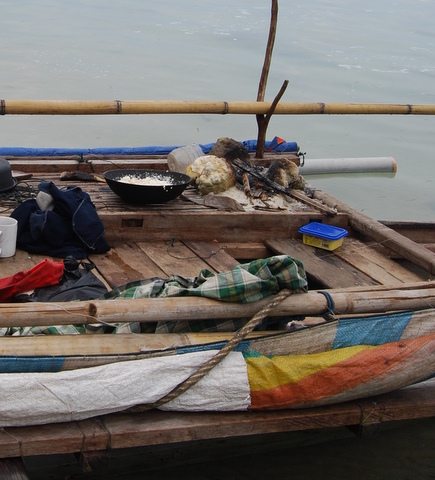
Suddenly they have a face. Three young people roaming the sea with a wok of tapioca and a hold full of fresh seafood – and they didn’t look so very different from me as a kid, running wild every summer, fishing around Mandurah in Western Australia.
Life is complicated.

Poaching: abstract versus reality

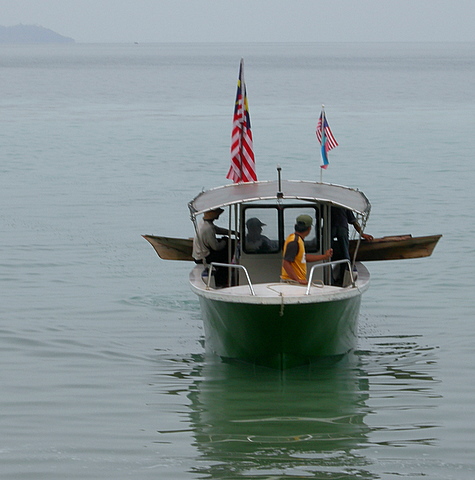
Pix 1: the Sabah Parks boat comes in with a poacher’s boat slung across the back, and the owner on board.

I loathe poachers. I have seen too much of the damage they have done, and the callous way they tend to treat their environment, in this case the marine environment – fish bombing, cyanide poisoning, dragging nets over corals, and so on. And far, far too often I have witnessed the enforcement authorities turn a blind eye.


Pix 2: A second poacher’s boat is being shepherded to shore with a crew of three

[Please don’t now tell me that what they do is nothing compared to the legal depredations of big business and developers. I know that.]

Pix 3: poacher’s boat. Note the back far corner…

Well, while we were in the Semporna Islands we witnessed the enforcement authorities at work, not only doing their job but doing it strictly, yet with compassion.
Yes, that’s a fire on board the boat. They were cooking their tapioca in the wok (now removed from the fire). The burning wood rests on a piece of metal sheeting. Doubtless they would have thrown their catch on to the fire when the tapioca was cooked.

I actually had downloaded a stack of other photos (which takes time because I don’t have broadband) and when I scrolled down this far, I found they had all vanished. So you are going to have to wait until tomorrow for the rest of the story of these poachers…

Sometimes Blogger can be very hard to manage. And does anyone know why half the directions for my postings are now auf Deutsch????

The secret of writing a good book: aim to do it all.

One of my favourite fantasy authors, Guy Gavriel Kay, has been interviewed in the September issue of Locus Magazine, and he has – as one might expect of such a talented and interesting storyteller – some wise things to say.

“I’ve been saying for years that good fiction is interesting things happening to interesting people. In a lot of the commercial bestsellers (any genre, any form, any field), you’re going to have interesting things happening to stupefyingly uninteresting characters, and in a lot of the lauded literary contemporary fiction you’ll have carefully thought-out characters with nothing remotely engaging happening to them. But it’s not a zero-sum game, not either/or. It’s difficult to deliver both, but that’s our mandate when we write.”

In the above paragraph, he really sums up what writing an interesting story is all about.

There is another element, of course, which most of us take for granted: the writer has to be able to write a decent sentence; you know, with the commas in the right places and the words in the right order.

[Here’s a bit of a digression:
Ask any published writer, and they will have tales of being approached by wannabe-published writers (often very young ones) shoving their stories into your hand or into your computer, when they don’t yet have the elementary tools to write a story.

Here’s a brief example lifted from the beginning of a story submitted for criticism that I read recently, and almost every sentence had an equal number of elementary mistakes:

“What did you just say”! He asked in a soft voice, “Marissa, you should ….” and so on. From the context, it is obvious that the “He asked in a soft voice” applies to the “What did you just say”.
Ok, so the capital H is probably a function of Word making an automatic change – but what kind of a writer then submits a passage for criticism with it (multiple times) still like that? And how can you think you’ll succeed if you don’t know that inverted commas (quotation marks) go outside the punctuation of the speech? Or that an exclamation mark followed by “in a soft voice” isn’t going to make sense? Or if you don’t know what constitutes a complete sentence in the first place – see the comma after voice?]

You may possibly get published with a book that doesn’t have interesting things happening to interesting people, but you will never get published if you don’t take time to conquer the tools of your trade.

The other element of a good tale, to me, is a plot that holds together and is believable. Now, the non-fantasy readers among you may raise an eyebrow at that. How can fantasy be believable? Well, that’s the function of a good writer: to make it so. (I could also add that the majority of the people of this world do accept the fantastic as real, on pretty little evidence, in their every day lives, but perhaps I had better not go there.)

And to tell the truth, I am constantly surprised at the number of novels that do get published even though they have plot holes so large you could sink a couple of oil rigs into them and still have room. The Da Vinci Code is a good example.

But anyway, here’s my formula for a good novel:

Interesting things happening
to interesting people,
well-written,
with a coherent, believable plot.

Conquer those four elements and you might just have best-seller potential. The first two make a great story, the third makes the great story a publishable book, and the fourth turns the great publishable story into a great book.

What do you think?

Bohey Dulang – Semporna Islands Marine Park

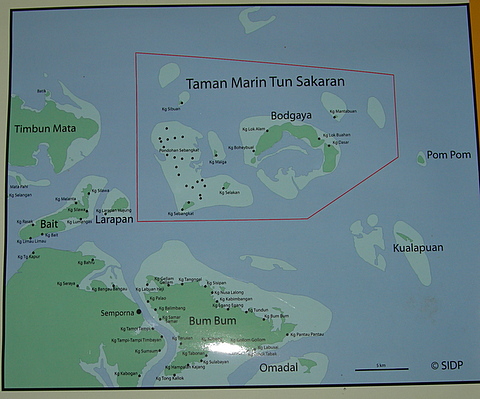
Actually the real name of the Marine Park is the Tun Sakaran Marine Park (the name of a past political leader), but I didn’t actually hear anyone call it that…
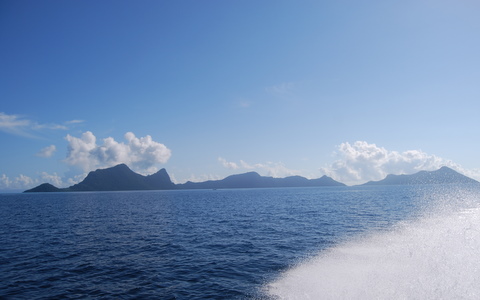
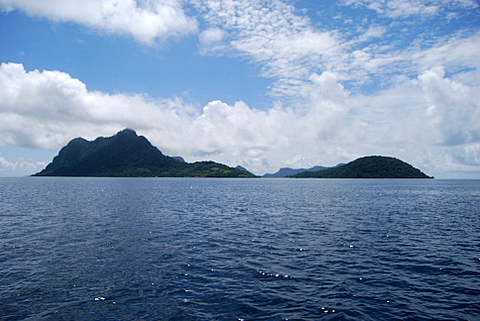
We went there courtesy of Sabah Parks, able to stay in their facilities, taken by their staff in their boats – a real privilege not given to the public. We were part of a scientific team from the university (UMS). I cannot thank the Park Staff enough for this wonderful experience.
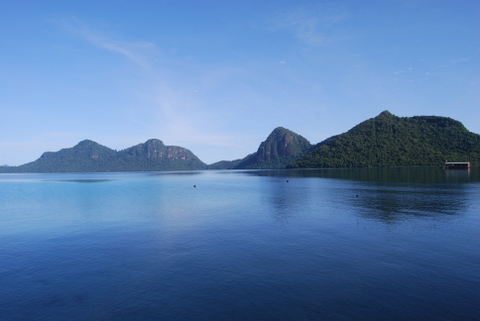
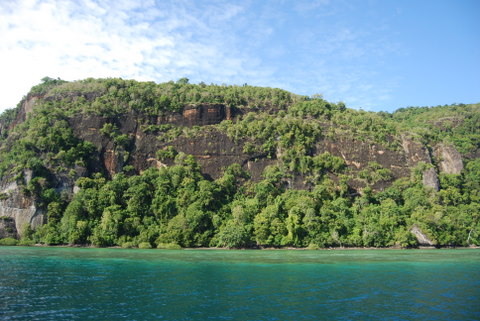
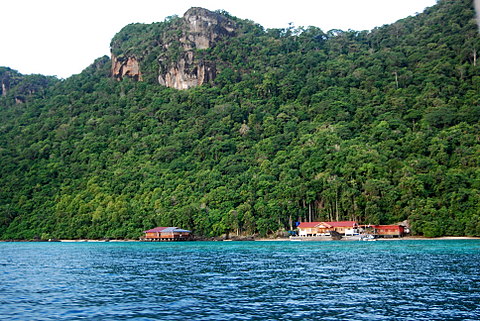
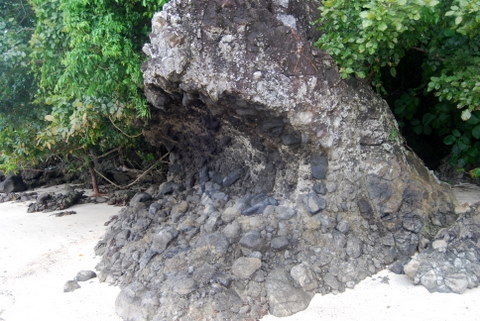
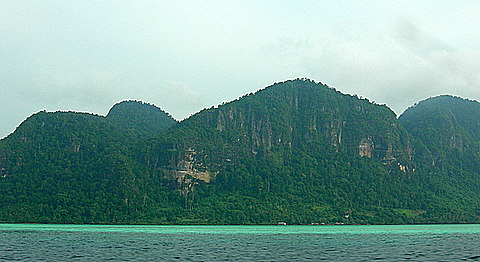
The islands of the park are mostly part of an ancient volcanic rim; the crater is now filled with sea water and corals. The island we stayed on is called Bohey Dulang, or Water Tray. That picture of a rock on the beach near where we stayed (taller than a man) is part of the volcanic evidence…


The first pix are the whole park area from a distance, then closing in…

People who lived in the park before are permitted to stay and use the seas in sustainable ways; fishing is not permitted by outsiders.

The red-roofed building at the foot of the cliffs is the Sabah Parks complex, where we stayed.

Today’s post is just to whet your appetite. More to come…

HEART of the MIRAGE available in Kuala Lumpur

So here I am back in Kota Kinabalu, recovering…I am scratching from monstrous itchy patches all over (reaction to sandfly bites I think).

And the trip was not without incident – Noramlyed a couple of times, if you count being somewhere off the coast of Sabah, poised between the Sulu and the Sulawesi Seas, with both boat engines not working on a rough day…

But I’ll keep that story for later. I shall be putting up photos of the trip in the days to come.

In the meantime:

Kitty tells me (bless you, Kitty) that the Orbit edition of book 1 of The Mirage Makers is now available in MPH in Kuala Lumpur – so go look for it. Buy it. It’s called Heart of the Mirage and you will find it in the Science Fiction and fantasy section of the larger MPH stores. If it is not there, they will get it in for you.

And here’s the progress for the new book (yes, I did some writing of Drouthlord while I was away):

Zokutou word meterZokutou word meter
168,232 / 180,000
(93.5%)

6.5% left to do, or under 12,000 words. Actually, it could be even less, as I am hoping to come in under 180,000 – which would leave me some wriggle room for additional material in the rewrites.

I shall be looking for some serious beta readers by end of November.