Over on Jenny Fallon’s blog the other day, she had a link to this article on villains at io9, a bit tongue in the cheek, which postulates that one of the reasons movies like The Dark Knight have done so well over the summer season (in the northern hemisphere) is because they have decently wicked villains.
The writer, Charlie Jane Anders, then gives a comprehensive list, with comments, of how good villains are ruined by script writers:
1) They get redeemed.
2) Too much information.
3) They become analogs of real-life nasties.
4) We see too much of their world.
5) Too many defeats …
6) …or victories
7) The villain that’s a reflection of the hero.
I can’t really comment because I am not much of a movie goer. What I really liked about the article were two comments towards the end:
- Good villains make great stories. A truly chilling villain makes the hero seem more important because the stakes are important, and the hero’s actions matter.
- A good villain has some kind of political message, but it’s subtler and woven into the storyline’s subtext.
I actually don’t feel that it is possible to extrapolate much of what Anders says into a comment on the written medium. Book villains, I feel, are much better fleshed out. In a film it’s OK to be thoroughly villainous; in a book the reader often wants more – why is the villain like that? Where is he coming from? How does she see herself? Readers want more subtlety than film goers. Am I right?
I do agree that too obvious an allegorical portrayal of a real life villain can be a real turn off, as can a miraculous redemption. If you don’t agree with me on this last point, try watching Hindi movies. Omigod. The utter rotter who has done despicable things to hero and heroine throughout a cinematographic marathon, suddenly turns good at the end? Or says, oops, sorry? Yuk. Or rather yuk unless done by a truly great writer.
I just looked back through my reading list for the year (on the bottom left sidebar of the this blog), and one villain stood out as the bloodiest I have read in a long time: Karen Miller’s Hekat from her Godspeaker trilogy. Not for the faint-hearted, the first book details the origins of Hekat’s villainy very well indeed. In fact, Hekat’s descent from sympathetic to hateful is brilliantly done.
More subtle by far, and perhaps even more chilling as a result, are the trio of villains of Marcus Herniman’s Arrandin Trilogy: Emperor Rhydden, his sycophantic and conscienceless henchman and the Archmage. In a way I wish they’d had more scene time and a bit more background detail.
So how do you like your book villains? Who are your great villains of fantasy and why?
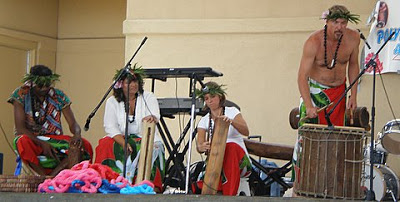 …was to attend the Polynesian Culture Association’s festival of music and dance, in which Daughter No 1 was participating.
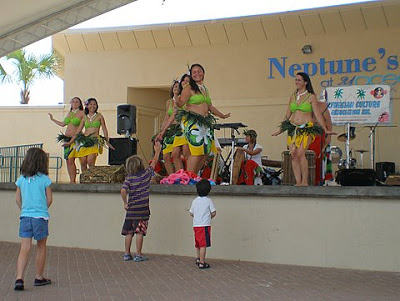
 In the pix below, the three children of 3 of the dancers (that’s grandson in the middle) suddenly realised that was Mum up on the stage and wanted acknowledgement, which was rather cute.
 That night, sitting around the campfire talking, I discovered that two of the drummers were fantasy readers and staunch members of the Society for Creative Anachronism, so I am now fascinated by the idea of attending the huge Pennsic which was 14,000 or so participants.
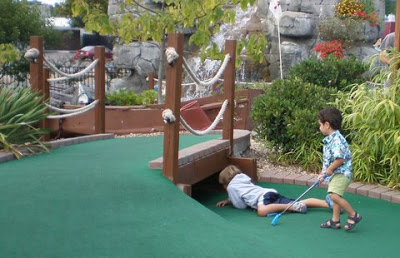 When you are less than five and you want to find out something, you just go look, no matter what the other guy thinks.