Do Malaysians read?

Over the years, there has been repeated soul searching about the reading habits of Malaysians, and how to get them to read more.

Occasionally some public figure – businessman or politician – will be interviewed and he (usually it is a he) will tell of how reading made such a difference to his life. He will be photographed in his study, surrounded by books, and he will talk of those that made the difference.

Great, I think, except for one thing. Very, very rarely will he ever mention fiction. Even my husband – who reads all the time – will almost never read a book of fiction. Not even at the rate of one a year. He hasn’t even read all of mine.

I was at a government clinic this morning, waiting for my turn to see the doctor. I started a new book when I arrived, and by the time I walked out of there, two and a half hours later, I had almost finished it, and what a wonderful read it was: Mr Pip, by Lloyd Jones, shortlisted for the 2007 Man-booker prize. (A book of complex ideas and themes that is amazingly easy to read – highly, highly recommended.)

Now, when I think of my wait at the clinic, I don’t think of it as wasted time, but as a wonderful couple of hours spend in another world which I previously knew nothing about (Bougainville Island) during a time that I used to – very occasionally – read something about in the newspapers: the secessionist rebels’ war against Papua New Guinea, backed by Australian military might. Read the book, and – if you are Australian – feel shame.

I looked around the clinic occasionally when I could drag my mind away from the story, to see what everyone else was doing.

A few read newspapers. Most sat and did exactly nothing, staring blankly into space.

How I pity them. They will never be truly well educated, because they do not read. They will never understand the human condition of people outside the limiting walls of their lives. They will never understand what it is like to be a different person, living in a different world, experiencing another vastly different life.

Except maybe as portrayed by Hollywood and the glossies. They might know a bit about Britney Spears, but what do they know of a young girl growing up on Bougainville in the 1990s? After this morning, I can tell them.

Reading a trilogy

I have a marked reluctance to read the second book of a trilogy if I haven’t read the first. It’s usually tough going, and sometimes just about impossible to make sense of what is going on.

Back in 2004, books 2 and 3 of my Isles of Glory trilogy were up for consideration for Australia’s Best Fantasy of the Year Aurealis Award. I know at least one of the judges for 2004 did not read book 1 (which had been shortlisted in 2003); perhaps none of them did. I wondered at the time if that was quite fair. It is hard to judge a story when you start a third of the way in…
Be that as it may, Book 3 was shortlisted for 2004. It did not win though.

I have just read a review of The Shadow of Tyr, book 2 of The Mirage Makers, written by a reviewer who has not read book 1, over at The Bookbag. [Spoiler Warning: don’t read the review unless you have read “Heart of the Mirage”!!]

Needless to say, she found it hard going to start with, but I was heartened to see that not only did she finish it, but by the end she could give it 4 out of 5 stars and write:

“I began to see just why Larke elicits the comments she does. Once I’d got embedded into the mindset and began to find my way in this world – which is closer to ancient Rome than the usual “mediaeval” setting chosen for fantasy stories – I did begin to care about the characters. In particular Arrant – the son who appears to be as flawed as Ligea feared he might be – and his interaction with the other that takes over his mind. By the end Larke had my emotional attention. Had I started at the beginning, as one should, I’d have enjoyed the whole much more [….] She can spin a battle-scene with the power of a mirage whirlwind, and capture the stunned silence in the aftermath of a massacre.

That was a nice Christmas present.

I am rich

My Christmas was great. My family might not have been around, except for my husband, but friends were and we had two very pleasant days of eating and drinking far too much and talking a lot.
You can’t beat good company and good food.

I have so much to be grateful for.
Photo (October ’07) : a shop and house on Banggi Island, Sabah. We stopped to buy a couple of cans of drink…

Author ego boost

The other day someone told me he thought it might be better if I turned my talents to writing mainstream fiction because he didn’t think I did much of job giving fantasy readers what they wanted.

Ouch.
I sincerely hope that what he was actually saying was that I don’t write what he wants, which is doubtless true. I have to believe that fantasy is a wide genre that contains everything from the large canvas epics and swordfighting heroics to the more intimate romance, from modern urban settings to space opera, and the whole gamut of story types and settings between, and therefore any attempt to speak of “fantasy readers” as a homogeneous group is naive. There is something for everyone out there.

Anyway, I was still picking myself up off the floor when I had a reader post a comment re one of my trilogies in the post below (thanks Hisham) , which promptly restored some of the leaking self-confidence.*

Secondly I did something I have been meaning to do for some time, and that is start sprucing up this blog. I began by putting pix of all the editions of my books down the lefthand side. And to my astonishment, I realised there are 16 of them, plus another five in the process of production which I haven’t received copies of yet. I hadn’t realised there were so many…

I feel much better now.

Merry Christmas

*[Hey, Never underestimate the effect on the writer of a positive – or even just a thoughtful – comment. We work in a vacuum, and knowing what you, the reader, thinks is important. So go out there and give your favourite authors, wherever they are, a Christmas present. Write something on Amazon.com or amazon.co.uk or some similar site about your favourite books. Or send them an email. Or write in the writer’s guestbook on their website about how much enjoyment they have given you this year. Believe me, except for the really mega selling authors who get a bit snowed under by reader response, they will read it. ]

Never condescend to kids

This from nytimes.com via Making Light. Love it.

(For those who don’t follow US politics, Mr Huckabee is a Republican presidential hopeful.)

“Who is your favorite author?” Aleya Deatsch, 7, of West Des Moines asked Mr. Huckabee in one of those posing-like-a-shopping-mall-Santa moments.

Mr. Huckabee paused, then said his favorite author was Dr Seuss.

In an interview afterward with the news media, Aleya said she was somewhat surprised. She thought the candidate would be reading at a higher level.

I guess she hasn’t yet been disallusioned by the scholarship of the average politician. The clincher, though, was in her follow up. Sort of: “If I can get this far, how come…?”

“My favorite author is C. S. Lewis,” she said.


Seasonal sadness

Yesterday was the festival of Eid Al-Adha. For my husband’s family, this year was more special than usual, as one of his sisters was off performing the Hajj.

Next week is Christmas – yet another Xmas which I don’t spend with any of my own family. The last time we were all together at Christmas? I can’t remember the year; certainly more than five years ago. In Scotland, it was, and it snowed.

Yesterday, we went to the old family home in the Malacca village where my husband grew up, the very house where I first met all his sisters and his parents and his brother, so very long ago. It was late at night, the year was 1968 and a coconut tree had fallen across the power lines. So I met them all for the first time by lamplight. It was Eid Al Fitr and Christmas, both, and I was sick with apprehension. So, I suppose, were they, although that never occurred to me at the time.

This time, when our car pulls into the yard, my husband looks anguished. The garden – once so lovingly tended by his mother – is all dead. All her beautiful orchids are gone and the orchid shade-house pulled down. The rambutan tree my father-in-law used to sit under in the evenings is no more, and the earth is hard and bare, the grass dead.

My parents-in-law have both gone now, and their eldest daughter- so kind in heart and generous of spirit – gone as well. No one lives in the house. One of my Malaysian sisters opens up the house for the festival, and those of us who remain go back. We eat, and talk, and exchange news. There are gaps at the table, not just for those who are gone, for there are divisions in the family now, when once they were strong and united.

Time has moved on. We have moved on. Yet, so suddenly yesterday, we discovered happy memories have the power to hurt.

On being morally manipulative

Over at Deep Genre, there was a discussion that started off talking about the film, The Golden Compass, but ended up much more interesting to my mind.

An author made this remark: “The book was morally manipulative to the 9th degree. I strongly disliked it, and it’s no surprise to me that the movie only make it worse.”

This comment niggled at me for some time. Now I can understand perfectly that some readers might not like the message of the books, and may heartily despise Pullman’s atheism, just as there are many who can’t stand C.S.Lewis’s brand of Christianity in the Narnia books, or even George Orwell’s politics in Animal Farm.

But morally manipulative??

Is an author morally manipulative when he or she writes a book that reflects their religious beliefs or philosophy of life? Was the commentator meaning “immorally manipulative” in that he was trying to get children to question their religious beliefs (if indeed, he was?)? If so, then was Lewis also morally manipulative when he tried to encourage children to be good little Christians? After all, that implies that he was also trying to manipulate Muslims/Buddhist/Jewish/atheist/etc/ kids away from their present religious persuasion!

I don’t know, but I thought the comment distinctly unfair. Just because an author holds a belief and writes stories on themes reminiscent of those beliefs does not mean that we have a right to condemn them as manipulative. Perhaps it would be more honest to say they are holding true to themselves.

(Anyway, I am more likely to criticise a writer when their themes/beliefs swamp the story in moralising, and you end up with self-righteous prose that is as tiring as it is ineffective.)

What do you think?

What few people want or enjoy

Recently I was up at Fraser’s Hill, with a long time friend who recently came back to Malaysia for a dose of nostalgia.
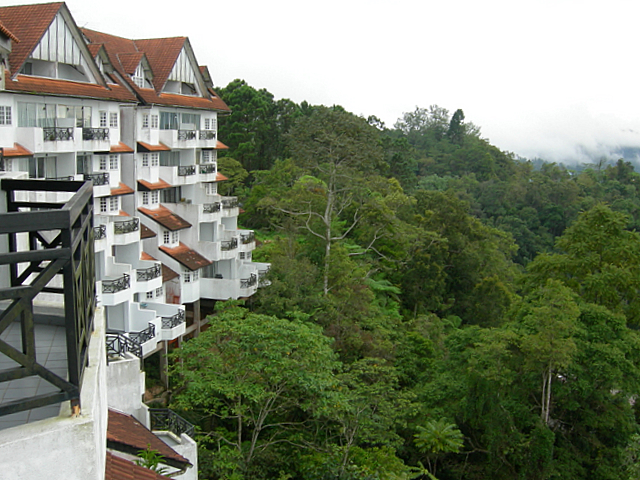
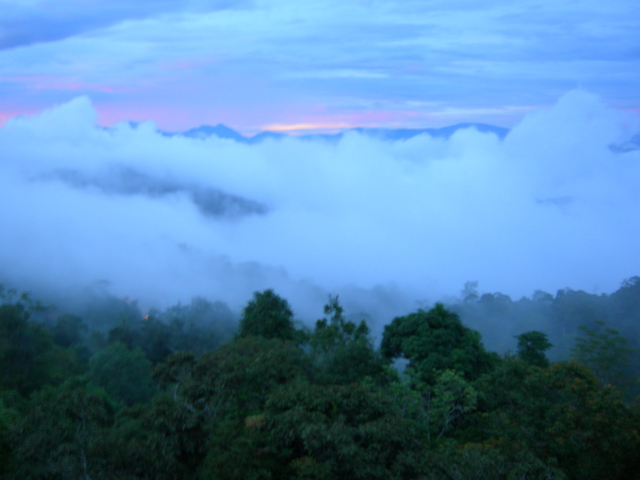
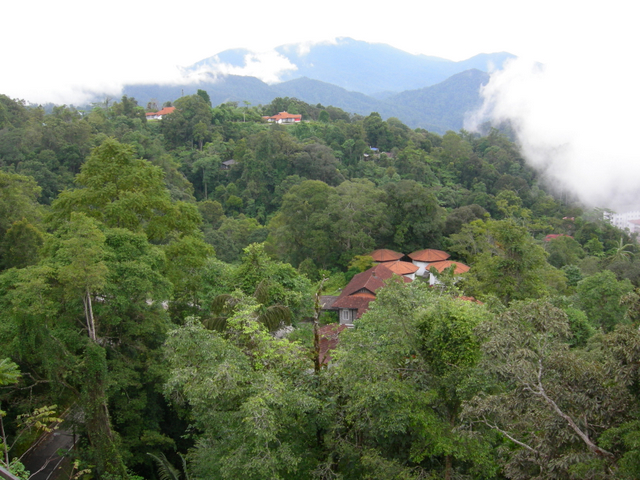
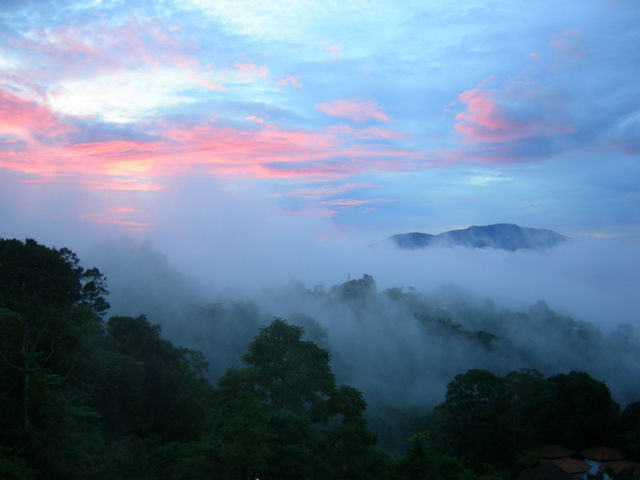
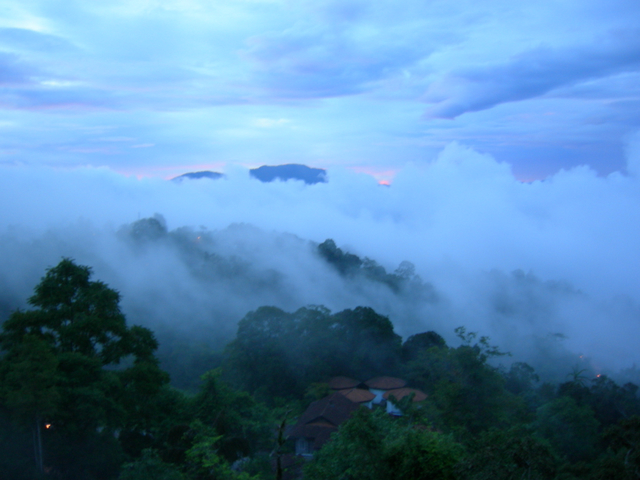
I love the way the mountains change. How a few minutes can mean a totally different scene. I love the sounds of the forest – the rush of rain as it moves across the valley towards me, bird song and gibbon woops and the squirrels’ chattering indignation, the whoosh of hornbill wings like a steam train going up a hill. I love the way the mists mutes nature, sight and sound.

Fraser’s is over 1000m in altitude, and therefore a lovely cool place in the tropics. All these photos were taken from balcony of the apartment where I stay – thanks to the wonderful generosity of another friend.
Years ago, many decisions were made that came close to spoiling this idyllic hill resort – ruinous development plans such as an extravagant golf course and resort, now closed down because no one came. The people who appreciated the quiet and the nature were beginning to give the place a miss. With their ill-conceived actions, authorities halved the number of kilometres of walking trails, and their passion for slashing the forest edge away from roads and banks as much as possible increased the probability of landslips and decreased the probability of seeing wildlife such as birds.

Birdwatchers still come though, even though it is more difficult to see birds, and the local authories managed to ensue that one of the world’s premier birdwatching accommodations, the famous Gap Resthouse, is pretty much abandoned. You have to have the persistence of a nagging fly, and a knowledge of the Malaysian language, and insider information to crack the code of how to book it – and then when you arrive you have to chase down the key holder like it was buried treasure because they totally ignore your booking and you starve to death because they don’t want to cook.

But the general public doesn’t go to Fraser’s. Too dull, the KLite says. Nothing to do. No shopping, lah. No internet cafes. No clubs. Few restaurants or stalls. No night life. No day life either, if it comes to that. What is there to do?

You see them sometimes, driving around in their cars with the radios on and the windows wound up, hooting every time they come to a corner.

So Fraser’s is tatty and rundown. Locals leave because there is no work.

It’s only an hour or two from the city. You’d think that people would come to recover from the the horrors of KL – from the traffic jams and noise pollution, dirty air and dust and construction, snatch thieves and carjackings and break ins.

Alas, they don’t. They don’t see what I see.

Infanticida


My husband is back from Indonesia. Now here’s irony for you: the immigration there was highly suspicious of his brand new passport, issued just that morning, and demanded to see his old one! Fortunately he had it with him.

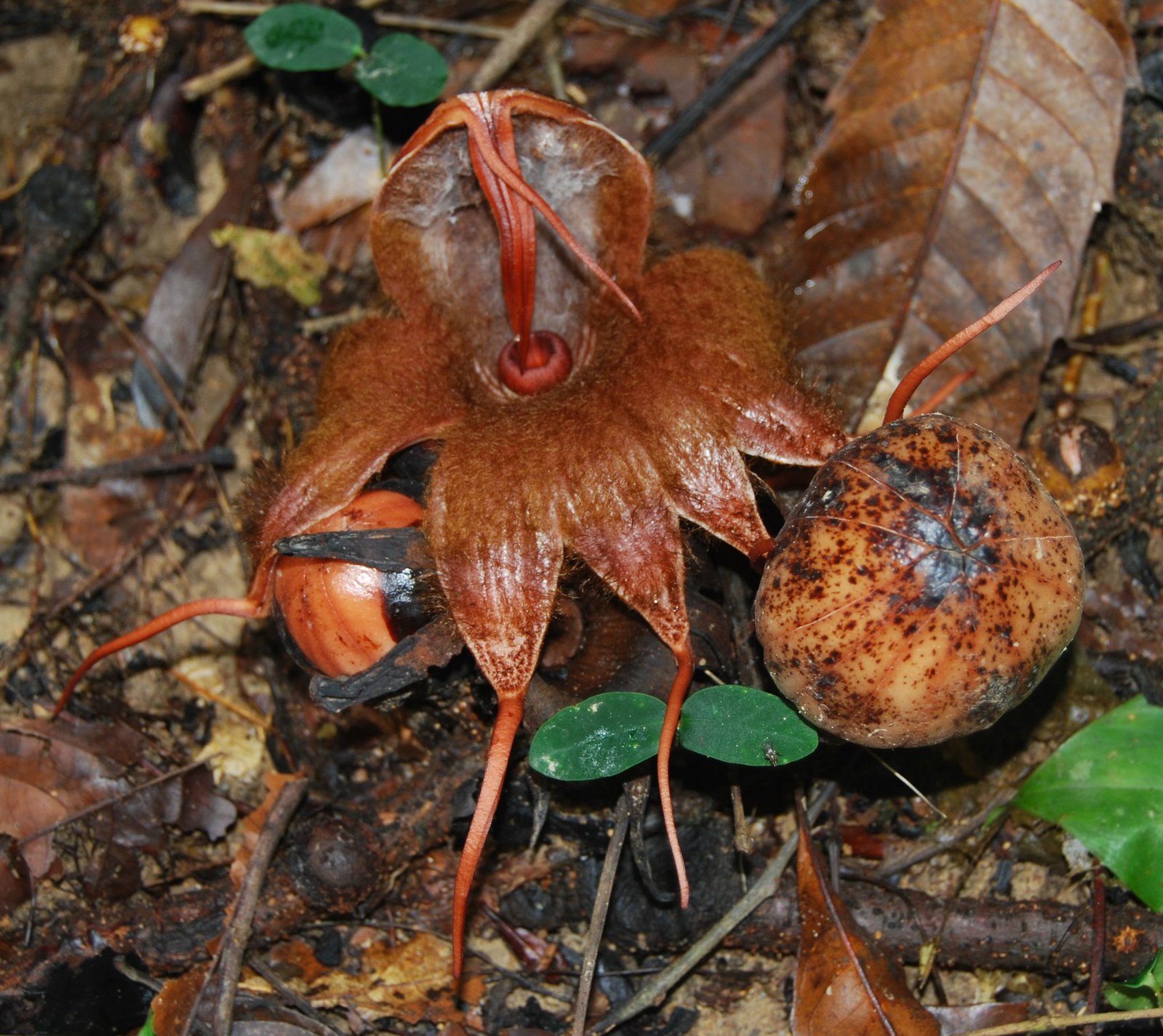
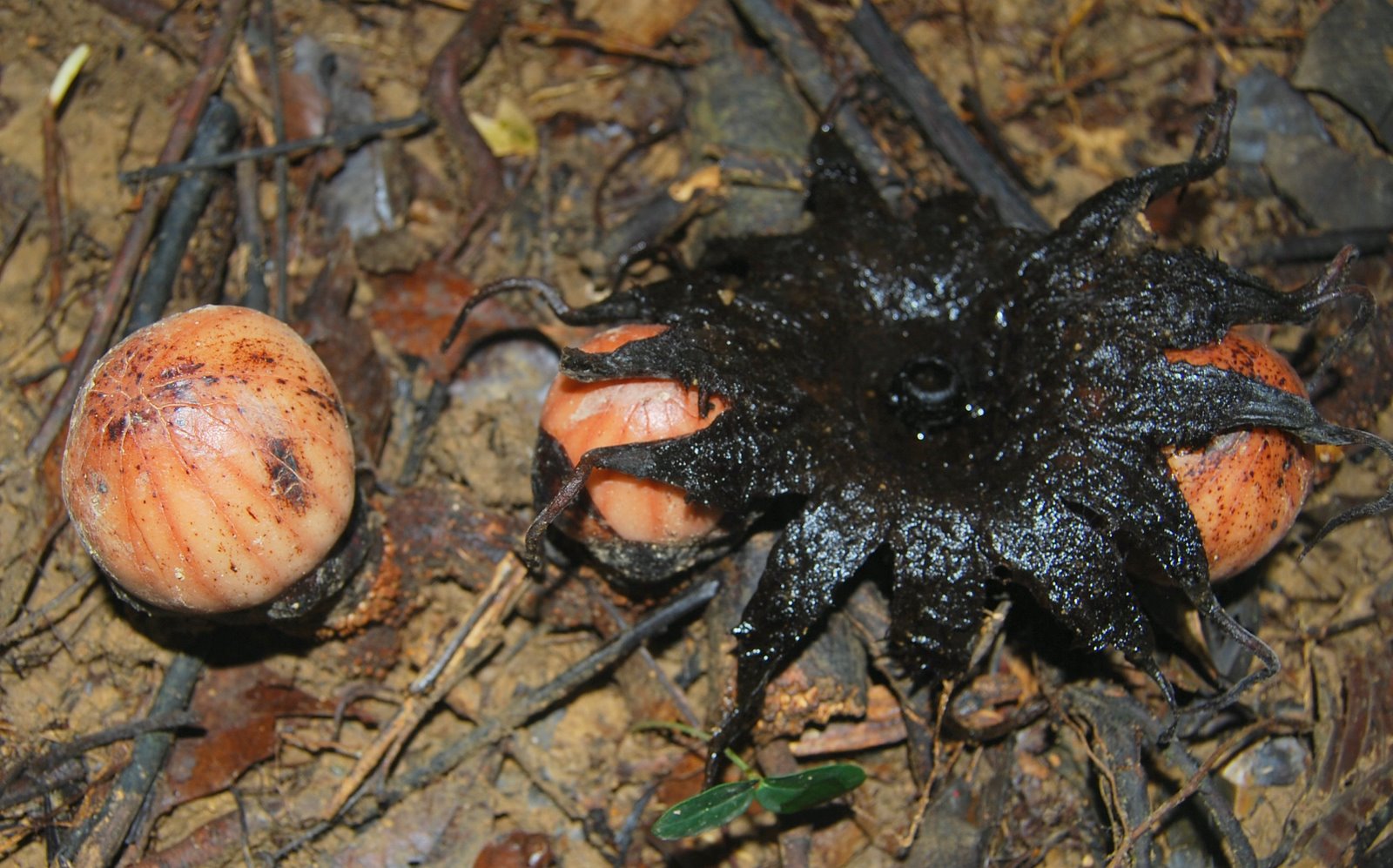
And here are some more plants – flower and buds – from Cameron Highlands that he wants me to put up…maybe he wants to freak Karen out again. They are related to the Rafflesia, they are also parasitic and leafless, but somewhat smaller, in this case growing on the host’s root in the ground.

Name? Rhaizanthes infanticida. Hmm. Not sure why they should be called infant killers, but maybe Karen has a point…and the dead one looks decidedly evil. Perhaps it has murderous designs on the buds?*

*Just checked with husband. Seems the flower kills the larvae of any insect unwise enough to consider it a suitable creche.

Grammatical error – or not?

One shouldn’t split infinitives, right? (To boldly go, anyone…?)
Or end a sentence with a preposition? (“This is the sort of English up with which I will not put.”)
And everyone knows you shouldn’t start a sentence with “And”, or that “dinner is done and people are finished” and that “Hopefully” it is “children who are reared and crops that are raised…”

Right or wrong?

Check out this wonderful site, if you want a handy reference. Better still, buy the book.

And I really can say “My last book is entitled Song of the Shiver Barrens.” Chaucer said so.